Author: Eric Wong

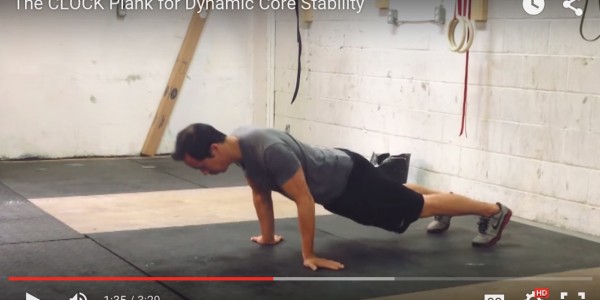
  • New Plank Variation: The Clock Plank

    New Plank Variation: The Clock Plank

    Basic plank exercises are awesome for training stabilization of your core.

    This base level of stabilization is what you need for a healthy low back and for the ability to effectively transfer force between your lower and upper body for techniques like throwing punches or pushing things like your car after it breaks down half a mile from home.

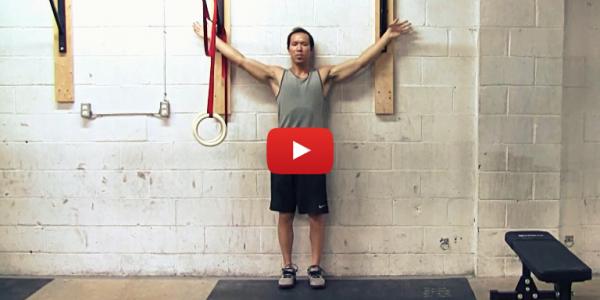
    But the Clock Plank steps it up a notch with the addition of a DYNAMIC STABILITY component, which is when your core has to react to other movements or a changing environment to maintain position.

    An added bonus in this variation is the different motor pattern when you hands are up over your head vs. down by your sides, which respectively recruits your lats or pecs more.

    Check it out:

    What’s your favourite core exercise?

    Let me know in the Comments, I’d love some new ones to play with the next time I train.

  • Advanced Core Circuit for RIPPED Abs

    Advanced Core Circuit for RIPPED Abs

    eric-wong-ripped-absThe conventional exercises most people use to train their abs suck.

    What I’m talking more about is how they do the exercises, typically with tons of reps of shitty little crunches or bicycle abs or something, or super long holds of planks.

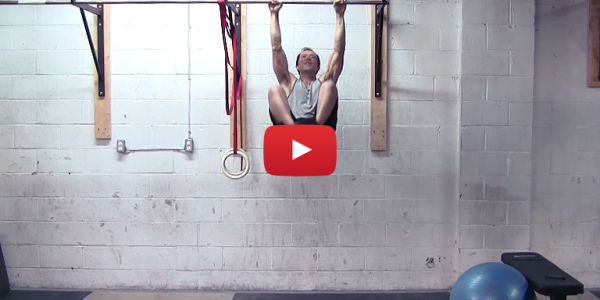
    What’s more effective is stringing different exercises that require different qualities, such as training in different planes of motion, hitting different aspects of your abs and in different positions, like lying prone or supine or hanging from a bar.

    This is how I train my pro and UFC fighters so I’m guessing it’ll work for you too.

    Best of all – in today’s video I’m hooking you up with a nasty little circuit that will absolutely torch your core that includes ALL of these elements.

    I suggest starting off at 2 rounds, then progressing up slowly to 4 or 5 rounds, then moving on to something else.

    Your core adapts very quickly so it responds better to variety compared to other muscle groups, which are a lot dumber and respond better to repeated stimuli.

    Check the workout then if you want some more killer core exercises and routines that don’t suck, peep the link under the vid because you want to keep throwing new routines at your abs for best results.

    Like I said, VARIETY is key because your core is a neuromuscularly intelligent muscle group.

    The reason why is because it is designed to protect vital areas of your body (spine, organs) and is used in pretty much every movement you do, so it has learned HOW TO LEARN very well!

    That’s why I suggest you check out this link:

    Click Here for More Advanced Core Routines

    These routines on the page above were designed by my pal and fellow Torontonian Andrew, who is a 2-time Ontario Gold Medalist in Boxing and Muay Thai Champ.

    I highly suggest you peep it to ensure you’ve got everything you need to win the war on your core!

  • After Work Shoulder Warmup (Posture and Activation)

    After Work Shoulder Warmup (Posture and Activation)

    If your job has you in front of the computer a lot and you train after work, then you might have the same issue as

    But the standard methods used to train the neck are not only wrong, but can DAMAGE your cervical spine.

    Find out what you should be doing and the full scoop in this episode of Ask Eric:

    Got a question you’d like me to answer?

    Submit your question HERE.

  • Analyzing UFC Fighter Diego Sanchez’s Mindset

    Analyzing UFC Fighter Diego Sanchez’s Mindset

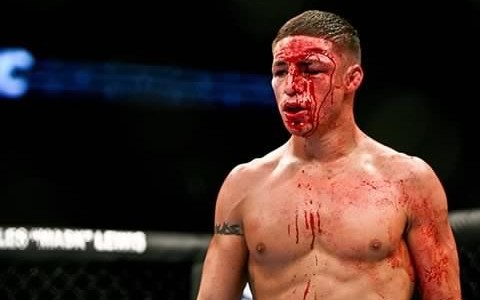
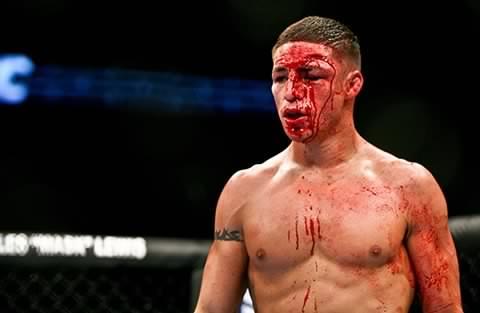
    Diego Sanchez has been a pro MMA fighter since 2002 and competing in the UFC since 2005.  

    That’s a long, long time to be a pro MMA fighter, especially with the type of fighter he is and the kinds of battles he’s been a part of.
    21262645

    He’s definitely put on more than a few entertaining fights that I’ve had the privilege of watching.

    He’s also always been lauded for being one of the most mentally tough fighters in the sport.

    However, I read a recent interview with him that doesn’t leave me confident in the path he’s choosing nor his confidence.

    First of all, he’s decided to drop weight classes, for a record fourth time, to compete in the 145 pound featherweight division.

    I have nothing against moving down to a lower weight class if it’s a better fit for your height/weight/body type.

    But what I really look out for is the reasoning behind the move and this is what he had to say was his:

    “That’s where the sport has gone right now.Everybody is cutting weight. I see 155-pounders who are big. These guys are big. Even just seeing Nate Diaz in real life, he’s a guy, he’s big. He looks 180-190, maybe even 200 pounds. So for me, I’m like, well, I’m tired of being the small guy. I want to be the big guy. I want to be the guy with more power. I want to be the guy with better wrestling.”

    I think it’s fine to want to be the big guy, but he doesn’t stop there.

    He also talks about how he wants to be the guy with more power and better wrestling and based on this, he’s assuming that dropping to 145 pounds is how to go about getting these qualities.

    Do you see the error in this line of thinking?

    That he is not in control of his relative skill in these areas?

    Unfortunately, this is a common mindset that a lot of fighters have – drop down in weight and instantly you’re going to be a beast and so far ahead of everyone else in every area.

    But this is NOT reality, nor is it where the sport is going right now.

    Just look at guys like Anthony Johnson who see the error in trying to cut too much and instead fight at a natural weight and then go and rack up dominating wins with devastating knockouts.

    These examples refute Sanchez’s generalization.

    And it doesn’t end there, folks.

    And I was like, wow, look at this guy, he’s holding a huge size advantage going into all of his fights. He has the reach. He has the leverage. It just made sense.”

    This just goes to show that Sanchez mentions size advantage, reach and leverage as the reasons why Conor McGregor is successful and fails to acknowledge strategy, skill, fitness and confidence, as important factors in his performance.

    Here’s why this is most telling about Sanchez’s mindset…

    The things that he’s choosing to see as the most important factors are largely those things that have the least leeway in terms of adaptability, while the things he fails to acknowledge are those most trainable.

    This is the ultimate error – focusing on the things you cannot change, while neglecting those you can.

    “God grant me the serenity to accept the things I cannot change, the courage to change the things I can, and the wisdom to know the difference.”

    I am not religious.

    But there’s a lot of wisdom in this simple prayer.

    Bless,

    Eric

    P.S. Thoughts or comments? Leave them below.
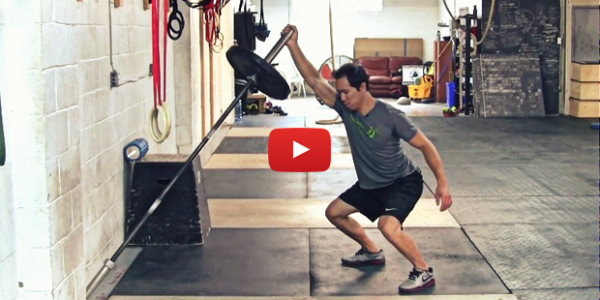
  • New Rotational Power Exercise (The LANDMINE Snatch)

    New Rotational Power Exercise (The LANDMINE Snatch)

    The transverse plane is the plane of POWER, if you’re an athlete.

    If you’re not an athlete, then transverse plane training will ensure you’re training your obliques for rotational power generation/stability and little-worked muscles in your hips and shoulders.

    This exercise gives you all of the above and more and it’s fun to pull off, too.

    What’s your favourite rotational exercise?

    Let me know in the Comments – I’d love to hear what you’re doing.

  • 3 Techniques for a Tight Groin [ASK ERIC]

    3 Techniques for a Tight Groin [ASK ERIC]

    The adductors, aka the groin, often gets tight because we rarely use the end range of motion of these muscles.

    So when you want to go and throw high kicks, they’re not used to it.

    In today’s episode of Ask Eric, I show you 3 techniques to use to loosen this tight area up.

    Submit your question HERE.

  • 2 Exercises to Fix Knock (Valgus) Knees [ASK ERIC]

    2 Exercises to Fix Knock (Valgus) Knees [ASK ERIC]

    If your knees go in towards each other when you Squat, Lunge, run or jump, then you’re going to run into knee pain sooner rather than later and any gains you make will be quickly erased.

    In this episode of Ask Eric, I show you a couple of exercises to fix this common problem.

    Got a question you’d like me to answer?

    Submit your question HERE.

  • DEFINED

    DEFINED

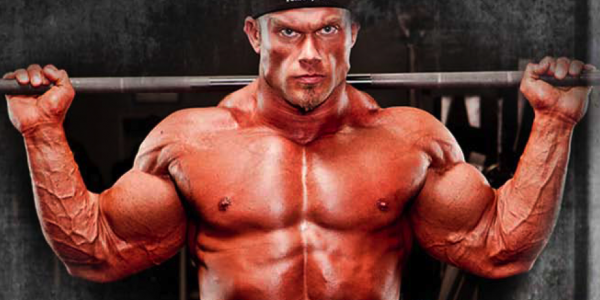
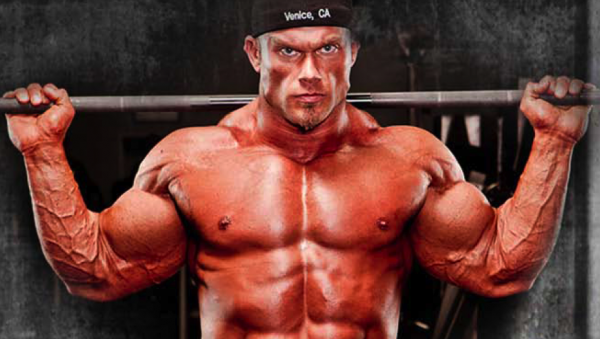
    Last week I had the privilege of attending the premiere screening of a new documentary called DEFINED, which follows a friend of mine, pro bodybuilder Ben Pakulski, as he prepares for the 2015 Arnold Classic.

    You could fit two of me inside of him lol!

    Obviously I’m not into the bodybuilding stuff but I have full respect for anyone at the highest levels of their chosen endeavour, especially Big Ben.

    Regardless of the use of steroids, bodybuilders still train their asses off and work as hard as athletes in any other sport.

    Defined is a short film and if you get a chance to watch it, I recommend you do.

    After the screening, the floor was opened up for some QnA and when I got the chance to ask a question, I first commented on how good he looked on stage in his red underwear, then asked him:

    “How do you come back from setbacks?”

    Many people have a (perceived) failure and then spend a lot of time and energy beating themselves up, either mentally (with negative thoughts), physically (through negative actions) or usually, both.

    Ben gave a great answer and outlined his process which gives you insight into how the elite become elite and continue to improve day-in, day-out.

    Essentially, he said that the outcome doesn’t really matter (he finished 8th in the Arnold), every workout is the real competition and if he’s successful there (in that he follows his plan and gives it his all), then he’s won.

    After the competition, he sits down and analyzes his whole training plan (the importance of having everything documented and tracked) and looks at where he could improve.

    Then, he revealed a very POWERFUL question that he asked himself after the Arnold…

    He said, “I asked myself, for the next competition, what do I have to do so that I can retire and be 100% happy with my performance and career?”

    This is a super powerful question and can only elicit a great plan.

    I really do look forward to seeing how he’s going to implement the answer to this.

    So that’s what’s up today.

    Focus on the PROCESS, not the OUTCOME.

    And make sure you ask yourself powerful questions.

    Tony Robbins says, “The quality of your life is directly related to the quality of questions you ask yourself.”

    Listen to these two giants and put it to use and nothing but good can come of it.

    I’d love to hear your thoughts or comments on this article, so you can leave them BELOW:

  • Neck Training for MMA [ASK ERIC]

    Neck Training for MMA [ASK ERIC]

    Having a strong neck can keep you from getting KO’d and also help prevent concussions.

    But the standard methods used to train the neck are not only wrong, but can DAMAGE your cervical spine.

    Find out what you should be doing and the full scoop in this episode of Ask Eric:

    Got a question you’d like me to answer?

    Submit your question HERE.

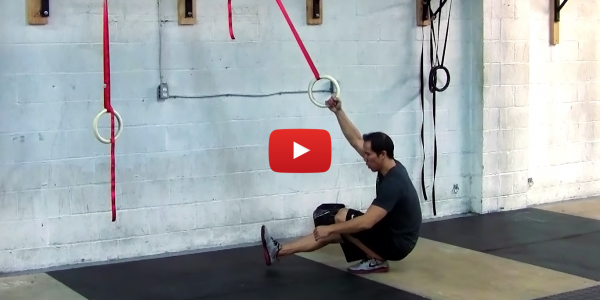
  • Unique Pistol Squat Variations

    Unique Pistol Squat Variations

    The Pistol Squat is a popular bodyweight exercise, but not everyone should be doing it.

    In this video, I tell you who should avoid this exercise (and what to do instead) as well as give you a couple of variations to help you build up to the full, unassisted Pistol Squat.

    Are there any exercises you’d like me to make a video about?

    Let me know in the Comments.