Author: Eric Wong

  • Try this exercise to improve your BALANCE

    Try this exercise to improve your BALANCE

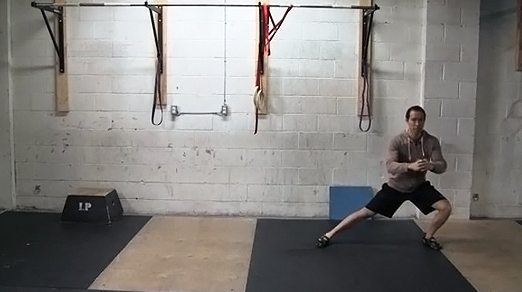
    The video I’m sharing with you today includes a couple of variations of the Lateral Lunge exercise, which you likely know.

    These variations will both improve your balance with the second variation a simple technique that you can use with any exercise to improve balance, proprioception and kinesthetic awareness.

    Those last 2 words may be foreign so here’s what they mean:

    Proprioception: how your brain knows the position your body is in

    Kinesthetic Awareness: how your brain knows where your body is in space

    Please let me know what you think after you give it a whirl.

  • Strained Groin? | MED for HFS [ASK ERIC]

    Strained Groin? | MED for HFS [ASK ERIC]

    In today’s QnA video, I answer the following questions:

    Any suggestions for strained inner thigh muscle?

    Strained it doing side stretch after doing kick boxing.

    – Patricia MacKinnon [00:20]

    =======================

    Hi Eric, I’ve been playing around with HFS for the last couple of months.

    I started doing a full month of HFS by the book and got great results.

    However, as a former athlete now turned desk jockey, I have plenty of areas that need additional corrective work (ankles, knees, rotator cuff & upper thoracic, etc) and between all of the corrective routines I am doing, its taking up a lot of my time.

    Is there a “minimum effective dose” for HFS?

    I was leaning towards trying to get 3 of the main routines in a week (2 kneeling/ 1 standing or vice versa) as well as 2x per week of core & ASMR.

    Thanks again, and I’m looking forward to Shoulder Flexibility Solution.

    – Jason Vaughan [04:24]

    If you’ve got a question about training for MMA or martial arts, nutrition, injuries or anything else that you’d like me to answer in a future QnA video, submit it here.

  • Simple 3 Step System to Achieve YOUR Goals

    Simple 3 Step System to Achieve YOUR Goals

    slackline

    With all of the info coming at you, it’s easy to get bogged down with info overload…

    An example is a reply to a follow-up email I got from John, a new Shoulder Flexibility Solution customer, who told me,

    “I haven’t started yet because I’ve gotten a bunch of new programs over the last couple of weeks and I don’t know what to do!”

    This is why I’ve recommended many times to stick to just 1 or 2 fitness newsletter lists, because any more than that and you’ll get overwhelmed (and might find your bank account a little lighter).

    Now, the system I’ve outlined below works best in the order presented.

    The thing is, many people skip steps or do them in a different order, which negatively impacts long-term results.

    But as you’ll see, there’s logic to this order, so check it out to see what’s up…

    That’s why Step 1 of my 3 Step System is as follows:

    JUST DO SOMETHING. IT DOESN’T MATTER WHAT, JUST TAKE SOME TYPE OF ACTION.

    This is the most important thing to do when you’re getting started.

    When I first started working out when I was 16, I did 3 exercises:

    1) Bench Press

    2) Bicep Curls

    3) Skull Crushers

    A horribly imbalanced program but guess what, I got some results and those results fueled my motivation to keep going and learn more.

    Now, I like to think my programs are a little more sophisticated. 😉

    Even if your actions produce no or negative results, at least now you know what DOESN’T work and can adjust accordingly.

    This brings us to Step 2:

    Once you’ve got some momentum from whatever actions you’ve taken, then do some self-directed research and learning and apply what you learn (and notice the results).

    When it comes to self-directed learning, the internet has given us opportunities to learn from the best like never before.

    Obviously this opens up issues like John experienced, but when you properly harness the opportunities available, you’ve got such powerful resources available.

    I recommend doing self-directed learning to begin with because a) it’s cheaper and b) doing so allows you to further build your action muscle.

    At this stage, many people jump from Step 1 to Step 3, which I believe sets them up to be life-long dependents, always depending on extrinsic sources of knowledge and motivation.

    So, what is Step 3?

    Here it is:

    Do the self-directed thing until you hit a plateau, then find a coach/mentor/trainer/teacher to work with.

    This is the time to step it up, because you’ve exhausted your ability to progress based on yourself.

    It’s also better because when you approach a coach having taken action already, if the coach is worth his salt, they’ll respect you more for it since they know you don’t need to be babysat and you’re going to do what they say.

    This can be in a small group setting or 1-on-1, but the insights you can get from an experienced and skilled coach once they learn about your history and how you tick can truly be invaluable.

    I’ve had many of both types of clients and now, I only take on the 2nd type of client because I’m not going to hold anybody’s hand.

    You can hire a rep counter at your local gym for that.

    In fact, I rarely do regular training sessions now, I simply do assessments and program design and enough sessions to ensure you’re doing things right, then it’s on your merry way.

    This is cheaper for the client, empowers the client and helps them be autonomous and is much more enjoyable for me.

    So there you have my Simple 3 Step System for Achieving YOUR Goals.

    Now I want to know if you haven’t achieved certain goals because you’ve missed any of these steps or you did them in the wrong order?

    Leave me your feedback below and let’s chat.

    Coach E

  • Sprints for Fat Loss | 1-Sided Low Back Pain [ASK ERIC]

    Sprints for Fat Loss | 1-Sided Low Back Pain [ASK ERIC]

    Alright so our weekly QnA segment is back and I’ve got a couple of questions that I answer today:

    Eric, sprints for fat loss. How often in a week, and what is a great program ?

    – Grant Vaka [00:53]

    ========

    Greetings Eric, I keep getting muscle spasms in my lower right side of my back.

    It originated in fire academy back in 2003 doing old school alternating toe touches.

    When it happens its very painful and I can’t move for a couple of weeks til it lets up.

    My body pulls to the right and I look like a walking boomerang for about 2 weeks, then sharp pains when I straighten up til it goes away.

    I’ve tried EVERY muscle relaxer, chiropractors, acupuncture, ibuprofen, PT, heat, cold and those electric shock muscle twitch things!

    – LaTeef Williams, Inglewood USA [04:59]

    If you’ve got a question about training for MMA or martial arts, nutrition, injuries or anything else that you’d like me to answer in a future QnA video, submit it here.

  • 1 Exercise to Assess and FIX Lateral Musculature

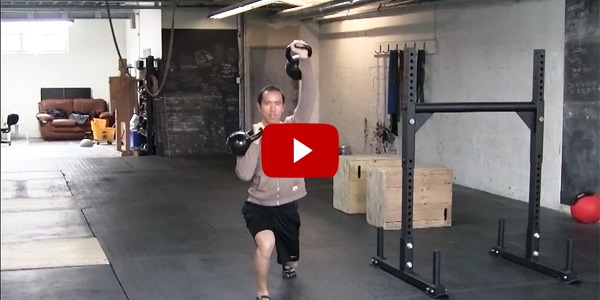
    1 Exercise to Assess and FIX Lateral Musculature

    Most exercises are assessments in and of themselves, when you know what to look for.

    Watching a Squat illuminates hip mobility, a Pushup shows upper body + core integration, and watching someone bend over to tie their shoes tells a lot about the health of their low back and knees.

    Today’s exercise shows both strength, stability and BALANCE in the lateral musculature of your body, including:

    [+] Glutes

    [+] Obliques

    [+] Shoulders, specifically for overhead stability

    Check it out and give it a shot:

    Whaddya think?

    Let me know in the Comments below:

  • Don’t make things HARDER and just FLOW

    Don’t make things HARDER and just FLOW

    Ahhhhh, it feels so good to breathe the fresh air again…

    Spring finally emerged from the long, drawn out winter here in Toronto and on the first sunny day I dusted my bike off, pumped up the tires and went out for a spin.

    It was sunny but crisp and the cool air felt great on my face as I cruised around, enjoying the freedom from the posture-destroyer that is the driver’s seat of my car.

    It was also a very windy day, unfortunately, due to another cold front blowing in that would give us one last taste of winter (and snow!) before we’re finally free from its icy grips.

    I rode around for maybe half an hour, maybe more, then made my way home, the final stretch being north on Jane Street, which is a long and gentle uphill perfect for getting a hard final sprint in.

    As I started the sprint, I felt the wind pick up directly opposing my progress.

    The wind didn’t relent and it kept pushing me back, trying to slow me down.

    Combined with the gradual uphill, any letting up would slow me to a crawl and on a fixie, it would be a slow and quad-burning ride.

    There’s something about riding a fixed gear bike, perhaps it’s the fact that the rider is in perfect rhythm with the bike, that allows insights to flash into my mind when I’m fully present and feeling the flow.

    On this ride, which under the conditions could’ve been the brutal struggle it’s been in the past, I realized the power of accepting what IS.

    Yes, the wind was blowing hard in my face and it is uphill the rest of the way.

    Yes, I wasn’t in the same riding-shape I normally am in.

    Yes, my butt is kinda uncomfortable because I’m wearing the wrong underwear and jeans.

    Those things are all true.

    NO MATTER.

    I can’t do anything about those things.

    What I can do though is focus on breathing and efficient pedalling.

    And that’s what I did.

    And I surprised myself (and a few passengers in cars I blew by) at just how fast I ripped up that hill home.

    I know for a fact that if I’d thought,

    “Oh man, this is gonna be tough,
    and I’m already kinda tired,”

    … the ride would’ve been a lot slower and less enjoyable.

    So the insight was that I realized that it’s NOT so much a summoning of superhuman feats of physical fitness.

    I definitely was in worse shape than before.

    It’s more about letting go of normal human thoughts that often occur automatically that make things harder than they have to be.

    Those thoughts often include fighting what is, or reacting to it.

    But, when you accept instead of fight or react, you can move on.

    And what you can move on to is to direct all of your energy and thoughts to the only things that matter, which in this case for me, was breathing and efficiently pedalling.

    When you do this, SUPERIOR results and performances can occur, almost like magic.

    I don’t have a formula or system for you to follow to make this happen.

    But I do know that it won’t happen without practice and faith that what I’m saying here is true.

    So keep practicing.

    Keep accepting what is.

    It’ll come.

    If you’re doing grueling interval work, stop thinking about how hard it is and how you didn’t eat the right meal exactly 1.5 hours before the workout.

    This is what IS.

    Just focus on the things that matter: breathing and running efficiently by letting go of any tension that isn’t contributing to your pace.

    If you’re in a fight, it doesn’t matter who’s standing across from you.

    This is what IS.

    What matters is having “NO-MIND” and breathing and trusting that your training will get you the result.

    Hey – it looks like there’s a commonality to all 3 scenarios I presented here…

    You might want to pay attention to this a little more.
  • Interview with Eric Cressey

    Interview with Eric Cressey

    Here’s an interview with one of the top strength coaches in the game who runs 2 successful gyms and works with dozens of MLB players and other pro athletes, Eric Cressey:

    eric-cressey


    Interview with Eric Cressey MP3

    (Right Click to Save As)

    Obviously, I’m a big fan of Eric Cressey’s work…

    He creates functional, balanced programs that take into consideration the movement patterns, proper periodization, corrective exercises and individual requirements.

    Plus, he walks the talk and stays fit year-round and can lift a ton of weight, being an accomplished powerlifter.

    The High Performance Handbook is a 4 phase, 16-week program that has all of these elements and more including different programs depending on your posture as well as 2, 3 and 4 day per week programs.

    The included video database is also monstrous.

    If you’re looking to train with one of the best coaches in the world, check out The High Performance Handbook now while it’s on sale:

    cressey-high-performance-handbook

    >>Click Here for The High Performance Handbook <<


  • Bench Dips | Exercises for SI Joint Instability | Get Strong Not Tight [ASK ERIC]

    Bench Dips | Exercises for SI Joint Instability | Get Strong Not Tight [ASK ERIC]

    In today’s QnA video, I answer the following questions:

    Triceps Bench Dip – Yay or Nay? (no name) [00:37]

    =================

    Hi Eric, I suffer with a hypermobile sacroiliac joint and periodically visit an osteopath to ‘click’ me back into place.

    It’s very painful and when the surrounding muscles tighten I really struggle to even walk!

    Can you give me any stabilisation exercises to help me?

    Thanks – Nic x Nicola, Carden-Nowell, Northwich UK [01:49]

    =================

    I follow 5/3/1 revolves around squat bench deads and shoulder press.

    I notice a decrease in shoulder range of motion as my bench goes up.

    So basically I want to know which exercises should I train for mma, which should I throw away.

    Keeping good posture is important to me, I have trouble squeezing my shoulder blades together at all, have very tight lats upper traps and chest.

    – Daniel Zwinger, Naugatuck, Connecticut, US [05:41]

    If you’ve got a question about training for MMA or martial arts, nutrition, injuries or anything else that you’d like me to answer in a future QnA video, submit it here.

  • DO NOT turn weaknesses into STRENGTHS

    DO NOT turn weaknesses into STRENGTHS

    I was at the boxing gym the other day watching a coach work with his pupil.

    They were working the pads and the boxer was firing off various combos…

    1-2-3-2…

    1-1-2-3…

    1-2-5-2…

    … and so on.

    When the buzzer went off signaling the end of the round, I overheard the coach mention to his athlete, “Your right hand is great but your jab isn’t very good, so we’ve gotta keep working it and turn it into your strength.”

    And it’s not the first time I’ve heard this before, nor will it be the last, as I feel it’s one of those sayings that gets passed down from generation to generation without a second thought.

    Well here’s the second thought:

    Trying to turn a weakness into a strength is an uphill battle and ultimately is an inefficient use of your time and energy.

    Here’s why:

    Let’s say you’re a gifted painter.

    The first time you picked up a paintbrush, you created something that surprised people when they heard that you were the one who created it.

    But you suck at math (you must not be Asian).

    So your parents, with the best of intentions, decide to enroll you in math lessons everyday so you don’t flunk out.

    Unfortunately, this means you have to give up your painting lessons.

    Now, not only will you be going against your natural talents, being a naturally more right-brained and creative individual, you’re forced to focus on something you suck at and don’t even enjoy.

    The result is frustration at your lack of performance, a blow to your self-confidence and possibly hating life.

    But what if you were encouraged
    to focus on your innate gifts?

    You’d be able to spend most of your time doing something you’re already great at and love, which can only result in joy and fulfillment, increased self-confidence and a greater love of life.

    And because you live in this left-brain dominant world, you’d get a little bit of extra math help, but only on those areas that are absolutely necessary so you don’t fail at life (I still have not used Calculus in the real world).

    So my advice to you is to instead, focus and nurture your STRENGTHS while making sure your weaknesses don’t hold you back.

    If you’ve got sick striking but you’re terrible on the ground, keep working your striking game but make sure nobody can get you down or at the very least, you’re the slickest mofo at getting back to your feet.

    If you’re strong as an ox, then get as strong as you can while making sure you don’t become so tight and inflexible you can’t scratch your own back.

    If you’re logical and solution-oriented, make sure you develop enough sensitivity to hear and accept emotion without trying to be someone you’re not (personal experience here).

    If you feel better when things move at a fast pace, don’t try to become a buddhist monk but do remember that slowing down and recharging allows you to keep your fast pace going.

    Develop your strengths and don’t allow
    your weaknesses to hinder you.

    We’ve all got things we’re naturally better at and gravitate towards so be the best you that you can be and part of that is making sure you’re not held back by those areas you’re not so good at or don’t enjoy.

    That’s my message to you today.

    Do with it what you will.

    PEACE~

    Eric

  • Dips + Shoulder Mobility | More Pecs when Pressing | Shoulder Flexibility and Punching Power [ASK ERIC]

    Dips + Shoulder Mobility | More Pecs when Pressing | Shoulder Flexibility and Punching Power [ASK ERIC]

    I’ve been reading through the 1200+ responses to the Shoulder Flexibility Survey I sent out and I’ve come across some great questions that I figured I’d answer in today’s QnA video, such as:

    Does shoulder tightness affect punching power? [01:04]

    Do exercises like Dips adversely affect shoulder mobility?  I seem to have problems with shoulder pain and headaches after doing them.  Thanks! [02:56]

    How can you limit the involvement of the shoulders in chest presses? [05:42]

    No names since the survey was anonymous. 😉

    Tons of actionable info in today’s video so make sure you check it out if you want healthy and balanced shoulders.

    Eric

    If you’ve got a question about training for MMA or martial arts, nutrition, injuries or anything else that you’d like me to answer in a future QnA video, submit it here.