Author: Eric Wong

  • 2 Keys to Combating New Baby BACK PAIN

    2 Keys to Combating New Baby BACK PAIN

    My little girl recently turned 5 months.

    It’s been amazing watching her learn and do new things and I’ve been trying to copy all of the new movements that I see her do.

    One of her latest moves is to bury her head when she’s on her tummy, lift her butt up, then push off and “crawl” one step. It’s pretty cute. 🙂

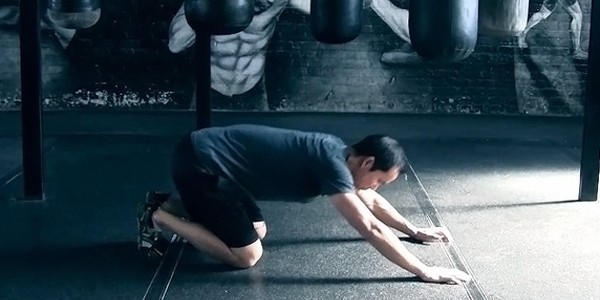
    This movement is kinda like the Push Plank exercise that I teach in this video, except with the exercise you don’t scrape your face across the ground.

    Give it a shot and if you want to do it like Livia, push off with one leg instead of two and alternate what leg you push off with each time or switch after 5 or 10 reps on one leg.

    She’s also been steadily putting on weight and its crazy how heavy she feels now compared to when she was born.

    With the added weight and all her extra squirming, it’s become increasingly more difficult to put her down to sleep in her crib at night and for naps, and I can see why many new parents complain about back pain, especially of the low back.

    A couple of months ago I started to feel some LBP myself and it started as just a moderate ache and soreness….

    Luckily, I was able to nip it in the bud and I’ve discovered that there are 2 keys to combating new baby back pain, which actually apply to back pain regardless of the source, so if you’ve got LBP, pay close attention:

    #1. Being diligent at maintaining neutral spine and hinging at the hips vs. flexing the spine.

    Because of the position of the crib, it’s easy to try and flex and bend over the rail when placing her down.

    But this will put excessive strain on the discs and ligaments in your spine, which will first result in tightness and soreness in the low back muscles because they’re trying to prevent you from flexing your spine.

    If you continue to move like this, the discs and/or ligaments may get damaged, which will then result in a sharper type of pain in the low back.

    So if you feel tight and sore, take it as a sign that you’ve got to start HINGING at the hips and keeping your lumbar spine in neutral.

    When you hinge at the hips, you’ll likely feel muscles from your hamstrings up to your rhomboids working and this is good because that means you’re taking some of the load off of your spine and the low back muscles.

    TIP: DO NOT stretch your low back muscles. While it may seem like a good idea or even provide some relief, you’re just causing further damage. See Point #2 on this page to learn why stretching your low back muscles is a bad idea.

    #2. Minimize the load on your low back by coming up with new movement strategies.

    It’s been a cold winter so far here in Toronto and as such, we’ve had to keep little Livia moisturized by lotioning her up 2-3 times a day.

    When we do this in the crib, the same problem applies in that we have to awkwardly bend over and reach to lube her up.

    This situation in particular was bothering me the most so instead of bending over, what I found helped was simply dropping to one knee.

    This position ensures my lumbar spine is in neutral and took all of the load off of my low back.

    Now, employing these 2 keys, my back is back to feeling as good as ever.

    Like I said before, these 2 keys apply to any situation that may put excess strain on your low back, so here are a few more examples to get illustrate this fact:

    [+] When grabbing groceries out of the trunk of your car, really focus on neutral spine and the hip hinge or you could even brace with one arm and basically do a 1-arm row to pull the bags out

    [+] If your job requires you to frequently pick things up off the ground, put some knee pads on and drop to one knee to get down instead of squatting or bending

    Just a couple of ideas to get your gears grinding in case your back pain isn’t caused by a new baby.

    Back pain is an all-too-common issue, so even if you don’t suffer from it now, keep these 2 keys in mind to prevent it from taking you out of action in the future.

    Hope this helps.

    Eric

    P.S. If you’re an athlete or if you train properly with intensity (you’re an athlete, too) and you’ve got LBP, this 4-phase, 16-week program will restore your core and retrain your movements so you can participate in your sport pain-free.

  • The SPLIT Snatch (Olympic lifting exercise variation)

    The SPLIT Snatch (Olympic lifting exercise variation)

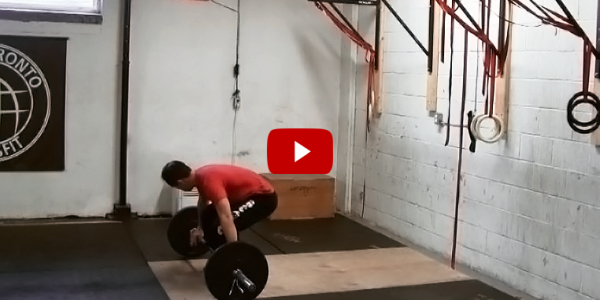
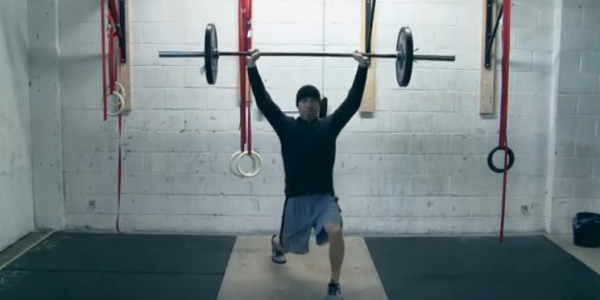
    This is a variation of the traditional Snatch exercise that I learned when I took a 2 day workshop on the Olympic lifts.

    It’s a great variation in general and also for those unable to due the traditional Squat Snatch because of mobility issues.

    Check it out:

    With this variation, the Snatch is now available to everyone.

    That sounded funny.

    If you don’t have the mobility to do the Squat Snatch, the key areas to hit are the hips and the shoulders, so get working on them so you can unlock this other great exercise and in the meantime, work the Split Snatch to develop your full body speed.

    And of course, if you’re not doing the Olympic lifts yet because you don’t know how, then check out my Olympic Lifting Mastery Course HERE.

  • Low Back Stretching | 1 Strength Session/Week | Fitness Trackers | [ASK ERIC]

    Low Back Stretching | 1 Strength Session/Week | Fitness Trackers | [ASK ERIC]

    In today’s QnA video, I answer the following questions:

    What are some good ways to stretch your lower back?

    – Jesse Davila, San Antonio USA 
    [00:29]

    If you have only time to do one strength training session a week (besides all the MMA skill and conditioning work), which exercises would you include when the focus is building general strength?

    – Alex Poppeck, Dachau Germany  [03:02]

    Hey Eric, With the slew of fitness trackers out there, push, omsignal, fitbit, etc… Have you tried any ? With yourself or clients ? Would you recomend any ?

    – Sergio Pichardo, Calgary Canada  [06:12]

    Have you trained any one with a heart condition? I love the martial arts. I am a blue belt in Karate and was just told i will not advance to purple or brown or even get a shodan. Is there any option or is my martial arts training done? Thanks for your time.

    –  Joe Wurzee, Ketchikan USA [09:00]

    If you’ve got a question about training for MMA or martial arts, nutrition, injuries or anything else that you’d like me to answer in a future QnA video, submit it here.

  • Eggs for High T | Piriformis Release | Glutes [ASK ERIC]

    Eggs for High T | Piriformis Release | Glutes [ASK ERIC]

    In today’s QnA video, I answer the following questions:

    I hate eggs but am trying your recommended T booster diet – is there a substitute?

    – Garry Mcdonell, Canada  [mm:ss]

    I do have a piriformis muscle issue. I was told the exercises you do for that depends on whether the muscle is shortened or lengthened.

    Do you have any help?

    – Joanne Attwood, Canada  [mm:ss]

    I went 3 weeks not missing a day but week 4 fell on the holidays and so I’ve slacked off a bit.

    But up to this point I have seen tremendous improvement in my hips.

    Since I’ve missed a week do you recommend starting from week 1 again or just pick up where I left off?

    – Aaron Cropper, US [mm:ss]

    What exercises have you found to best strengthen and add flexibility to the gluteal muscles?

    I am a physician and I appreciate your explanation based on muscle physiology.

    – Ronald Wong, US [mm:ss]

    When I sit, I feel real tight in the hip flexor / aDductor area.

    I can stand to take the pressure off, but I was curious if you have input on how to stretch/strengthen this specific area as it gets tight almost immediately when I sit.

    If there is an area of your HFS program I should focus on to help with this, please point me in the right direction.

    – Fletcher Wilson [mm:ss]

    If you’ve got a question about training for MMA or martial arts, nutrition, injuries or anything else that you’d like me to answer in a future QnA video, submit it here.

  • TUBTHUMPING aka on COMING BACK

    TUBTHUMPING aka on COMING BACK

    “I get knocked down. But I get up again. You’re never gonna keep me down.”

    This is a line from the (annoying) hit song from many years ago called Tubthumping by Chumbawamba.

    It popped into my head after I read an email that landed in my Inbox all the way from Australia from Steve Taliss, who outlined his busy schedule and asked me if I’ve, “… noticed a shift in time away from a routine and commitment to exercise?”

    He also asked me what techniques I use to drive myself to exercise and if there’s anything I can provide to help motivate those who have fallen off to get back on track.

    Do you find yourself wishing for an extra hour or two in the day to get your exercise (or anything else) in?

    I sat and pondered these questions over a hot and steamy Americano for a while because I feel this is an obstacle that a lot of people can relate to.

    The initial thoughts that came to mind were along the lines of the lyrics I wrote at the start of this email, which in my opinion at the time, were superficial and none-too-helpful.

    It’s the same sh#t you see on Facebook all the time – simple one-liners and motivational quotes that make you feel good and go, “Yeah! That’s right!”

    So that’s what I wanted to avoid when addressing the topic of “I don’t have enough time to exercise. Help!”

    After 15 or 20 minutes of sipping and pondering, some thoughts and concepts started to bubble up that seemed more powerful and that they could actually help someone restart a dormant exercise routine and more importantly, be consistent with it.

    One such thought that stuck out that has made a huge difference in my life is tying exercise to my identity and core values.

    WALKING THE TALK is one of my core values and as such, I strive to always be in great shape, continually strive for higher performance and only recommend and talk about things I truly believe in and use myself.

    Obviously, as an S&C Coach, it’s easy to associate exercise with my core value of walking the talk.

    But think for a moment about your own identity and core values.

    For example, are you a Dad?

    If so, what kind of message do you want to communicate to your kids about time, exercise and priorities?

    A lot of men (myself included) tend to place such a high priority on career and money by default that the other important aspects (family, relationships, health) of life can fall off the radar.

    And if this is your conscious choice, then it’s all good, as long as you communicate as much to those who deserve to know.

    But if this is you (Steve?), ask yourself if it is just your default and if your time and energy are going exactly where you want?

    If they are, stay the course.

    If not, if you want different results, you have to change things up.

    Because you can’t just keep adding things into your schedule. This is the real work.

    And it’s another mistake I’ve made in my life – thinking that I can keep adding and adding without taking anything away.

    Unfortunately, time and energy are both limited resources, so this strategy is bound to fail and something will crack, with your health/sanity at the front of that list.

    So think about your core values, what’s important to you and who you must be in life to live a life you’re proud of.

    This isn’t something you can get from a motivational quote, but will require some quiet time of reflection, preferably when you’ve got energy and are in a positive state of mind.

    And as I continued to ponder, I actually came back to the thoughts I’d started with, including the line from Tubthumping…

    In doing so, I feel in that short time I experienced what Bruce Lee described when he said:


    “Before I studied the art, a punch to me was just like a punch, a kick just like a kick. After I learned the art, a punch was no longer a punch, a kick no longer a kick. Now that I’ve understood the art, a punch is just like a punch, a kick just like a kick. The height of cultivation is really nothing special. It is merely simplicity; the ability to express the utmost with the minimum.”

    Because one of the greatest mistakes we make is when we fall down, we stay down.

    But results don’t happen that way.

    You can’t expect perfection.

    Instead, results follow the same path as driving straight from A to B – you’ve got to continually make minor adjustments on the wheel to stay the course and you can’t just lock the wheel in one place because if you do, you’ll end up in a ditch.

    You feeling me?

    I hope so.

    Either way, that was a damn good Americano.

    Eric

  • 1 Tip to Quickly Add 10 Pounds to Your Clean and Jerk

    1 Tip to Quickly Add 10 Pounds to Your Clean and Jerk

    True power comes from your ability to quickly go from rest to max force and back and forth and the Olympic Lifts are amazing at training your ability to execute this important skill.

    You don’t need to lift a lot of weight to benefit from the Olympic lifts, but you do need to perform them properly, or you won’t get the full benefits.

    Watch the video for a tip I recently implemented that helped me add 10 pounds to my Clean and Jerk.

    Before doing this, I’d get stuck on the Jerk above 165 lbs, but after I added this technique, I hit 175 lbs no problem.

    That’s the power of proper technique – you become more efficient and can do more with the same amount of energy or do the same amount with less energy.

    The Olympic Lifts are all about efficiency, which is why at the elite levels, athletes are lifting double their bodyweight (and more)  in both the Snatch and Clean and Jerk.

    I suggest that everyone training for performance learn the Olympic Lifts and continue to refine their technique.

    So whether you want to start them or improve what you’re already doing, check out this article where I give you 3 Tips to Mastering the Olympic Lifts.

  • Speed | Lose Fat or Build Muscle | ITB Tightness [ASK ERIC]

    Speed | Lose Fat or Build Muscle | ITB Tightness [ASK ERIC]

    Got a question for me? Submit it at http://EricWongMMA.com/ask-eric

    In this video, I answer the following questions:

    How can I train for explosive speed for 1 and done type point fighting? – John Monk, Canada [01:09]

    For the 3DF Hip Flexor sequence, is there an alternative for grabbing the ankle of the back foot? – Renee [05:41]

    Is it better to lose fat first before muscle gain, or is it better to just try to gain muscle mass than lose fat? – Robert Tobin [07:41]

    My IT band is very tight. How can I release it? – Mike, New York, USA [08:23]

    If you’ve got a question about training for MMA or martial arts, nutrition, injuries or anything else that you’d like me to answer in a future QnA video, submit it here.

    If you’ve got a question about training for MMA or martial arts, nutrition, injuries or anything else that you’d like me to answer in a future QnA video, submit it here.


  • How to Boost Your CONFIDENCE

    How to Boost Your CONFIDENCE

    con-fi-dence: belief in oneself and one’s powers or abilities

    Grade 9 was not a confident year for me…

    It was my first year at a new high school where it seemed like everyone knew everyone else because I didn’t come from one of the typical feeder schools and because I skipped Grade 7 and thus didn’t have as many friends from my old elementary school.

    And being 1 of about 5 Chinese kids in a school of 1,000+ didn’t help, either, because, you know, kids can be idiots (and they were).

    Grade 10 got better, because I made some new friends but I remember one day, I was walking beside a mirror and I caught a glimpse of myself and noticed how bad my posture was.

    My shoulders were slouched forward, my head was down as if I was looking at my feet and I just looked weak.

    I didn’t like what I saw, but just kept walking…

    Later that year, my brother introduced me to weight training.

    I was playing competitive hockey and needed to get bigger and stronger, as I was getting thrown around on the ice.

    So, my brother Ty gave me a bench press and barbell set for Christmas and helped me start training.

    I didn’t know much but jumped into it with enthusiasm.

    My workout consisted of Bench Press, Bicep Curls and Skull Crushers (lol) and I performed this workout 3 days a week.

    As most beginners to weight training, I quickly put on some size and gained strength and it was even noticed by a couple of girls at school.

    This felt awesome.

    But the biggest benefit I got was the boost in confidence I got, which wasn’t necessarily from the increased attention, but more from the fact that I committed to something, saw it through, then experienced results.

    This is where TRUE confidence comes from.

    Sure, you can repeat affirmations and say “I’m confident! I’m confident!” all day, but if you don’t actually do anything to better yourself, you’re simply lying to yourself.

    Confidence comes from capability and capability comes from learning + application.

    This is the PROCESS to confidence.

    Once you have the capability, then it’s time to add things like affirmations, visualization and mental tricks (which we’ll discuss in a future article), otherwise they have nothing behind them and your unconscious will know you’re full of it.

    So if you want to be confident, develop new capabilities.

    The best part is that it doesn’t matter what area of life they’re in, whether it’s fitness, business or love.

    Because by experiencing this PROCESS at work, you’ll discover that it applies to anything you want, which instantly boost your confidence.

    Did reading this boost your confidence?

    I hope so, but if it didn’t, don’t worry, just pick some capability you want to gain, follow the process and you’ll get it. I know you will.

    Eric

  • 34 Things I Learned in 2014

    34 years ago, I was born.

    baby-eric

    I used to think that giving birth was no big deal, since we as a species (and all other species) have been doing it since forever.

    But since the birth of my baby girl Livia, that mindset has changed.

    Even though it’s been done trillions of times over since the beginning of time, giving birth is still a miracle.

    How else could you describe the coming together of my simple sperm and wife’s ovum to eventually grow into this:

    livia

    Definitely a resemblance, no?

    So that’s the #1 thing I learned in 2014 and that knowledge is such a blessing because now I have a different perspective including a greater appreciation for my fellow man and every other being on this planet because of it.

    But wait – there’s more!

    33 more, to be exact.

    I’ve always wanted to do one of these lists, so why not today?

    Heck, it’s my birthday, I can do what I want, so here we go: the top 34 things in no particular order that I learned in 2014 in fitness, MMA, business, life and anything else that comes to mind as I’m letting these thoughts flow from my brain.

    1. See above.

    2. Mobility is the most under-appreciated component of fitness and when focused on with a proper plan, can result in dramatic gains in every aspect of athletic performance.

    The feedback I’ve received from followers of my Hip Flexibility Solution carved this out in stone as the results shared with me inclues increased strength, greater stamina, more speed and power, decreased pain and improvements in many different sport techniques such as throwing kicks, swinging a golf club, playing hockey and more.

    3. You know the saying that we only use a small percentage of our brains?

    Well, it’s bunk, since the brain is used in so many ways UNCONSCIOUSLY.

    However, I assert that we only use a small percentage of our muscles properly and when we do learn proper activation and sequencing of muscles and movement patterns, a new level of performance awaits.

    I learned this as I had a lesson with a skating coach and learned a new skating technique, which was totally different than my regular technique and required me to learn to use muscles previously dormant.

    Once I got the muscles activated, I can skate a lot faster with a lot less effort.

    4. In terms of your physique, heavy strength training is like putting money in the bank for a rainy day in that if you can’t train, you don’t all of a sudden get fat, whereas conditioning and hypertrophy training helps keep your interest rates low (low body fat %) but aren’t as permanent.

    The reason why is because heavy strength training acts more on your nervous system, and neural pathways built over time do not disappear quickly if you suddenly stop exercising, which ensures you keep your muscle or it comes back quick.

    neuromuscular

    On the other hand, conditioning and hypertrophy training act more on the cellular system, which is more dynamic and requires more upkeep for maintenance and degrades quickly when the training stimulus is removed.

    5. While you can do it all yourself, it’ll be a lot more work with more frustration and a there is a much lower ceiling on your results.

    I lived by the “if you want it done right, you’ve gotta do it yourself” mantra for a long time but since letting go of this belief (which is still a work in progress), have found great people to work with who have helped me build my business bigger and made it more fun to boot.

    Big shout out to my jack-of-all-trades Madalina for taking care of all of my customers and attacking every task and problem with optimism and skill, Gjorgji for chopping my videos up and making them look professional, Irshad and Nikola for making sure my sites are running smoothly and Neda for whipping up cool graphics whenever I need them done.

    Also my Kyoudai MVDB and Josh for helping out – I’ll have more responsibilities coming your way soon. 😉

    6. Getting organized is not just something to do because it’s good to be organized…

    It’s good to do because without it, you’re stopping or at least slowing your progress towards your dreams.

    Livia needs our time and attention and just adding these demands into our lives on top of what’s already there was not possible.

    So, we were left with 3 options:

    a) Take care of the baby and significantly sacrifice most other areas of our lives
    b) Neglect the baby and maintain the status quo
    c) Come up with solutions to take care of the important things in our lives AND Livia

    We like the last option best, so we’ve had to re-organize ourselves, spend more time planning and ensure we execute on our plans.

    One example – following a meal plan.

    Before, we’d think of what to eat the day of or at most the night before and get everything we needed the next day.

    Now, we’ve got the entire week scheduled and all groceries are purchased as far in advance as possible and we’re also ensuring that leftovers are there for the next day’s lunch.

    Another example is shopping – now, we have one shopping day a week where we sit down, figure out what we need then go buy everything at once or order it online.

    We’ve saved a ton of time doing this and now, we’re able to take care of the baby and the other important areas of our lives.

    Of course, some things we’ve had to let go, but that’s just part of the transition from being a childless couple to becoming parents, but things like working out, eating well, reading, etc should be a part of EVERYONE’s lives, not just people without kids.

    7. Use an anchor to get in the “zone”.

    I recently took a workshop with a business coach and one of the tips he shared that I thought was awesome was the use of an anchor to get in the zone.

    For example, you might want to be a loving husband and father in your normal life, but when you step into the MMA gym, you know that same guy won’t get the results you’re after, so you want to invoke “warrior” mode.

    A great way to do this is have some anchor, which could be a piece of clothing, ritual or routine that you attach warrior mode to.

    For me and business, it’s the watch my wife gave me as a wedding gift.

    I rarely wear it so now, when I put it on, I know it’s time to focus on business and forget all of the things trying to distract me.

    And when I’m done working for the day, I take the watch off and can go into husband, daddy, friend, or workout mode – whatever is relevant at the time. [Can you think of something/somewhere to use this? Let me know in the Comments…]

    8. Take time to explore your body.

    Not just in movement, but also how it feels.

    Squeeze different muscles, poke around, see how things feel.

    Do movements you’ve never done before and don’t judge or criticize, just explore what you’ve got and you might surprise yourself with what you find.

    9. Don’t believe anything until you’ve put it to the test in your own life.

    The more un-tested beliefs we carry around as truth the more confusing our lives become and the less confident we are.

    For example, I heard a couple of trainers tout their mobility method as the greatest thing since sliced (sprouted whole grain sourdough) bread.

    The story was compelling but I decided to put it to the ultimate test – I dropped all other mobility work in favour of this method.

    After 1 month of doing this, I found I was tighter in my hips than before and just felt ‘OK’.

    So I’m back to my regular routine of activation, mobility, foam rolling, etc (HFS style work).

    But if I didn’t put it to the test, because they were so convincing, the whole time it’d be in the back of my mind thinking that I’m missing out on something great and wasting my time with what I’m doing, which would erode the belief I have in my ways and take up valuable space in my brain.

    This brings us to the next point…

    10. Aim to make the gap between learning and application as small as possible.

    The more you learn without actually applying, the more data you have to confuse you and take up brain space without tangible, concrete knowledge.

    Learning is all in your head, knowledge occurs when you take your learning and apply it in the world and get feedback from your actions.

    Here’s how you can apply this right now – unsubscribe from all but 1 or 2 fitness email lists.

    Pick the 1 or 2 coaches you think provide the most value and listen and apply their advice.

    Feel free to unsubscribe from mine if you want, no hard feelings – I’m in your corner and if you do, I know you’re taking steps in the right direction to achieve your goals.

    11. Train the opposite of what you normally train once in a while.

    If you box conventional, train southpaw.

    If you always brush your teeth with your right hand, use your left.

    bruce

    These little things will ensure one side of your brain and body don’t get overdeveloped compared to the other and will help improve general communication between the 2 sides across something called the corpus callosum, which is the highway that connects the 2 sides of your brain.

    More efficient communication between the 2 sides means improved coordination of your muscles, which will help in many areas in your sport and life.

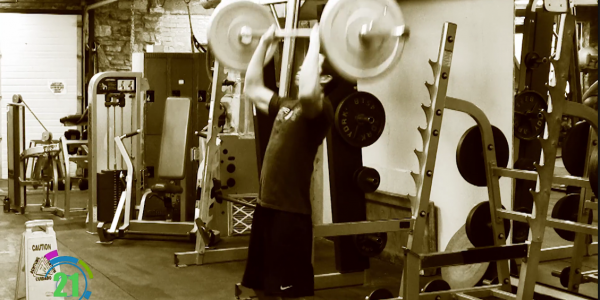
    12. If you sit a lot, do 5-10 reps of this every hour:

    You’ll feel SO much better after.

    If you can’t do it every hour, at least do it twice: before lunch and before you go home for the day.

    It can be your anchor to getting OUT of work mode.

    13. Measure twice, cut once.

    I was installing quarter rounds on the main floor of my house and was getting frustrated, so I started cutting the pieces really quickly and kind of guessed the angle instead of bringing the piece back to the spot it would be installed and really figuring it out and marking it down.

    This resulted in a lot of loud swearing and a throbbing vein in my forehead.

    I’ve jumped into business partnerships without taking the time to properly vet them before and have wasted a lot of time because of it.

    I’ve had numerous loaves of bread end up as dense, hard, crusty blobs because I rushed.

    Now, I take a deep breath and consciously go about my day slower and more deliberate and find I’m actually faster and definitely more effective with a hell of a lot less frustration (and that vein hasn’t been so throbby).

    14. Commit to completing ONE important thing a day to move you towards your goals and leave the rest as icing on the cake.

    Far too often, my daily to-do-list looks like a grocery list for a family of 5.

    At the end, I may have completed 1 or 2 things and been frustrated that I hadn’t done more.

    Now, I ensure that I get ONE big thing done that I’ll feel good about that will get me to my goals and leave the rest to do if I feel like it.

    15. Want to know a quick way to judge the  power of your punches or kicks? 

    You can do this with me right now if you’ve got 30 seconds:

    1. Get in your fight stance, close your eyes and take 3 deep breaths.
    2. Now, pretend there’s a solid concrete pillar in front of you.
    3. Finally, pretend that you’re throwing your strike against it.

    The amount of cringing and/or hesitation you get from imagining your fist, foot or shin striking the pillar is directly correlated to the power of your strike.

    Your unconscious mind knows exactly what will cause your body harm and will this is a way to bring the unconscious up.

    Try it for various strikes and you’ll see which are more powerful.

    16. If you’ve had an injury that caused a movement compensation, once the tissues are healed, you must REPROGRAM yourself.

    Otherwise, you might actually experience pain without any tissue problems, because it’s conditioned into your neuromuscular system (like Pavlov’s dogs – where the bell=saliva, or in this case, a certain movement=pain).

    To do this, determine what movements you compensate in and perform them deliberately, slowly and while breathing deeply over and over the way they should be performed.

    I had a buggered left knee for a bit and on the fifth stair before the landing I always hesitated and felt a bit of pain in the knee.

    This continued for a few weeks after I knew I was healed.

    So I went up and down the stairs over and over and counted the 5 stairs each step, so my brain knew what was coming and I broke this pain-cycle within 10 minutes of up and down and haven’t felt it since.

    17. If you spar on a regular basis, for some of the sessions, pretend you’re someone else.

    It could be Mike Tyson.

    Or Jon Jones.

    Or Bruce Lee.

    Or Muhammad Ali.

    To make this even more powerful, watch a lot of video of whoever you want to be in the week leading up to the sparring so that their style embeds itself into your unconscious.

    You might just find you quickly teach yourself some new, effective techniques and ways of fighting.

    Plus, it’s a heck of a lot of fun to float like a butterfly and sting like Bruce Lee.

    18. Asking for help is a skill that you must learn and apply.

    Like I mentioned in point 5, it’s not as much fun or effective to do it all by yourself.

    The other reason why this has been an issue for me is because I’ve never been good at asking for help.

    Which is why right now, I’m asking YOU for help.

    You see, I wanted to write 34 points here because it’s my 34th birthday.

    But I don’t feel like writing anymore and want to go hang out with my daughter.

    So I need YOU to help me complete this list.

    So, I want to hear just ONE thing you learned in 2014 that you can share to help me complete this list.

    Before posting yours, read through the comments below and use the next # on the list until we get to 34.

    We might get a few duplicates since other people may be writing their comment at the same time, but that’s cool, that way we’ll just get more sharing. 🙂

    Thanks in advance for helping me finish this list and I look forward to reading what you learned in 2014.

    – E
  • Best cardio for FAT LOSS?

    Best cardio for FAT LOSS?

    I was skimming through the never-ending pile of emails in my Inbox and after the excitement of reading a status update on my new project from my manufacturer (sample is READY) I saw this question from Jeremy in response to the last few emails I’ve sent regarding conditioning and cardio:

    “Eric, I’m not a fighter but I like training like one. My main goal is fat loss. What’s the best type of cardio workout for fat loss?”

    If you pose this question to a dozen different experts, you’ll get a dozen different responses…

    And I think my response is different than ALL those different responses.

    [Tell me if you agree after reading it, ok?]

    First, let’s not talk nutrition, even though it’s a more powerful lever when it comes to losing fat, so we can focus our conversation.

    Now, fat loss is not all about training in the “fat-burning zone” or the “afterburn” effect (EPOC)…

    It’s not about “tricking” your body into fat burning mode or “hacking” your way to a faster metabolism.

    It IS about 2 things:

    Consistency + Adaptability

    Consistency does not get the attention it deserves.

    It’s like the good looking tom boy in high school who played sports and had a great sense of humour but couldn’t get a date to the prom.

    Without consistency, you have nothing.

    You have WASTED time and energy.

    And it’s not just about the action of making a training schedule.

    That’s just the surface…

    It’s more about the things that will help you stick to that schedule.

    Things like:

    • Training with proper technique
    • Choosing the right intensity and volume so you don’t get overtrained or injured
    • Taking care of yourself by sleeping and eating well so your body has the capacity it needs to change itself into its new leaner form
    • Etc…

    Got it?

    Cool – NEXT:

    Adaptability is another bastard child forgotten by the hucksters selling the latest tricks and magic pills.

    They say, “Oh, just do 4 minutes of this ancient Japanese doctors magic interval formula and you’ll have a body that’s 3.4% fat… in just 7 days!”

    Sure…

    The thing is, no matter how effective the protocol is at the beginning, your body will ALWAYS adapt to it so it becomes less effective over time.

    That’s just what your body does.

    To combat this, you can do 2 things (I recommend you do them both):

    • Maintain technique while continually pushing the intensity level at which you execute the workout
    • Progress the workout so it’s harder in some way via more work (more reps, sets, exercises) and/or less rest

    This is how you systematically progress a workout to the point where it’s returns diminish, which takes around 4 weeks, before changing the workout up completely.

    Here’s an example of a progression plan for a workout from CAGE Cardio Bodyweight:

    Pay attention to the progression of sets and rest periods – this forces your body to continue to adapt, which will keep conditioning AND fat loss moving in the right direction.

    Does this make sense?

    If it does, reply and just say “yeah buddy” just so I know I communicated my message clearly, because it’s important you get this.

    Best thing about Consistency and Adaptability is that they’re fundamental PRINCIPLES, not “tricks” or “hacks” and they can be applied to improve ALL the training you do.

    “Give a man a fish, feed him for a day. Teach a man to fish, feed him for life.”

    Principles are how you learn how to fish and is what I want for you.

    But if you are a bit hungry right now, here’s the fish on a silver platter that will help you do exactly what I’ve taught you here as if you were one of my athletes.