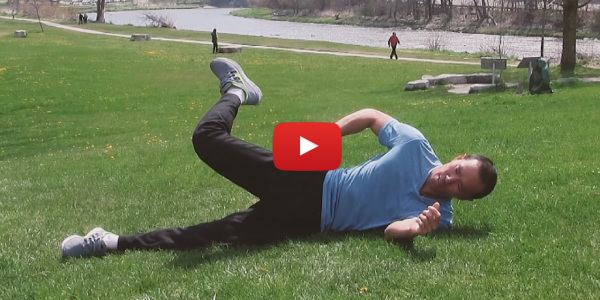
This simple exercise is designed to strengthen your internal hip rotators, and will help to balance your internal vs external hip rotators since if we’re doing squats, deadlifts and lunges, our external rotators are likely stronger.
Watch the video once through, then watch it again and do the exercise along with me.
After that, I suggest you do it daily for at least 1 week before dropping down to a 3 times/week or so schedule.
Hold for 10-30 seconds without excessive co-contraction and aim for 2-3 minutes of total work every time you do it and pay attention because you’ll experience some benefits, the specifics of which depend on your particular make-up and training history.
I know it doesn’t look like much but statics are never very sexy, however, they’re so effective for activation and building strength at end ROM, we should all be doing them more often.
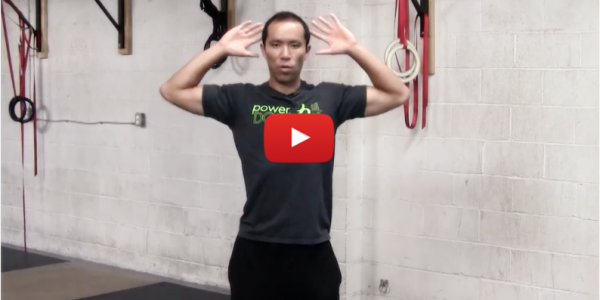
When you think of a rotator cuff exercise, you probably picture some type of external rotation move.
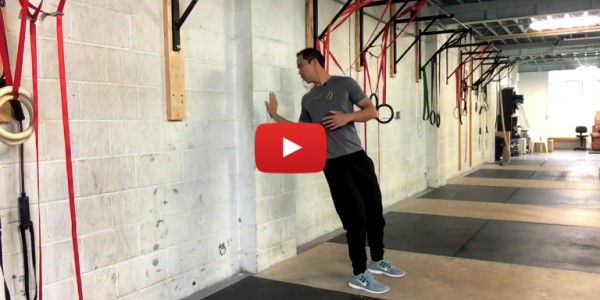
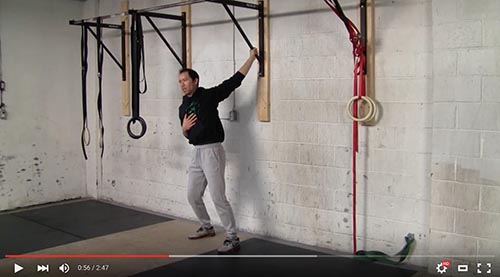
While these exercises are great and should be used, I’ve been playing with and have had success using a new type of exercise that I call the “Twisting Wall Press”.
This one is going to be a staple in my healthy shoulders diet for myself and those I work with.
It’s different than your typical rotator cuff exercises because it’s a closed chain vs. an open chain movement (I explain more about this and the benefits in the vid).
The rotator cuff stabilizes your shoulder girdle and ensures the scapula (shoulder blade) and humerus (upper arm bone) move in concert with each other and this exercise trains this ability very well.
Watch the vid and try it out with me then let me know what you think or if you’ve got any questions.
I’d definitely add this exercise in either at the start or end – it’s gentle and non-fatiguing but will help you activate the rotator cuff and scapular stabilizer muscles for proper movement patterning as part of your warmup, or ensure proper patterning/posture post-workout.
There are a few key components I include in every warmup:
Heart rate elevation
Dynamic mobility
Muscle activation
Muscle de-activation
I’ll also include CNS activation drills if I’m working Power or Max Strength.
In today’s video, I share another flow I’ve been using as part of my warmups lately:
The one exercise you may not be familiar with is the Active Groiner, so make sure you watch the video that I posted a few weeks ago for the important technique cues.
This drill requires flexibility, coordination, balance and strength – so it hits many different Biomotor Abilities.
It also trains the Push, Twist and Lunge movement patterns in multiple planes of motion, making it one bad ass exercise.
Give it a shot:
The Cossack portion of this drill definitely requires good adductor flexibility and strength.
If you haven’t yet gotten the 3 Freaky Flexibility Techniques PDF, definitely grab it below because one of the exercises will help your Cossack tremendously if you have problems with it.
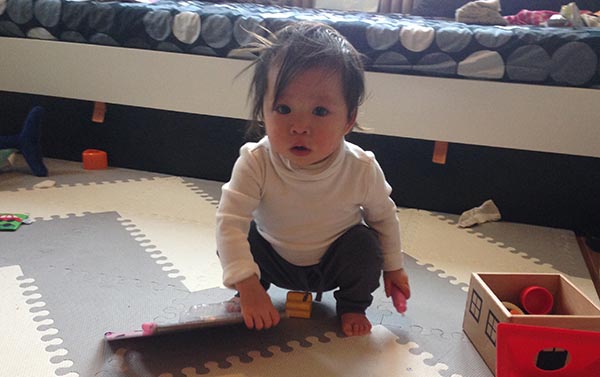
Getting down into the bottom range of motion in the Squat is a fundamental human movement pattern that we’ve lost because of all the sitting we do.
We don’t need to think anymore about it.
But is getting down deep into the Squat an absolute necessity?
You could argue against it because in modern western society, we really don’t have to get into this position all the time.
For some sports, yes, but just normal day-to-day activities, we can avoid it completely.
The thing is doing so definitely helps to maintain full flexibility in the hips, knees and ankles, it helps your digestive system do it’s thing because in this position, your guts press up against each other at the same time your anus is opened up (weird, but reality and come on, we’re all adults here).
Plus, I want my body to be able to do everything it was designed to do.
I don’t want to be robbed of my natural movement ability.
And getting down there is fun, especially when you’ve got people down there to play with.
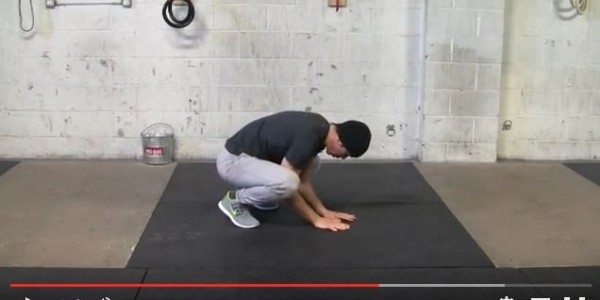
Today’s exercise I call the Deep Squat Prayer Pushup and it will help you get further down and more comfortable when you’re down there.
A good test of this is to get down into the deep Squat and feel what it’s like to hang out down there for a minute or two, then stand and walk around for a minute, do this exercise, then stay down in that deep Squat position to compare.
If you do this test, let me know what it feels like in the Comments.
As always with the exercises I share with you, TECHNIQUE is critical, so pay close attention to the pointers in the video and follow-along and watch a few times.
[thrive_2step id=’20388′]
[/thrive_2step]
It’s also a great idea to bookmark/save/share/whatever you have to do to ensure you can come back to this video to further refine your form.
So try it out and let me know how it feels in the Comments and if you’ve got any favourite Squat mobility exercises.
We’re gonna get to the exercise in a sec but first, I have to share something I’ve been feeling with you…
I’ve been inspired at the movement that’s taking place in the world of fitness because I feel like we’re finally getting away from the superficial as the ultimate goal.
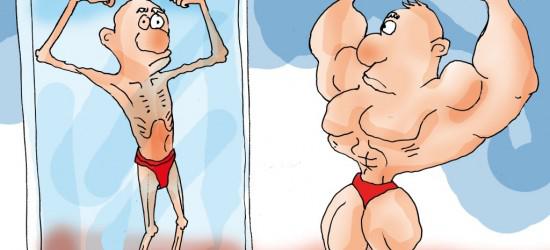
While avoiding obesity and being lean and muscular is definitely important and a reflection of healthy choices, for the longest time, these ideals dominated fitness to the point where anorexia and megarexia are common occurrences in today’s society.
Well this is all changing, my friend, and in my not so humble opinion it’s about damn time.
Since Day 1, I’ve been more interested in how we move and perform than how we look and I’ve also been teaching how the continued elevation of your ability to move, whether it’s through flexibility, mobility, strength, speed, power, endurance or what have you will ultimately give you a body that looks as good as it performs, as long as you follow just a few key nutrition principles.
When bodybuilding and aerobics were the main forms of exercise, once the physique was attained, there were only 2 choices an individual had:
Continue to push the envelope with respect to physique, towards anorexia or megarexia.
Stop your evolution and just maintain doing the same old, same old, which typically results in boredom and alternating between having your ideal physique and having to work towards your ideal physique.
But the irony is that when physique becomes secondary to performance and movement ability, it actually becomes easier to maintain.
The reason why is two-fold, one, because continually elevating your fitness will force your body to continually adapt in ways that are beneficial to aesthetics and two, because with respect to performance, the sky really is the limit and there’s no way you’re going to be elite in every BMA.
That’s why it’s so fun – because there’s always a new challenge.
If you’re not interested in being challenged you’re basically saying you want the easy way out.
But since you’re here on powerDOJO.com, I know you’re not the type to look for the quick fix – you realize that work is required and you’re more than willing to put it in.
Now, if your goal is just to be fit and healthy…
The key is to be a GENERALIST vs. a SPECIALIST.
A generalist works towards building:
Flexibility and Mobility
Strength and Power
Speed and Agility
Conditioning and Cardio
Balance and Coordination
In short – all of the Biomotor Abilities (BMA).
So if your goal is to specialize, for example, you want to be an elite Powerlifter, you have to focus on the Strength BMA at the expense of the others.
If you’re fine with that then cool, rock on!
The specialists are those who show the generalists what’s possible.
But for you and I, when the goal is to be able to enjoy everything in life that’s available and be someone who is fit and healthy, being a fitness generalist is where it’s at.
I believe this is why my approach to fitness, which evolved from training mixed martial artists, who must truly be generalists in their combat training as well as their fitness, resonates with so many including those who don’t train the martial arts at all.
Because now, we no longer have to focus on the superficial and instead, can work on what we’re capable of instead of just how we look.
FUCK. YEAH.
/END RANT
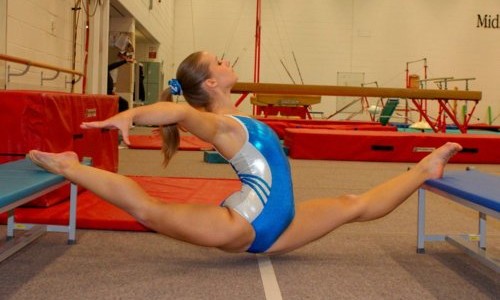
On that note, here’s today’s exercise, which will not only improve your flexibility and mobility, but also your strength, specifically in the front split position.
Give it a shot and let me know how it feels in the Comments below.
If you’re one of my top practitioners, you know I’ve been sending out a lot of content on flexibility and mobility (which I’ll just use the term flexibility for going forward) lately.
This is because I spent many years talking more about building Strength, Power and Conditioning and since integrating and taking flexibility training more seriously for myself and my athletes, I’ve been getting better results in while actually doing less in these other areas.
The reason why is because flexibility is a Biomotor Ability that most people neglect until it’s too late…
You know, like when it’s tough to put your socks on, or when your posture makes you look more like the Homo neanderthalensis species instead of Homo sapiens…
And then, when you add proper flexibility training in, you make
MASSIVE progress in a short amount of time because
it’s like discovering an untapped gold mine.
This is what it was like for me when I first got serious about flexibility.
Before, when I threw a kick it was like my hips were tearing apart and I could barely make it to stomach level.
Now, when I throw a kick, I can turn and put my hips into it whether it’s to the legs, torso or head.
Plus, how this training has literally affected every other Biomotor Ability like Strength, Power and Endurance, since now, my body is no longer fighting itself and my joints move loose and free while my muscles are allowed to work unhindered.
[thrive_2step id=’20388′]
[/thrive_2step]
.
The feeling can be summed up nicely with just one word:
FREEDOM
But like everything, there are different ways you can go about your flexibility business and the most effective depends on where you’re at.
Like everything, as you get deeper into your training, the techniques you use must evolve, otherwise, you’ll get stuck.
It’s fine to get stuck if that’s what you want, but if you’re here and you’re down with the powerDOJO Way, then evolution is your thing and you want to keep learning and applying and improving day in, day out.
And I LOVE that about you, which is why I love putting out content like today’s video, which might be an exercise you’ve done before, but when you do it the way I describe in the video, it’ll feel a heck of a lot different and give you much different results.
First, watch the video, then I’ll talk a bit more about why this type of exercise is an EVOLUTION in your flexibility game:
https://vimeo.com/151092710
Have you done the Groiner exercise before?
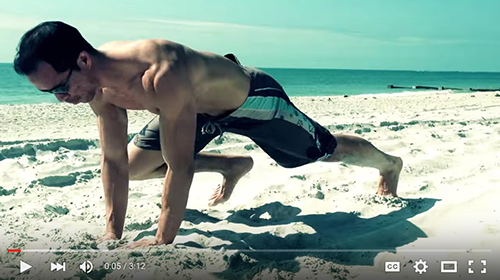
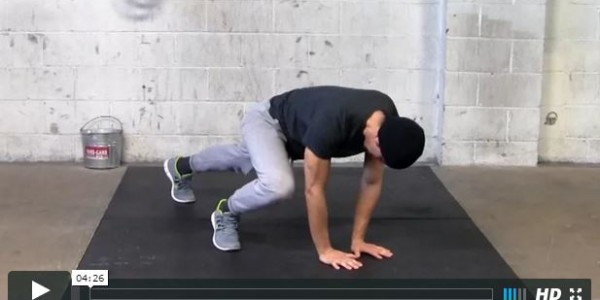
It’s kinda like a Mountain Climber, except your knees go outside your hands instead of inside.
And it’s typically done in a jumping-like fashion, where you bring your leg up and rapidly jump your legs up and back.
Sometimes it’s done where you jump the leg up and then sit deeper into the stretch before switching.
Either way, it’s different than what I show in the video.
The key difference is by bringing your leg up in a controlled fashion and holding it in the top position actively, versus jumping the leg up, which brings the leg up to a point that can only be reached through momentum, then sitting statically into the stretch.
The results you’ll get from this different approach that you won’t get through the traditional approach include:
Building hip flexor strength through the full range of hip flexion
Training your core to stabilize while working through hip flexion (very important for those with low back pain)
Not only that, but training your core in a diagonal pattern, which is more applicable to sport and daily life (think walking, running, swinging a club or bat, pushing things)
Strengthening of the glute of the extended leg, which also lengthens the hip flexor of that leg
So I’m not saying the typical Groiner is bad, just that we can upgrade it if our goal is to improve upon our flexibility.
The thing is, this exercise takes more strength, more concentration, more discipline to execute properly.
While it looks simple, there are many subtle pointers that contribute to its effectiveness.
If you’ve tried it already and followed along with me, you know what I mean.
But I know you’re down with the idea that if you’re going to do something, you might as well do it right, and it’ll take time to master this one simple move and it’s time you’re willing to invest.
That’s why I’m glad you’re here with me in this “Evolution of Flexibility”.
Lots more to come. 🙂
PEACE~
Coach E
P.S. One favour, I’d really appreciate you sharing this on Facebook (or wherever) with your friends. I’m sure they’ll appreciate being enlightened with this new info and even with a simple act of sharing that’ll take a few secs, you’ll be influencing those you care about for the better and if nothing else, it’ll grow your Karma bank.
Focus on the breathing, staying relaxed and the TRACTION of the arm/shoulder to help decompress the shoulder, elbow and wrist joints.
Like I said in the email, do this exercise EVERYDAY, 10 reps on each side for 4 weeks straight and you’ll see phenomenal results in your posture and overhead flexibility and you might also find a reduction in shoulder and/or elbow pain.
[thrive_2step id=’20430′][/thrive_2step]
.
If you know any computer junkies or people needing help with posture or shoulder pain, please share it with them using one of the buttons below.
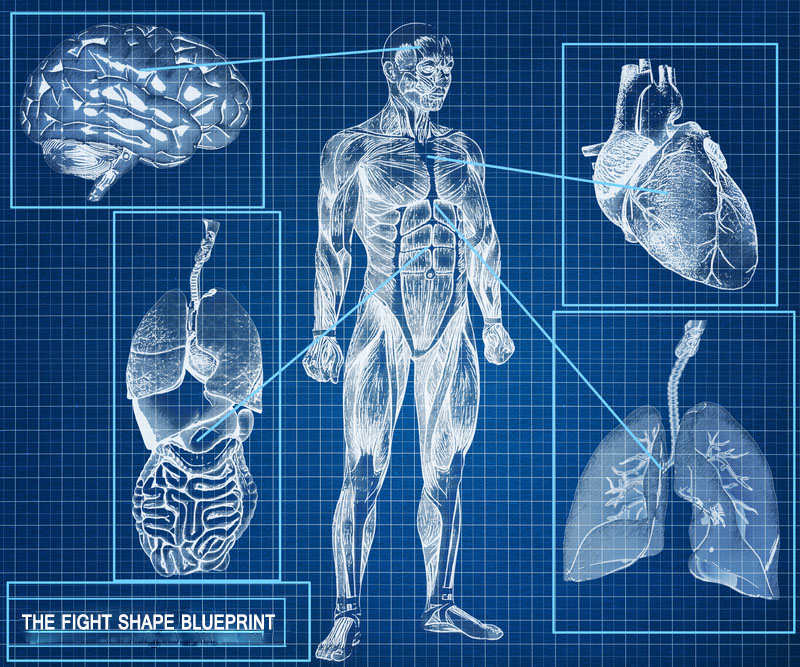
This resource is designed to give you an overview of the exact steps you must take to get in top fight shape.
You see, many martial artists are confused about what it truly takes to get in top fight shape.
On top of the information overload created by the internet, there’s also a pile of misinformation to sort through before you get to the good stuff.
Being in top fight shape includes the ability to execute dynamic and high speed techniques with power and precision, like throwing explosive head kicks or executing vicious takedowns…
It means having the conditioning to continue to battle long after your opponent tires…
It means being strong, powerful and adaptable, allowing you to handle any tough situation that comes your way, even if you’ve never encountered it before…
It also means having a balanced body that is immune to injuries…
Is this what you want?
I sure as heck do.
This is for you, even if you don’t fight or study martial arts…
Think about the type of fitness that pro fighters have and what they need from their strength and conditioning program and ask yourself the same question.
Think about how resilient their bodies must be to be able to endure grueling training sessions every day.
And think about the need for their workouts to be efficient and provide results in the least amount of time possible, since so much time and energy is already dedicated to skills training and sparring.
Well, this page is here to give YOU a step-by-step plan to get in TOP FIGHT SHAPE.
That’s why I call it…
The Fight Shape Blueprint
You down?
It’s the same blueprint I use to train multiple UFC fighters, Olympic boxers, competitive athletes across many different disciplines and recreational martial artists who want elite physical fitness.
Before we get into it, let me give you a quick backstory about who I am and why I’ve created powerDOJO…
My name is Eric Wong and I’ve been involved in the martial arts since 1999 when I first began studying Brazilian Jiu-Jitsu.
I was an early UFC fan and saw Royce Gracie quickly tapping guys out that were twice his size and knew that it was a powerful art, so I signed up at a school in my hometown of Hamilton, Ontario, Canada that offered BJJ training.
I wonder what possessed Art Jimmerson to wear ONE boxing glove?!?
I trained diligently for 6 months then moved to attend the University of Waterloo where I spent the next 5 years studying and came out with an Honours Bachelor of Science in Kinesiology.
One of my professors whom I took numerous classes from was Dr. Stu McGill who is widely considered the top low back pain expert in the world.
The scar I have from major back surgery when I was 14
This was especially good for me because when I was 14, I spent the entire summer lying flat on back recovering from back surgery, which has left me with this wicked scar.
It took a long time to get back to moving around, not to mention doing what I loved most – playing sports (particularly hockey, baseball and tennis at the time).
However, physically I never returned to being 100% pain-free or moving as fluidly as before.
And I suffered from intermittent bouts of back pain for years, until learning some of the critical concepts in rehabbing LBP from Dr. McGill and further study I did with Paul Chek after graduating from university (which you’ll learn all about in this series) and experimenting with different exercises and approaches (thankfully I’m 100% LBP free now!)…
After graduating, I returned to Hamilton where I also started training at the BJJ school I first studied at.
I learned that the head instructor, a guy stud named Jeff Joslin, was fighting MMA professionally.
I thought to myself, “I love MMA, maybe I can help him with his strength and conditioning?”
To make a long story short, we trained together for a year and in that time, he won a title in a Pro Canadian MMA organization (Apex – now defunct) and made his UFC debut against Josh Koscheck, which I was lucky enough to accompany him to.
Left to Right: Jeff Joslin KO’ing Nuri Shakir to win the Apex title, Jeff Joslin fighting Josh Koscheck in the UFC
While he lost the fight against Koscheck, he battled hard for 3 full rounds and it was clear his conditioning was there.
When we returned from San Diego where the fight took place, I started getting bombarded with requests for personal training and programs from many local fighters.
So I started working with a number of local athletes who were already fighting or wanted to start.
In 2007, I also started a blog and began sharing articles and videos online and in 2008, I created my first online program, the Ultimate MMA Strength and Conditioning Program (which has since been updated) to satisfy the demand for an efficient and effective program for MMA since I didn’t have the time to work with everyone who wanted to train with me.
Since then, I’ve worked with a couple other Canadian UFC fighters, Claude Patrick and Mark Bocek, as well as many other pro and amateur mixed martial artists, national boxers, BJJ competitors and other competitive and recreational martial artists and have continued sharing my ideas online via my blog and through Premium Programs.
It’s this experience combined with continuous study that has culminated in the FIGHT SHAPE BLUEPRINT and the 6 steps you’ll discover within.
It includes components most other programs don’t, which is why it consistently delivers LONG-TERM results.
It’s based on Kinesiology, which is defined as the science of human movement, and experience training hundreds of athletes.
There are no magic pills, quick fixes or fly-by-night fads here.
If you’re the type of person that looks for these things, you’re outta luck, so you might as well skidaddle.
Because here, all you’re getting are tried-and-true scientific principles to get you in top fight shape…
With the LEAST amount of time and energy.
This point is important because the less time and energy you spend in the gym, the more time you can spend training your technique, recovering or just chilling out and enjoying life.
Plus, you’re more likely to be able to consistently stick to an efficient plan versus one that requires you to be in the gym for hours everyday, because I bet you’re busy, right?
LET’S DO THIS
So close the door, shut off your phone and get ready to take some notes, because the info you’re about to learn you won’t read in magazines or hear from your typical personal trainer.
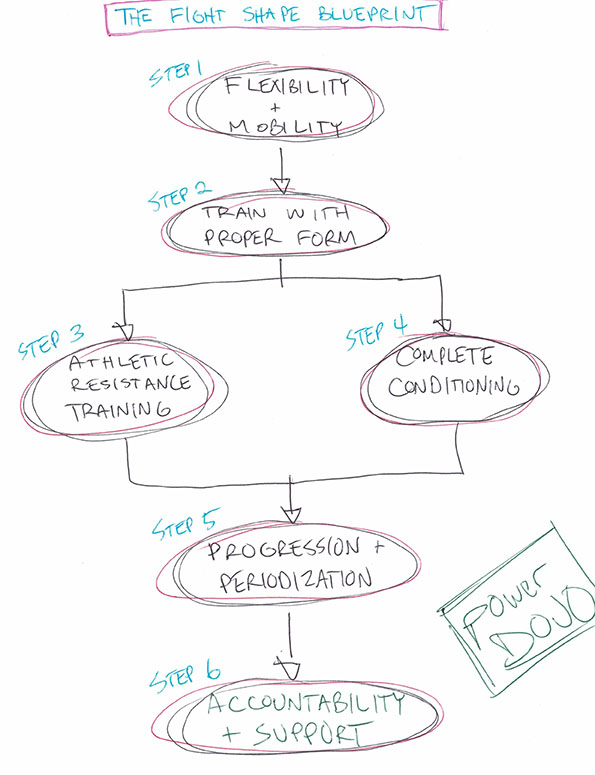
The following flowchart outlines the FSB.
WARNING: there’s little value in understanding, for example, exercises for punching power or stretches for tight hips by themselves. There is enormous value in learning how to integrate all of these components into an efficient and balanced program.
Here are the 6 steps to get in top fight shape:
Correct Flexibility and Mobility
Train With Proper Form
Athletic Resistance Training
Complete Conditioning
Progression and Periodization
Accountability and Support
We’ll examine each of these steps and the precise wording used in this series.
You’ll also be pointed to additional resources to dive deeper into each topic.
Some of these resources are freely available on the powerDOJO blog. Other resources are only available inside the powerDOJO Members area.
The Members area is for those of you who take their fitness seriously and are looking for the best programs to get the fastest results possible.
Lean in to the FSB and pay close attention – I’m about to reveal the exact steps I use to get my athletes ready to battle inside the Octagon or compete at their peak on the mats.
 [/thrive_2step]

 [/thrive_2step]