Category: Increase Flexibility

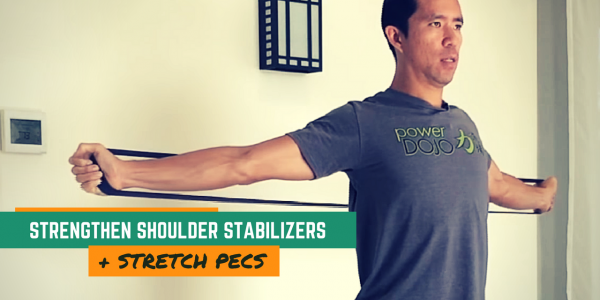
  • Exercise to Strengthen Scapular Stabilizers + Stretch Pecs

    Exercise to Strengthen Scapular Stabilizers + Stretch Pecs

    The title of this post says it all…

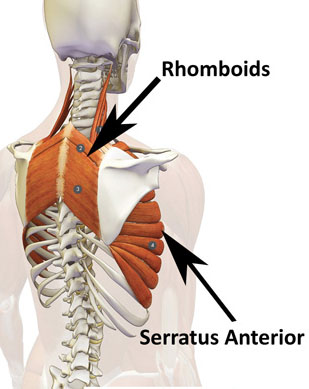
    This exercise primarily strengthens your serratus anterior and rhomboids, two muscles that are crucial to scapular stability and shoulder health.

    These 2 muscles work together to keep the scapula flush to your ribcage and prevent winging.

    Look at the image below and you’ll see that these muscles have the same line of pull and essentially blend into one another, with the rhomboids anchoring the scapula to the spine and the serratus anterior anchoring the scapula to the ribcage.

    rhomboids-serratus

    When they both contract, they pull the medial border of the scapula tight to the body, which is what we need to happen for a stable shoulder joint.

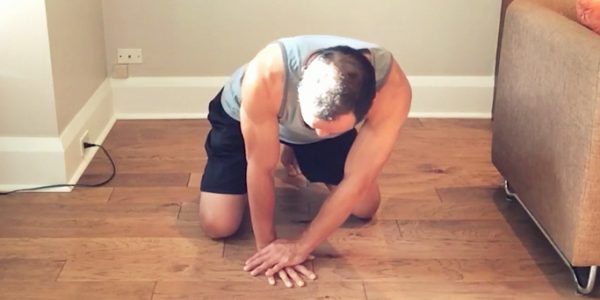
    The exercise we’re doing today works both of these muscles at their shortened end range of motion while the pecs also get a great stretch.

    Give it a shot and let me know how it feels:

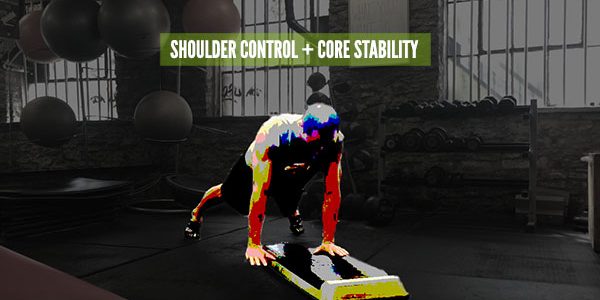
  • The Scap Step Up: Shoulder Control + Core Stability

    The Scap Step Up: Shoulder Control + Core Stability

    Today’s exercise builds off of the last post I shared on the blog (Exercise to Cure Serratus Anterior Amnesia), which got some great feedback from Mike who said:

    “I did it and my shoulders feel much looser and
    almost gave me like a warmed up looseness…”

    Immediate looseness like Mike experienced happens when you activate stabilizer muscles (i.e. the serratus anterior) because your central nervous system sees that the joint is stable and can let go of protective tightness, which guards a joint from injury when no stability is present.

    It’s like when you’ve got a powerful urge to do a #2 but there’s no toilet in sight – you clench up your glutes and sphincter and all the muscles down there to protect you from making a poopie in your pants (and the associated shame and embarrassment).

    Same thing happens at every joint in your body including the hips, spine, ankles, etc.

    I guess your anus isn’t really a joint, but I digress.

    Let’s get back on track here.

    The Scap Step is a great exercise because it trains the following important elements:

    • Straight-arm strength (to counteract all the bent-arm strength training that’s mostly done)
    • Unilateral serratus anterior strength and control through the full range of protraction/retraction
    • Integrated diagonal core stability (rotational power anyone?)

    And more, which you’ll discover in the video:

    Do anywhere from 4 reps on each side if you’re going for activation as part of a warmup or multiple sets of up to 10 reps per side if you’re trying to build strength-endurance.

    I also recommend you do the sequence from the last post FIRST, as it’ll release the naughty pec minor and get the serratus anterior activated at a low level before jumping into the Scap Step Up, which is a higher intensity drill when done correctly.

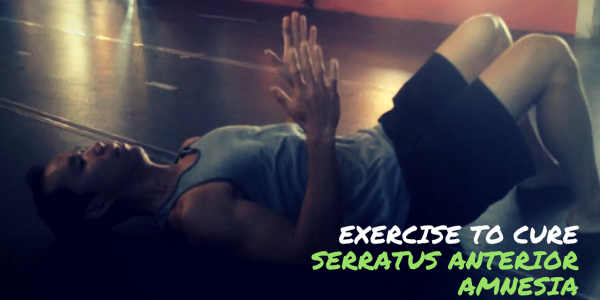
  • Exercise to Cure Serratus Anterior AMNESIA

    Exercise to Cure Serratus Anterior AMNESIA

    You may have heard about the importance of the serratus anterior muscle before…

    serratus-anterior-muscleIts most commonly discussed function is protraction of the scapula, which is why it’s often trained with the Scap Pushup (aka Pushup Plus), which is when you get into a Pushup position and protract your scapulae by pushing yourself away from the ground without bending your arms.

    It’s a great exercise that should be done by everyone, but it trains just ONE of the serratus anterior’s functions.

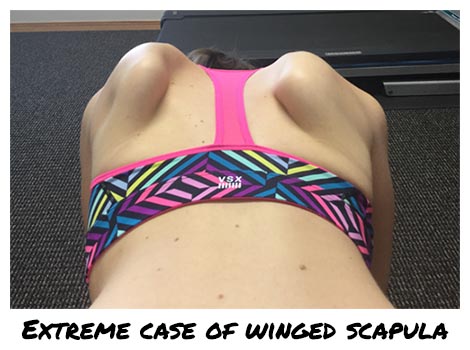
    Likewise, its most commonly discussed dysfunction is winged scapula, which is when the medial border of the scapulae stick out and away from the body and it looks like you could hide stuff in there.

    The thing is, there are two other functions that are just as or even more important for maintaining healthy shoulders.

    The first is upward rotation of the scapula to maintain proper scapulohumeral rhythm.

    Scapulohumeral rhythm is the term used to described how your scapula must rotate as you lift your arms up overhead to ensure the head of the humerus has space to move smoothly.

    If the scapulae don’t upwardly rotate when you raise your arms up, a bone-on-bone collision can occur that will stop the movement and cause pain.

    Thing is, proper scapulohumeral rhythm is largely unconscious and just requires proper thoracic mobility a low level of strength in the 3 muscles responsible (upper trap, lower trap and serratus anterior) and avoiding doing anything silly when lifting your arms up i.e. trying to pinch your shoulder blades down and back the whole time, then you’re likely ok.

    The other function not often discussed but critical to shoulder health is posterior tilting of the scapula.

    Posterior tilt of the scapulae should occur during most movements including:

    • Horizontal pulls (Rows)
    • Vertical pulls (Chinups)
    • Horizontal pushes (Pushups)
    • Vertical pushes (Overhead Presses)

    All of these movements require your scapula to be tight to your ribcage, which occurs as a result of the ability of the serratus anterior to fire first, then its strength and endurance.

    But in most people this muscle is weak, inhibited and/or rarely considered in exercise programming.

    The result is our scapulae don’t move how they’re supposed to, causing dysfunctional movement patterns, limited mobility, decreased strength and pain.

    But today, you’re in luck because you’re going to
    wake up your serratus with a KILLER 1-2 punch.

    The first part is to release the pec minor, which is antagonist (opposite in function) to the serratus.

    We’ve got to release and deactivate the pec minor because when tight and/or overactive, it fires and will inhibit serratus activation.

    After we release pec minor, we immediately perform the serratus activation technique shown in the video, which I’m guessing is one you’ve never seen before.

    Unlike the Scap Pushup, we’re activating the serratus in its lengthened position with shoulder extension torque occurring, which is a powerful downward rotator of the entire shoulder girdle and a common dysfunctional movement pattern that occurs during Pushups, Chinups and even Rows!

    As with all of the techniques I share, focus on the itty-bitty details as they’ll determine whether the exercise just looks ok or is actually effective.

    One more point before we dive in – do your best to breathe in a relaxed fashion and if you’re trying too hard to the point where you’re tensing up, back off and BREATHE.

    You won’t effectively reprogram movement patterns while holding your breath.

    Now, GO:

    Go into and exit the activation slow and smooth, do 10 reps and hold for 5 sec on each rep, so it’ll take you under 2 minutes to complete.

    After you give it a try notice your posture and scapulae, then let me know how you feel in the comments below.
  • Are Your Scapula PARALYZED?

    Are Your Scapula PARALYZED?

    Since I’ve focused on publishing content to help you with eliminating pain and improving flexibility and mobility (on the path to greatness!), I get a lot of questions from about SHOULDER ISSUES…

    Sometimes the questions come from VIP subscribers like you, sometimes it’s in person from friends or friends I haven’t met who also follow me online.

    If I’ve got the time, I like to ask questions about the issues and assess to see if I can help because I love this stuff…

    So if you ever bump into me, please feel free to ask me something (email is another story).

    winged scapula

    One big theme I’ve noticed over and over is that most people have poor control of their scapula and their scapular muscles are weak.

    An easy way for me to detect poor scapular control is when people have problems dissociating elbow from shoulder joint motion i.e. I ask them to perform a movement that should be pure shoulder motion and they bend at the elbow and can’t separate the two.

    There are 2 reasons why our poor scapular control isn’t surprising:

    • The scapula are on the back of our bodies, so they’re more difficult to engage since we can’t see them move.
    • The common mindset in fitness of quantity over quality, where we keep going regardless of compensatory movement patterns in the name of more reps i.e. shoulder shrugging when trying to max out on Pushups and Pullups, makes our scapula stupid.

    The problem is that your scapula are literally the foundation of your shoulder joint and its role is akin to that of the foundation of a house.

    Build a house on a shaky and unstable foundation and soon it’ll all come crumbling down.

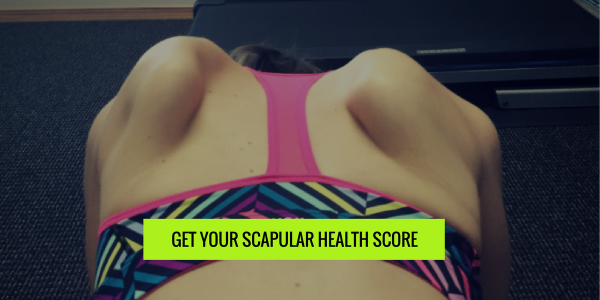
    So, I’ve decided that the next few weeks are going to be dedicated to RE-PROGRAMMING scapular motion and building true scapular strength… and it all begins TODAY with an assessment:

    >> Assess Your Scapular Health HERE

    After taking this assessment (will take you less than 2 minutes) you’ll get an idea of how healthy your scapula are.

    And as a bonus, I’ve got a special training video for you, based on your results, that will tell you all about each of the questions in the assessment and will help build scapular control and strength.

    >> Get Your Scapular Health Score HERE

    Take the assessment, watch the video afterwards and let’s restore the function and strength of your shoulders

    Coach E

    P.S. When you restore proper scapular movement and strength, you unlock a whole new level of upper body POWER… not to mention bulletproofing your shoulders in the process.

    Gymnasts are well-known for impressive upper body strength and power and when you look at gymnastics movements, you’ll notice their “secret”…

    Gymnastics movements are predominantly performed with a straight arm, which means the strength is coming from the shoulder joint, not the elbows.

    Doesn’t matter if it’s the pommel horse, rings, parallel bars, or a floor routine – 90%+ of the movements are done with straight arms.

    Pay attention if you’re watching gymnastics at the Olympics and you’ll see what I mean, but make sure you don’t forget to get your scapular health score here, first.

  • Flexibility Exercise For Poor Shoulder Extension

    Flexibility Exercise For Poor Shoulder Extension

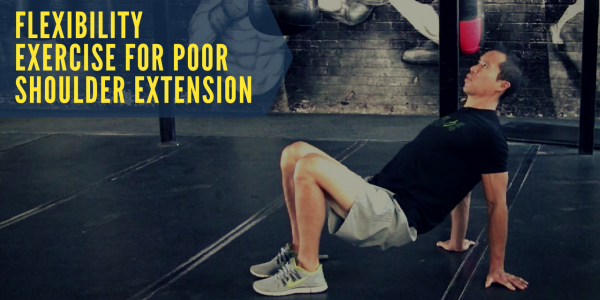
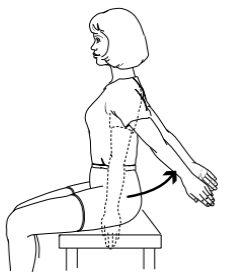
    Shoulder Extension DemonstrationShoulder extension is when you lift your arms behind your back in the sagittal plane.
    We often train for shoulder flexion flexibility, but not shoulder extension and because we don’t do much behind us in everyday life, if we don’t often work this range of motion, so we lose it.

    But it’s an important range to be able to do fun things like Dips, Muscleups, allowing a full wind-up for throwing and racket sports and simply to be as flexible as we were meant to be.

    One exercise that is often prescribed for this is the Crab or Tabletop.

    However, I personally have often performed this technique incorrectly because I’ve been trying to max out the stretch without paying attention to proper alignment.

    So in this video, you’re going to learn the proper alignment and we’ll also discuss what should be happening with your scapula to get the most out of this technique.

    Move with PURPOSE & PRECISION!

    What we’re all about here in the DOJO.

    If you feel like you can’t activate your shoulder blades properly, just keep working it for 4 reps x 30 seconds per day for 2 weeks and I bet you’ll feel what you’re supposed to and at the same time, you’ll open your chest up and improve your posture.

    Add the Active Hands Behind the Head exercise and you’ve got a great 1-2 punch to fix your posture and open your chest.

  • Exercise to Fix Posture and Open Your Hips

    Exercise to Fix Posture and Open Your Hips

    It’s summer here in Toronto so I’ve been riding most everywhere.

    I love riding in the city.

    However, if we ever come across each other and you’re driving, I apologize, because I ride a bit like a maniac – dodging cars, running lights, squeezing through tight spaces, etc…

    Nothing dangerous as I’m in full control and completely aware of what’s going on in front, beside and behind me, but if you’re not used to riders like me, you might be shocked.

    For some reason I feel compelled to get to my destination as fast as possible.

    Helps with the cardio.

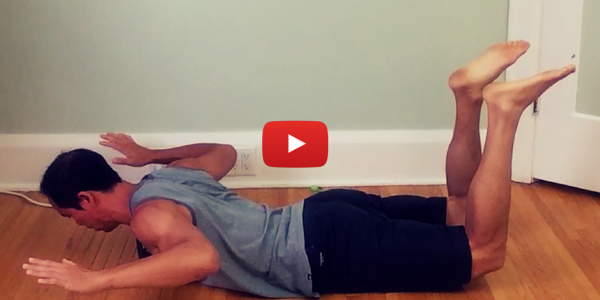
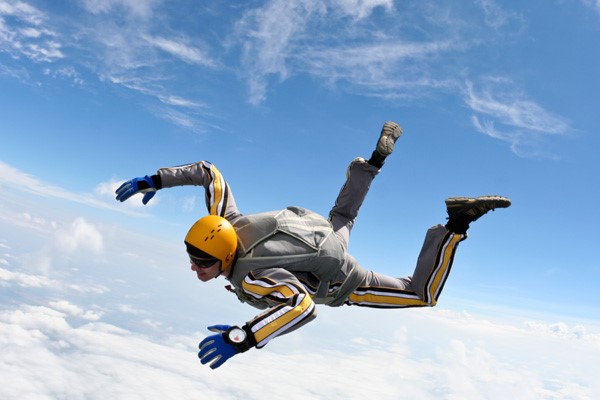
    Anyway, the exercise I’m sharing with you today I call the Skydiver and it’s great for people who ride to counteract the physical demands of rounded shoulders and flexed hips, as well for general posture, people who sit a lot, balancing the fight stance, etc.

    skydiving

    The one and only time I’ve been skydiving was for my friend’s bachelor party – it was pretty damn scary and cool at the same time.

    The best part about it for me was pulling the chute right when we got into the clouds as everything went quiet, all I could see was white and for an instant I felt like I was floating in heaven.

    The reason why I call this exercise the Skydiver is because this is the position you need to hold when free-falling so you don’t get twisted and can safely open your chute.

    NOTE: I call you “Kyoudai” at the start of this video because that’s what I call my Inner Circle members, which loosely translated means “brother” or “sister”. This video was originally for my Inner Circle members only but I thought I’d share it with you too.

    TIGHT HIPS? | TIGHT SHOULDERS?

    Do this daily and work up to 4 x 30 second holds for a total of 2 minutes, starting from 6 x 10 sec holds for a total of 1 minute.

    And if you don’t mind, please share the love, I’d really appreciate it!

  • NEW Scapula Stabilizer Activation Drill [VIDEO]

    NEW Scapula Stabilizer Activation Drill [VIDEO]

    The deep stabilizers of the scapula are often inhibited because of poor posture.

    Today’s drill aims to fix this problem.

    It may look easy, but for many it’ll be near impossible because it requires precise control and activation of deep shoulder stabilizers that don’t work properly in many people.

    Keys to this exercise include going slow and under control so that the proper muscles work through the full range of motion and keeping your elbow and core/hips LOCKED, so the movement is isolated in the shoulder joint.

    The reason why I suggest you start in an open chain (hand free) fashion is because it’s easier to activate the proper muscles and achieve the desired movement.

    Once you’ve got that, then do the closed chain version, which fires up the stabilizers even more.

    And when you first start, don’t think about reps or anything and just get the proper activation going. Get this down then go for 3-6 circles in each direction.

    [thrive_leads id=’22595′]

    Would love to know how it feels so try it out and let me know in the Comments after.

  • 3 Exercises for Wrist Pain & Injuries

    3 Exercises for Wrist Pain & Injuries

    These 3 exercises will help you if your wrist hurts in extension, which is when the back of the hand is lifted closer towards the forearm.

    They’re also great to use as part of your warmup if you’re doing anything that requires full wrist extension, like Cleans and Handstand Pushups.

    For all 3 exercises, make sure your elbow stays totally locked out and do not push yourself hard or fast – go slow and easy and to effectively mobilize the joint.

    [thrive_leads id=’22550′]
    Even if you don’t have wrist pain, try this out to see how it feels – you’ll likely feel a lot more free after doing it.

    And if you think it’s a good one or you know anyone with wrist pain i.e. anybody who types/mouses a lot, please share it with them so they can feel better (and so they’ll owe you one ;-).

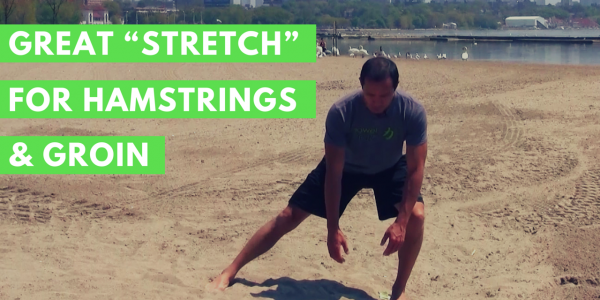
  • Bent-V Lateral Hip Shift (Hamstring & Groin Mobility)

    Bent-V Lateral Hip Shift (Hamstring & Groin Mobility)

    Let’s cut to the chase –

    Here’s what doing this exercise together with me once a day for the next 7 days will give you:

    – Mobilized hamstrings and adductors
    – Strengthened hip flexors and internal rotators
    – Better hip hinge
    – Decreased tension in your privates

    Watch the video then try it out, then watch it and do it again everyday for the next 6 days and you’ll experience the benefits for yourself and your technique will progress via deeper understanding and frequent practice:

    >> Get the Complete Hip Mobility Warmup Checklist Here

    Go for 6-10 reps in each direction, nice and slow and don’t be afraid to stand up and shake it out if you’ve pushed too hard or feel too much strain.

    If you find this exercise feels nice, I’d love it if you could SHARE it on Facebook or wherever you share things. Oh and if you do, I’ll send you one of my old stuffed animals. Trying to clear out my parents house!

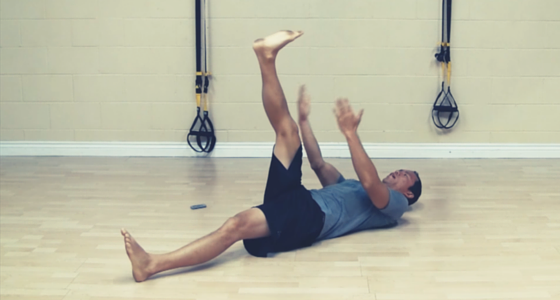
  • The Supine Hip PNF: Best Hip Flexibility Exercise?

    The Supine Hip PNF: Best Hip Flexibility Exercise?

    This exercise will lengthen your hamstrings, adductors and hip rotators, mobilize the joint capsule and activate pretty much all of your hip muscles.

    It’s a great bang for your buck technique, so be THANKFUL you landed here because your hips are going to feel renewed after doing the exercise I’m sharing with you.

    Lucky you. 🙂

    I call it the Supine Hip PNF because you’re lying down on your back (this is what supine means) and PNF stands for Proprioceptive Neuromuscular Facilitation, which is not just about stretching, but a system of exercise and movement that trains muscle activation, joint stability AND flexibility.

    I first learned about PNF from the book Supertraining by the late Mel Siff and in the book Siff lists 23 principles of PNF and the exercise you’re about to do today includes (but not limited to) these important ones:

    1. Use of spiral and diagonal movement patterns
    2. Motion crossing the sagittal midline of the body
    3. Recruitment of all movement components, especially flexion-extension, adduction-abduction and internal-external rotation
    4. Movement free of pain, but not free of effort

    To summarize, here are some of the benefits of doing this exercise and thus applying these principles:

    • No equipment – do it anywhere you can lie flat on your back
    • Anyone can do it regardless of level of fitness
    • Strengthens muscles in end ranges of motion where most people are extremely weak
    • Works rotational and diagonal movement patterns (PNF), which fully integrates your left and right brain hemispheres

    So, watch the video in FULL and if you have any inkling that you might benefit, I urge you to do the exercise as soon as possible, ideally, right now.

    Don’t just watch it then leave – this is what most people who watch exercise videos online do, which is why most people are inflexible and out of shape.

    But I mean, if you landed here and for some reason thought you were going to watch a Mike Chang video, then you don’t have to do it as I can understand your supreme disappointment. 😉

    For the rest of you, it’s GO TIME:

    [thrive_leads id=’22497′]

    Ideally perform 3 reps in both directions on each leg, but even 1 rep on each side is better than none.

    Once you’ve tried it out, you qualify to leave a comment, so hit me up when you’re done.

    Can’t wait to hear from you, champ. 🙂

    And if this exercise does feel great, please SHARE it because everyone these days is so tight from all the damn sitting! I’m sure you know at least a few people who will really appreciate getting this from you so don’t be shy.