Tag: training

  • Try this exercise to improve your BALANCE

    Try this exercise to improve your BALANCE

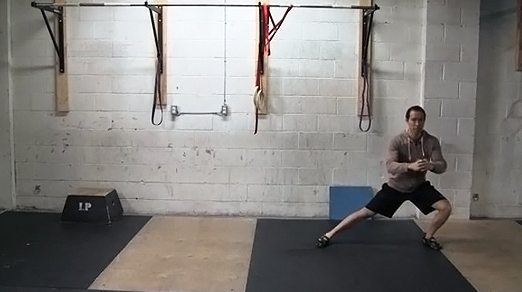
    The video I’m sharing with you today includes a couple of variations of the Lateral Lunge exercise, which you likely know.

    These variations will both improve your balance with the second variation a simple technique that you can use with any exercise to improve balance, proprioception and kinesthetic awareness.

    Those last 2 words may be foreign so here’s what they mean:

    Proprioception: how your brain knows the position your body is in

    Kinesthetic Awareness: how your brain knows where your body is in space

    Please let me know what you think after you give it a whirl.

  • The SPLIT Snatch (Olympic lifting exercise variation)

    The SPLIT Snatch (Olympic lifting exercise variation)

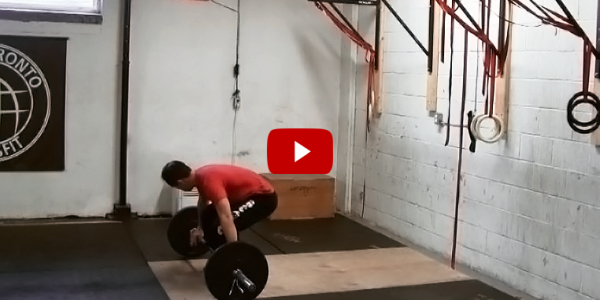
    This is a variation of the traditional Snatch exercise that I learned when I took a 2 day workshop on the Olympic lifts.

    It’s a great variation in general and also for those unable to due the traditional Squat Snatch because of mobility issues.

    Check it out:

    With this variation, the Snatch is now available to everyone.

    That sounded funny.

    If you don’t have the mobility to do the Squat Snatch, the key areas to hit are the hips and the shoulders, so get working on them so you can unlock this other great exercise and in the meantime, work the Split Snatch to develop your full body speed.

    And of course, if you’re not doing the Olympic lifts yet because you don’t know how, then check out my Olympic Lifting Mastery Course HERE.

  • Eggs for High T | Piriformis Release | Glutes [ASK ERIC]

    Eggs for High T | Piriformis Release | Glutes [ASK ERIC]

    In today’s QnA video, I answer the following questions:

    I hate eggs but am trying your recommended T booster diet – is there a substitute?

    – Garry Mcdonell, Canada  [mm:ss]

    I do have a piriformis muscle issue. I was told the exercises you do for that depends on whether the muscle is shortened or lengthened.

    Do you have any help?

    – Joanne Attwood, Canada  [mm:ss]

    I went 3 weeks not missing a day but week 4 fell on the holidays and so I’ve slacked off a bit.

    But up to this point I have seen tremendous improvement in my hips.

    Since I’ve missed a week do you recommend starting from week 1 again or just pick up where I left off?

    – Aaron Cropper, US [mm:ss]

    What exercises have you found to best strengthen and add flexibility to the gluteal muscles?

    I am a physician and I appreciate your explanation based on muscle physiology.

    – Ronald Wong, US [mm:ss]

    When I sit, I feel real tight in the hip flexor / aDductor area.

    I can stand to take the pressure off, but I was curious if you have input on how to stretch/strengthen this specific area as it gets tight almost immediately when I sit.

    If there is an area of your HFS program I should focus on to help with this, please point me in the right direction.

    – Fletcher Wilson [mm:ss]

    If you’ve got a question about training for MMA or martial arts, nutrition, injuries or anything else that you’d like me to answer in a future QnA video, submit it here.

  • Best cardio for FAT LOSS?

    Best cardio for FAT LOSS?

    I was skimming through the never-ending pile of emails in my Inbox and after the excitement of reading a status update on my new project from my manufacturer (sample is READY) I saw this question from Jeremy in response to the last few emails I’ve sent regarding conditioning and cardio:

    “Eric, I’m not a fighter but I like training like one. My main goal is fat loss. What’s the best type of cardio workout for fat loss?”

    If you pose this question to a dozen different experts, you’ll get a dozen different responses…

    And I think my response is different than ALL those different responses.

    [Tell me if you agree after reading it, ok?]

    First, let’s not talk nutrition, even though it’s a more powerful lever when it comes to losing fat, so we can focus our conversation.

    Now, fat loss is not all about training in the “fat-burning zone” or the “afterburn” effect (EPOC)…

    It’s not about “tricking” your body into fat burning mode or “hacking” your way to a faster metabolism.

    It IS about 2 things:

    Consistency + Adaptability

    Consistency does not get the attention it deserves.

    It’s like the good looking tom boy in high school who played sports and had a great sense of humour but couldn’t get a date to the prom.

    Without consistency, you have nothing.

    You have WASTED time and energy.

    And it’s not just about the action of making a training schedule.

    That’s just the surface…

    It’s more about the things that will help you stick to that schedule.

    Things like:

    • Training with proper technique
    • Choosing the right intensity and volume so you don’t get overtrained or injured
    • Taking care of yourself by sleeping and eating well so your body has the capacity it needs to change itself into its new leaner form
    • Etc…

    Got it?

    Cool – NEXT:

    Adaptability is another bastard child forgotten by the hucksters selling the latest tricks and magic pills.

    They say, “Oh, just do 4 minutes of this ancient Japanese doctors magic interval formula and you’ll have a body that’s 3.4% fat… in just 7 days!”

    Sure…

    The thing is, no matter how effective the protocol is at the beginning, your body will ALWAYS adapt to it so it becomes less effective over time.

    That’s just what your body does.

    To combat this, you can do 2 things (I recommend you do them both):

    • Maintain technique while continually pushing the intensity level at which you execute the workout
    • Progress the workout so it’s harder in some way via more work (more reps, sets, exercises) and/or less rest

    This is how you systematically progress a workout to the point where it’s returns diminish, which takes around 4 weeks, before changing the workout up completely.

    Here’s an example of a progression plan for a workout from CAGE Cardio Bodyweight:

    Pay attention to the progression of sets and rest periods – this forces your body to continue to adapt, which will keep conditioning AND fat loss moving in the right direction.

    Does this make sense?

    If it does, reply and just say “yeah buddy” just so I know I communicated my message clearly, because it’s important you get this.

    Best thing about Consistency and Adaptability is that they’re fundamental PRINCIPLES, not “tricks” or “hacks” and they can be applied to improve ALL the training you do.

    “Give a man a fish, feed him for a day. Teach a man to fish, feed him for life.”

    Principles are how you learn how to fish and is what I want for you.

    But if you are a bit hungry right now, here’s the fish on a silver platter that will help you do exactly what I’ve taught you here as if you were one of my athletes.
  • Counter-intuitive tip for GREATER stamina

    Counter-intuitive tip for GREATER stamina

    I was talking to a supplier for a new project I’m working on (it’s gonna rock) via Skype last night and as I was busy asking for all the changes I wanted, I catch my wife staring at me from the hallway.

    When we make eye contact, she raises both hands in front of her, palms facing down and makes the universally accepted motion for “calm down”.

    I then realized that my shoulders and neck were all tense, my head was jutting forward like a Tyrannosaurus Rex and that area between my eyebrows was scrunched tightly together like I was trying to crack a nut in there.

    And I was holding my breath.

    After I calmed myself and took a deep breath, my whole energy level changed and the rest of the call finished off as well as it would’ve had I been all tense, probably better.

    This is why when I’m coaching athletes through tough exercises or circuits or even intervals, the most common thing I say is, “Relax. Breathe. Stay loose.”

    While staying relaxed, breathing and loose might seem counter-intuitive to what you need to do when it feels like you’ve got to bite down and grind, it is EXACTLY what Doctor Wong ordered if you want to push your limits.

    You see, when your neck muscles and traps are all tight, it slows blood flow.

    Slowed blood flow means delayed delivery of fresh oxygen and delayed removal of waste products of metabolism.

    Not good.

    Plus, it takes energy for tight muscles to be tight, thus taking energy away from what you actually need to do.

    After all, you’ve only got so much energy to play with. Better put it all towards what you want to accomplish, not unnecessary tension.

    And when you breathe shallow (or hold your breath) you’re not getting any new oxygen in or getting rid of all the CO2 you’re generating.

    Again, not good.

    Finally, tensing that little area between your eyebrows makes it look like you’re taking a poo, and didn’t your mother teach you to keep your poo face to yourself?

    This is a skill to practice and continually develop.

    I continue to develop my ability to relax what I don’t need tight and breathe deep while pushing myself to the limits every day.

    This is one tip that you likely won’t hear anywhere else that really will make a huge difference in your conditioning.

    That’s why you’re such a smart cookie for being here. 🙂

    So the next time you get on the treadmill, hit the heavy bag, push through a killer bodyweight circuit or even carry a heavy load of groceries from the car to your kitchen, practice what I’ve taught you here.

    The best workouts to practice this tip are tough bodyweight circuits, particularly NRG System Complexes, since rapidly changing exercises challenges your neuromuscular system and you’ve got to quickly activate certain muscles while relaxing others due to the different movements.

    Click here for a collection of bodyweight circuits designed by yours truly that will get you in elite fight shape that include a few of these killer complexes.

  • Jack of all trades. Master of NONE.

    Jack of all trades. Master of NONE.

    The quote from the title came to my head as I was reading through some questions I got last week.

    I interpret the quote to mean that the higher the level of mastery you desire is, the more time and energy you must dedicate to it.

    Logical.

    That also means that the fewer things you’ve got going on, the more time and energy you can dedicate to mastery of what it is you want to master.

    So, the question that spurred my thoughts came from my man Jacob from the US of A about my CAGE Cardio Bodyweight program:

    “Does the program help develop muscle and strength on top of the cardio?

    It looks like a great program:-)

    I’m in the process of moving my family so the short bodyweight workout sounds perfect.

    Especially because all my weights will be in storage for a bit.”

    It’s a good question because whenever you see workout and fitness advertising and marketing, the descriptions often say things like:

    Build Muscle! Burn Fat! Increase
    Strength, Power, Cardio AND Speed!
    Improve Your Math! Make Your Dog
    AND Woman Finally Listen To You!

    Look familiar?

    Here’s the thing – these claims are TRUE…

    For BEGINNERS.

    When you’re all rosy-cheeked and new to training, you can build muscle, burn fat, increase your strength, power and cardio all at the same time.

    When you first start acting more confident, both your dog and woman will take notice and take you more seriously.

    [As for the math thing – unless you’re Asian, work with what god gave you. ;)]

    However, once the honeymoon period is over (anywhere from 4-10 months of consistent training), doing all-in-one workouts with no clear focus will bring your gains to a screeching halt.

    So the answer to Jacob’s question is simple…

    CAGE Cardio will help you improve your cardio and build muscle and gain strength…

    If you’re a beginner.

    But once you pass that stage of your training life, the program is designed specifically to drastically improve your conditioning especially for MMA or any martial art and that’s my promise to you.

    I don’t market my programs to beginners using all the hype and claims that many others do.

    I market my programs to those who appreciate the fact that I respect their intelligence and want to follow a scientific approach without needing a university degree in science to understand it.

    So if you follow what I write and publish, that says a lot about you and YOU are who I like to work with.

    The rest of the sheep are free to buy into the hype and fluff and try all the new tricks while going nowhere.

    We’ll just continue to be patient and do our thing and make consistent, measurable progress.

  • 30 sec fitness test: how fit are YOU?

    30 sec fitness test: how fit are YOU?

    Since my move, I’ve been training seriously for a solid 3 weeks now.

    Weights twice a week, CAGE Cardio workouts twice a week, playing some sports and riding my bike like a madman everywhere I can.

    At the beginning, I was feeling out of shape because I hadn’t been on a program for a good month or so.

    I was just kinda wingin’ it…

    Which is the worst thing you can do, from a results over the long-term perspective.

    And my resting heart rate (RHR) confirmed how I was feeling – it was a shockingly high 62 beats per minute!

    For the uninitiated, RHR is the number of times your heart beats in one minute at rest.

    The best time to take it is in the morning after waking up and going to the bathroom.

    Just sit down, take 3-4 deep breaths and then count how many heart beats occur in 30 seconds, then multiply that by 2 to get your RHR.

    Well, lo and behold I just took mine again this morning and after 3 weeks of training I’m down 8 bpm to 54 bpm, which is close to the 48-52 bpm range that I feel best at.

    Here are the RHR recommendations I make to my athletes before going into a fight:

    [+] Welterweights and below: < 50 bpm
    [+] Middleweights: 50-55 bpm
    [+] Light heavy and above: 55-60 bpm

    These are good #’s to shoot for that should give you confidence in your conditioning.

    While RHR isn’t the only measure of aerobic fitness I use, it’s quick and does give you an indication of how efficient your cardiovascular system is.

    A higher number (> 70) indicates that your heart is weak or your vascular system isn’t well developed because it takes your heart more beats to pump the amount of blood you need to function at rest.

    A lower number (< 60) indicates that your heart is strong and vascular system well-developed so that each beat pumps out a lot more blood than those of you with higher numbers.

    More blood pumped per beat = greater efficiency.

    So, the lower, the better.

    If you’re curious where you’re at, you can take your RHR right now following the instructions here, but just note that things like caffeine, stress, alcohol and workouts will affect the # and make it higher than what it truly is.

    That’s why I recommend you do it in a consistent fashion, which is to wake up, go to the bathroom, take a few deep breaths and then measure it.

    This is just 1 of many metrics I use to assess my athletes and is also 1 of many metrics used to assess all powerDOJO Kyoudai in their Gradings.

    So when you wake up tomorrow, take your RHR and you’ll have a simple metric from which to compare the results of your conditioning work in the future.

    If you’re not assessing, you’re guessing!

    Eric “Measurable Results” Wong

    P.S. If you do find your RHR is too high, these workouts will help you quickly lower it, especially the NRG System Complexes.

  • 4 years, 1 big disappointment

    The 2010 Winter Olympics in Vancouver juts finished up, and what a finish! There were so many lessons to be learned, but one story sticks out in my mind which I’ll get to in a sec…

    The men’s hockey team won gold in a nail-biter of a game that ended in overtime over a tough US squad…

    After the win, people were spilling out on the streets (I was one of them) to yell and act like a fool… Good times!

    But when all is said and done, there’s one story that I’ll remember forever…

    (more…)

  • Balance Exercises for MMA

    I was out for a long walk the other day and where I was by Lake Ontario, which is really close to where I live. It’s one of the 5 Great Lakes as they’re called in North America.

    Unfortunately it’s polluted as hell from all the steel companies and other industries that dump their toxic waste into them, but it still looks nice on a sunny day.

    Anyway I was walking on the shore and came to a spot where there were those big rocks that they sometimes have near water. As I was jumping from rock to rock, I, for some reason, thought about the fact that barely any fighters (or anyone in the gym) trains their single-leg balance.

    Training your single-leg balance will not only improve your performance in the cage, it’ll also help to keep your ankles and knees healthy.

    One thing you don’t want to do (unless you’re rehabbing an injury) is focus on standing on unstable things like BOSU balls, discs, or foam rollers. These tools don’t do anything for performance and limit the strength you can build.

    You might think they’re great for balance, but the truth is, the ground doesn’t move under you, you move over theground, so it’s a different neuromuscular pattern that doesn’t transfer over to a real life situation.

    So what kind of exercises do you want to do?

    Check out videos of 3 of them here:

    => Balance Exercises for MMA Training

    As I mention in the videos – these are not meant to replace your traditional strength exercises, they’re supplementary.

    Train smart,

    Eric

  • ‘Core’ Exercises for MMA

    These are variations of traditional exercises that increase the recruitment of the core muscles in a stabilization role, which helps you develop explosive KO power and a shredded six-pack: