I’m going to answer a couple of questions I got from readers here today…
The first question I got was about Squats and Deadlifts and which exercise is better.
I can’t remember who asked me this question. Perhaps I’m still a little foggy from my birthday weekend. I just turned 32.
I’m guessing the question was really, “If I had to choose, would I rather do Squats or Deadlifts?”
First of all, these questions aren’t very useful because they assume you can only do 1 exercise, which is obviously not the case.
You can and should do both, as they are both key exercises to develop your strength.
But I’d like to share some of the different benefits of each exercise, some of which I’m betting you’ve never considered before…
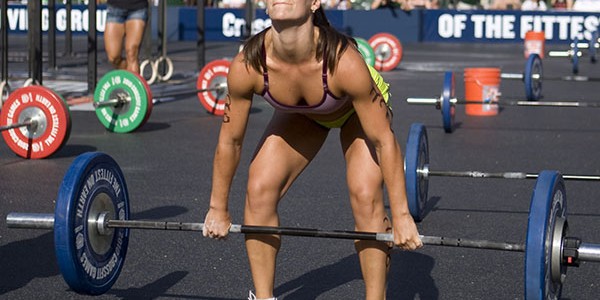
Squats give you better overall development of your your legs and hips, hitting your glutes, hamstrings and quads. While both work your torso stabilizers. the Deadlift puts more emphasis on your posterior chain, which includes your hamstrings, glutes and back muscles.
With respect to Squats, one big thing that’s not talked about as a benefit is that there’s nothing that can replace the feeling of confidence of having a shitload of weight on your shoulders, getting down low and successfully making it back up.
Sure, getting your chest crushed from a Bench Press failure sucks, but as an inexperienced bench presser, you’re probably not pushing enough weight to do much damage.
Like me, you’ve probably had this happen to you when Bench Pressing at some point in your life:
You’re on your last set of Bench. You don’t have a spotter and you want that last rep to really build up your pectorals so the girls will notice (and hopefully try to cop a feel).
You get to the last rep, think you got it, lower the bar, make it about 1/4 of the way back up then think, “Uh. Oh.”
You rest the bar on your chest, hoping to recover, but the elimination of the stretch-shortening cycle combined with your fatigue makes it impossible to get it off your chest.
So you roll it down your torso, being extra careful as it approaches your naughty bits, sit up and lift the bar off of you, trying to avoid eye contact with those who noticed your epic failure.
Trust me, I’ve been there. Done that.
Now that I’ve got more experience, I don’t fail on the Bench Press, or if there’s a chance I might, I have a spotter.
Failing on the Bench Press sucks, but it wouldn’t suck nearly as much as being crushed underneath a barbell from a failed squat. So many more things can go wrong…
Thus, the element of fear, and more so, the resulting confidence of overcoming that fear to successfully Squat a serious weight is a real benefit unparalleled by any other exercise.
You come out of a heavy Squat set feeling like a real MAN.
With the Deadlift, there’s no fear of getting crushed. You can simply drop the bar.
So this is one reason why you definitely want to Squat – to build confidence, which is your ability to take action in the face of fear.
In the Deadlift, because you’re grabbing the bar with your hands, obviously grip strength is required, which the Squat doesn’t require much of (gripping the bar a bit tight does help with keeping your upper back tight).
One unique Deadlift benefit occurs only when you learn really good technique and understand what it’s supposed to feel like.
How could I not use this picture?
When you do a good Deadlift, you can feel the integration and ‘tightness’ starting from your feet, moving up through the legs, between your shoulder blades, up through your arms and into your hands.
You really get to feel how every muscle in your body is linked and can work together.
This total body integration and ability to feel your the muscles from toes to fingers work together is a unique feature of the Deadlift that benefits all athletes.
Good form is key though, because if you’re loose at any point up the chain, you’ll lose this feeling and you won’t get this benefit.
Hope that gives you some new insights into 2 of the most important strength exercises you can do.
If you’re a fighter or you train MMA, you’ll see these exercises in my Ultimate MMA S&C program and exactly during what phase of training to do them and how many reps and sets to perform for maximum benefits.
I also got a question about the MMA Ripped program from Dan Mercorelli asking me how long the workouts are.
There are 4 workouts per week in MMA Ripped: 2 x Strength + Cardio workouts, which, including the warmup, would probably take around 55-75 mins, depending on the week.
Then there are 2 x Bodyweight workouts, ranging from 30-40 mins including warmup.
The program is periodized so the # of sets and reps and stuff goes up and down throughout the program, ensuring that you avoid overtraining and plateaus.
Oh and the difference between Ultimate MMA and MMA Ripped is that Ultimate MMA is designed for guys training for an MMA fight or who train MMA at least a couple times a week. It only requires 2 days/week so it can be fit into a busy schedule.
MMA Ripped is designed more for guys who don’t train MMA, or don’t train it too seriously, as It takes a bit more time.
That’s it for now.
Talk soon,
Eric
P.S. If you’ve got a question about anything I’ve talked about here or any other training/nutrition topic, the best place to ask is either in the powerDOJO forum if you’re a member, or on my Ask EricWongMMA page here.
The holidays always includes a bunch of big feasts to indulge in.
One particular night, I had a hankerin’ for some all you can eat (AYCE). Specfiically this place up on Queen St. called Spring Rolls that serves dim sum, sushi AND Thai food.
I don’t generally frequent AYCE establishments because I enjoy seeing my private parts, but sometimes, I get the urge.
The last time I was at an AYCE buffet I almost got trampled, for Shanghai noodles, of all things.
But I wouldn’t be discouraged…
Anyway, the meal was absolutely reDICK!
Here’s what I ate:
I generally eat 75% of whatever portion is there, which pleases me very much. My wife is small and likes to not only stay small, but also sample a bit of everything. God bless her little soul.
The walk home was interesting – I felt like a Chinese version of Santa Claus and I had a bit of difficulty breathing.
The powerful 30 day cleansing protocol will clean out your colon, float fat and toxins right out of your body and give you a jump start to the healthiest year ever.
To fully understand the impact it will have on your health and fitness, you’ve got to read the page.
And don’t forget, you’re also getting access to my MMA Ripped 8-Week Training Camp ($97 regular price) for FREE.
Follow the TWC cleansing protocol for the first 30 days, then switch over to my performance fat loss nutrition plan for the last half of the camp and your results will be INSANE.
So if you’re ready to get your GRIND on and start your year on a foundation of true health, grab the Total Wellness Cleanse at a $100 discount today.
After you grab TWC, fire me an email and I’ll get you setup inside MMA Ripped.
I originally planned on having this post done on Friday…
This here is the second attempt that I’m writing and I hope it finds its way to your computer screen.
I got 800 words into the first draft before I scrapped it because it was boring and dry. Shit you can find if you search, “how to set goals” on Google.
Instead of giving you a lame ass academic goal setting article, I’m going to keep it real…
I’m going to share with you the MISTAKES I’ve made when setting goals. Hopefully you can accelerate your results and learn from my experiences.
Goal setting is something I first learned about after university. My brother Ty introduced me to the field of personal development and I dove head first into books and audio courses. Goal setting was and still is one of the hottest topics.
So I set goals here and there, trying different methods and tricks to make them work for me.
Many goals early on centered around income because I was building my business.
In my second year in business, my goal was to earn $100K.
Then, I trained my first MMA fighter, Jeff Joslin.
Now I’ll be quite upfront and say I didn’t come close to earning $100K in 2006.
I’ve actually missed a lot of monetary goals I’ve set for myself.
One of the biggest reasons why is because deep down, I really don’t care that much about money vs. other things.
With this being so, why set a money goal?
Heck, I was living at home that second year in business and didn’t need much money to get by anyway.
But, I did care about who I was working with and my day-to-day life.
Once I got my first taste of working with an MMA fighter, I was hooked. It wasn’t about the money at all. Hell, when I started, I was doing it for free!
I was doing it because designing exercise programs for MMA was challenging and rewarding work. And I like hanging out and training athletes more than 40 year old women trying to lose their muffin top.
So the money goal wasn’t congruent with what made me happy. And I’m a happiness-driven kinda guy. I think we all are, ultimately.
I’ve shared this story because maybe your goal is to be the UFC champ, or some other title.
If this is you, then I suggest you think about the lifestyle first…
Are you prepared to do what it takes to get there?
Spending hours in the gym everyday, putting your body through punishment, fighting your up through the ranks against guys who want to rip your head off?
If the idea of this excites you, then go for it.
But if you don’t love the training or the lifestyle, you’ve only got 2 choices:
a) Set another goal
b) Set your first goal to be to fall in love with the training and lifestyle
If you don’t love it, it’s going to be real easy to quit when the going gets tough.
And more philosophically, you’re going to be spending all this time and energy doing something you don’t really love and that’s time you don’t get back. Why bother?
The best fighters in the world didn’t get there because all they wanted was the fame and money. Those things are by-products of their passion for what they do and their mastery of their craft. Their devotion to constant learning and improvement and love of being in the gym day after day.
Maybe you’re more focused on the potential payoff at the end. The fame; the money.
And while there’s nothing wrong with wanting those things, if you’re going to go down this road, I suggest you learn to love it.
Same goes for any weight loss goal.
If you don’t learn to love eating healthy and training consistently, you’re going to be setting this same goal again in the future. Guaranteed.
This is what people need to know.
Another problem I’ve run into is setting too many goals at once.
You’ve only got so much energy and focus.
Setting too many goals for yourself weakens the energy you’re able to put into each of those goals.
I’ve made lists of 20 or 30 goals before. Needless to say, not many of them got achieved.
It’d be ideal if you could simply have 1 goal to focus on. For the caveman, it was to survive. Because of this, he got really good at it.
But for us, we’ve got lots of different roles and responsibilities, so we need a few goals in each area if we want to continue growing as people.
Here’s a shortlist of some of the areas in your life to consider:
[green_plus_2_list width=”100%”]
Health and fitness
Relationships
Work, career and business
Personal growth
Fun and recreation[/green_plus_2_list]
I suggest setting goals for each area and then breaking them down into actionable steps with measurable outcomes every 3 months or so.
Some goals you may not start until later, which is good to know now so you can plan out when you will attack it.
Either way you do it, just have some rough plan to follow and to check-in with yourself on a consistent basis.
The last mistake with goals I’ve set for myself includes not checking back in regularly.
I’ll set some goals then not constantly review them and check them to keep myself accountable.
So remember to review your goals daily, lest they fall by the wayside.
MMA Goal Setting Worksheet (Download)
Finally, I’ve promised to hook you up with a little worksheet that will help you skyrocket your MMA skills.
All the info is inside, so just right click to download:
Since we can all celebrate the fact that the world did not in fact end in 2012 as was so popularly debated to occur, we might as well roll with the punches and continue to celebrate all good things that made up the year 2012.
This is the first post in a 2 part series on setting (and achieving) goals.
It’s something I’ve spent most of the month of December on.
Training winds down as parties, shopping and get-togethers dominate the schedule.
Writing and program creation take a back seat, perhaps as a side effect of all of the parties and get-togethers (aka HANGOVERS).
But before I share some unique concepts and frameworks for goal setting with you, there’s one important thing to do…
You see, we often get stuck in is the whole idea of “What’s next?”
I easily get caught up in the future while forgetting about the past and present.
Whether you’re an entrepreneur or work a corporate job, getting caught up in this is part of the rat race.
But reliving past successes, learning from past ‘mistakes’, and enjoying the moment is a key ingredient in successful living.
Why strive for anything if you’re not going to enjoy not only the achievement of it, but also the process of achieving it?
Now I’m not going to get all YOGA on you and tell you that living in the moment is the only thing there is.
Without thinking about the future, you’re apt to be stuck with whatever life decides to throw at you, which is often a pile of shit, to be quite frank.
But if you’re always chasing the next win, achieving more, or being better, you can easily lose your life to the future and prevent yourself from enjoying the process of achievement and the actual achievement itself.
So let’s all take a collective step back and answer these questions:
[features_box_light_blue width=”85%” + border=”1px”]In the past year…
1. What is ONE thing with respect to your health and/or fitness that you’re proud of achieving?
2. What is ONE thing in an important relationship (e.g. as a son, father, spouse, friend) that you’re proud of achieving?
3. What is ONE thing in your career that you’re proud of achieving?[/features_box_light_blue]
Go ahead, take a few deep breaths to relax and the time to answer these questions for real.
Don’t rush through this. It’s important to you. And it never hurts to relive past successes, because it feels good and these good feelings energize you to create more of these good feelings in the future. It’s magnetic.
Now, your successes don’t have to be HUGE and world-changing.
Let me help you by sharing a few of my answers…
With respect to my fitness, I’m super proud of working up to 10 Muscleups.
I set the goal of 10 Muscleups and worked up towards it. It was tons of fun creating programs to get to 10 and scoping out new places I could do them, like this beach in Barcelona that I stumbled upon on vacation this past summer:
In my relationship with my wife, I’m proud of the fact that I’ve been better able to communicate my feelings, of happiness or unhappiness. Trust me, it’s a work in progress. But letting myself be a little vulnerable or communicating something I’m unhappy about even though I’m uncomfortable doing so is greatly helping our relationship.
It’s not something that comes naturally, as Chinese culture doesn’t tend to promote the sharing of feelings. Traditional Chinese culture is about obedience and discipline.
But I think it’s important to feel more for my own health, my relationship with my wife and other important peeps and eventually, my kids.
Finally, with respect to my career, one thing I’m extremely proud of is launching powerDOJO. It’s been something that has been brewing for years. This year, I’ve finally taken the various ideas jotted down in old notebooks, saved in random .txt documents and stored in the back corners of my mind to create a progressive ‘program’ to achieving your ‘black belt in fitness’ and made them a reality.
But once I decided to make it do it, it took a few months of work by myself and my Russian programming team to create the site and I enjoyed every second.
I’m so proud of the way it’s turned out; I love coaching and interacting with all of the positive and like-minded members (the powerDOJO Kyoudai), I’ve awarded 7 Yellow Belts so far and I’m only going to continue to improve and add to it throughout 2013 to make it amazing.
Now that you’ve got some examples from me, go ahead and answer the 3 questions above.
It’ll get those endorphins flowing that will charge you up for Part 2, which is all about proper goal setting.
I’d love to hear 1 or all of the answers to the 3 questions below, if you’re willing to share. If not, no worries, just make sure you answer the questions as it’ll set the stage for setting goals that stretch you and you’ll be proud of achieving.
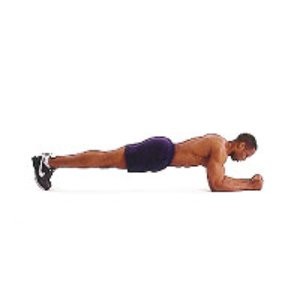
So, to ensure you’re getting variety in your diet of fitness and training info from me, here’s a short, to the point video showing you some advanced plank variations you can use to develop a rock solid core:
Stability training should make up at least 50% of all the direct core work you do.
Holds of anywhere from 10-30 seconds are good.
Aim for a total time under tension of anywhere from 3-5 minutes, so that would be 6-10 reps @ 30 seconds.
Or 3 sets of 6 reps when holding for 10 seconds.
Either way, just make sure the math works.
If you have trouble figuring it out, find a local Chinese guy to help you out. They can often be found in Chinese restaurants and/or laundromats. If there are none, any other Oriental with slanty eyes should do fine.
If you liked this video, let me know with the handy ‘Like’ button that was designed for such a purpose.
Countless articles and videos have been published extolling the virtues of plyometrics for developing explosive power.
I’m here to tell you that most of what you’ll read and watch about plyometrics is completely WRONG.
The reason is because a lot of people call any type of jump a plyometric exercise. But this is inaccurate and will not help you understand where true explosive power comes from.
But as a reader here, you’re all about doing things RIGHT, so now, you’re going to understand what plyometrics really are and how to do them properly.
In this article, I’m going to explain the science behind plyometrics, how to use it to improve your explosive power and show you the difference between a simple jump and a plyometric exercise, and give you a few exercises you can use.
Let’s begin.
A Brief History of Plyometrics
The first book I read about plyometrics was by Don Chu called “Jumping into Plyometrics”, which was first published in 1992.
It’s a book big on exercises but short on background info. However, some of the background info is very good and accurate, even though many of the exercises contradict it.
When I first read it, I did probably what most would do and skimmed the 2-3 pages of background info to go right to the exercises.
But it’s not just about the exercise, it’s the precise way you perform the exercise that makes it effective. The thinking that goes into it.
While Chu’s book was the first big taste the west got of plyometrics, they were studied and being used in Eastern Europe since the 60’s, led by famous Soviet coach Yuri Verkhoshansky, who passed away in 2010 (RIP).
But the Europeans did not use the term plyometrics; instead, they used the term “shock method”, speaking specifically about the Depth Jump exercise.
It makes complete sense why, once you understand the physiology.
Physiology of Plyometrics (Translated from Geek)
True plyometrics harnesses the power of the stretch shortening cycle (SSC). If you’re not familiar with the SSC and you want some more depth, read this article, then come back here to continue.
To summarize, the SSC is a result of 2 phoneomena:
1) When a muscle lengthens at a rapid rate, invoking something called the myotatic stretch reflex, which is an automatic muscular contraction of a muscle when it is quickly stretched.
A common example of the stretch reflex is when the doctor plunks below your kneecap with a hammer and your quads contract, causing the knee jerk reaction.
To use this in training or to improve explosiveness, you rapidly lengthen the muscles involved in the movement you want to perform, then quickly decelerate and contract those muscles to perform the desired movement.
2) Elastic energy that is created from stretching the elastic components of muscles (cross bridges, actin-myosin) and tendons.
Just like the stretch reflex, rapid lengthening and QUICK deceleration right into your movement is key.
And it’s these reasons why most exercises you see that are labeled as plyometrics are not actually so – because the time from lengthening to concentric contraction is too long to induce the stretch reflex and causing the loss of all elastic energy.
In the classic book “Supertraining” by Mel Siff, he states, “If the transition phase is prolonged by more than about 0.15 second, the action may be considered to constitute ordinary jumping and not classical training plyometrics.”
This is why the Europeans refered to this as the “shock method” – because of the rapid change of direction of muscle action, the neuromuscular system must be as fast as lightning to coordinate the proper muscular action. Also, because of the rapid change, high forces must be controlled, which can be a shock to the body.
That’s why any true plyometric training must be performed by individuals who possess a base level of strength and have trained regularly, so their tendons and ligaments are ready for the high forces involved.
Strength Guidelines for Plyometrics
For lower body 2 foot plyometrics, a minimum level of strength required is a 5RM Back Squat with bodyweight. For 1 foot plyoz, I’d up that to at least a 5RM Back Squat of 1.5 x Bodyweight.
Without these minimum levels of strength in the Back Squat (or comparable exercise), the knees will get hammered and you risk a meniscus injury or problems with your patella, since the muscles won’t be able to absorb the force and it will all go into the other joint structures. And there’s nothing worse for explosive power development than injuring a ligament or meniscus.
For upper body plyometrics, a 1RM Bench Press of 1.0 x Bodyweight would be the minimum I’d recommend, for the same reasons as the Back Squat, except here it will be the shoulder and elbows taking the beating.
With these principles in mind, you now have the knowledge to distinguish between a simple jump and a true plyometric movement.
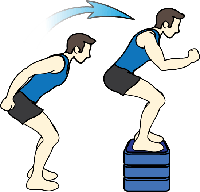
Now there is NOTHING wrong with simple jumping exercises. They train acceleration and force absorption.
But I’m sick of hearing simple jumps referred to as explosive plyometrics. Let’s get the terminology and science correct.
Now, I’m going to further your knowledge and give you a few exercises to work on in the video below. It’s quite a long vid (about 15 minutes), so watch it when you’ve got the time to take it all in at once.
Before we do that, you’ve got to understand the THINKING that goes into these exercises…
The best way to approach a plyometric exercise is to think of yourself as a ball – if you’re not bouncing like a ball would, you’re not utilizing the stretch reflex and/or elastic energy.
If this is not happening, you either need to build your strength, start with a lower intensity exercise., do fewer reps, or rest more between sets. Each and every rep should be bouncy.
Think quality, not quantity, my friends.
Now, the video:
Again, when doing plyoz, every rep must be good – once they’re no good, you stop.
In fact, this is a principle that applies to ALL exercises. Don’t program your neuromuscular system with bad motor patterns. You’ve been warned.
So that means short sets (15 secs or less), long rest (2-3 min) and a low number of total sets (3-6) and total exercises (2-3 at most, decreasing in intensity/complexity as you go).
When it comes to programming, think in BLOCKS.
Phase 1 (4 weeks) – Warmup, Plyoz (1 simple exercise like a standing Tuck Jump), Strength (2-3 exercises)
So a base strength phase then followed by a plyometrics-dominant phase works best performed 2 days per week, especially for fighters who are doing a bunch of other training (MMA, grappling, Wing Chun or whatever) on top of S&C.
That’s why I recommend linear/block periodization (like in the Ultimate MMA S&C Program)– because I only want you training strength or plyoz 2 days/week so you have energy and recovery ability for the rest of your workouts.
And that concludes my article and video on plyoz.
Thoughts?
Do you fully understand the concept?
If not, what don’t you understand?
I’m also interested in seeing if YOU can find on YouTube some exercises that are called plyometrics, but now knowing what you know, aren’t. Leave the link in the Comments below.
One last thing…
It’s good to be back.
It’s been too long since I wrote a solid training piece for ya’ll.
Missed you. 🙂
I’ve been focusing my efforts on my Kyoudai, who are the members of my new project called powerDOJO, FYI.
For now, I’m out, brutha.
PEACE~
Plyometrics QnA
As I was writing this post, I asked peeps on my Facebook page if they had any questions about plyoz that they wanted answered.
I received a flood of questions, so I’ve added those that I feel I haven’t addressed in the article above here.
Satya asks, “Are plyometrics for agility or strength?”
Plyoz are for explosive power and agility, not so much strength. Because you’re training the elastic ability of muscles/tendons and you’re not loading up with heavy weights, they won’t build strength, but can help with strength building by making you faster.
Andy asked, “What are the best plyometric exercises for footwork, and Agility ladder for footwork for MMA/striking?”
Basic drills like the Pogo Jump are excellent for developing the ability to bounce in and out of striking range.
The agility ladder can help people learn to relax and coordinate their feet. But I find most people are too tight when doing the ladder and it then becomes ineffective.
Footwork in general should be trained more relaxed and bouncy and non-patterned, so I love shadowboxing to some good hip hop (I’m really feelin’ J Cole right now) and just getting into it more like dance. Be smooth and relaxed, not tense and rigid.
Nicolas asked, “How best to mix (if at all) “very heavy” squats/deadlifts + olympic lifts + functional light weight/bodyweight plyometrics? How to balance plyometrics and (strength) endurance training?”
I think I answered that above, think in blocks. Once you reach an intermediate/advanced level of training, trying to do everything at once is near impossible, unless all you’re doing is training and your recovery and nutrition are PERFECT.
I would do a strength block, then o-lifting block, then plyometric block personally as a good model periodization.
Chris asked, “Why are plyoz placed at the start of a workout? Are there better exercises for quickness vs. explosive strength?”
Plyoz are done first because they are the most neurologically demanding exercises and can only be done effectively when your nervous system is fresh.
Kathryn asked, ” My question is, how can we tell when we have reached the appropriate amount of stretch for the rebound?”
The stretch reflex is activated through decelerating either a fast moving and/or heavy load, because you must change the direction of movement and it will either be a brief eccentric or an isometric muscular contraction before changing to concentric. So the muscle might not stretch perceivably. You know if you’re doing it right if you feel bouncy.
Mike asked, “Can you get equally fast doing sprints?”
Plyoz are not so much about pure speed, but power and quickness – the ability to change direction and/or explode.
Naomi asked, “Are they worth it (risk to benefit ratio) for the older (50+) crowd?
Depending on your goals, if it is general fat loss, not really. If it is to continually improve fitness, development of the strength base then moving towards plyoz is a possibility without injury, it’ll just happen slower and you’ll do less volume and lower intensity exercises.
Micayla asked, “How much more effective are plyoz than traditional weight lifting?”
If your goal is to develop explosive power, then they go hand in hand. You can get away with strength training to a point, at which your explosive power would be more further developed through the introduction of plyoz.
But they are not a replacement for traditional weight lifting if your goal is explosive strength and power.
Nikki asked, “Can you use plyoz for mass?”
Not really, because you’re not stimulating the muscles enough. You need weight training with controlled movements to properly stimulate your muscles to grow.
Lloyd asked, “How do plyometrics affect adolescents and, what is the minimum age they can do them?”
I don’t really recommend them as most adolescents don’t have the proper body control to handle the forces, nor the desire or attention span required to properly learn how to perform them.
I could see most adolescents watching the video I posted and getting bored after 30 seconds because nobody almost died or got kicked in the balls.
For most youth, I would focus on strength training and proper movement patterns and general motor skills until about 16 years old, at which point if they’re strong enough, they can start to learn true plyometrics.
[Psssst – extra karma points if you hit ‘Like’ below. Extra super bonus karma points if you use the ‘Share’ button]
I know you were all sitting around waiting for my 3WO guest blog… I’m sorry it took so long.
I started my 3WO a couple weeks back and got through my first strength workout and the sparring session. That Wednesday, I had a tattoo appointment that I had forgotten about when I began the 8WO, so I had to hold off for a couple of days.
The next week I started 3WO over again and absolutely blasted it. My strength was through the roof and my endurance has never felt so good. Again, I ripped through the sumo deaf lift + rollout in one set with no breaks. This has to be my biggest achievement to date.
The Saturday following my ‘live sparring’ session, I did what was called ‘The 2012 Ride to Conquer Cancer Celebration Ride’. It was where all previous RTCC Riders and new riders to the ride got together to simply ride. We did a 38km ride through Vancouver and I am proud to say that I was the first to finish. It wasn’t a race by any means, but I kept up with the leading pack and when we turned that final corner I was in the lead. WOOO HOOO!!
I have to say though, I cheated a little bit with my diet. It was tough trick or treating with my 3 year old on Halloween without snagging a few of the little chocolate bars.
How did you all make it through Halloween cheat free?
Well, I am stoked for 2WO and look forward to bringing you some serious results!!
I must say I’m really happy with the way my meniscus is healing.
I’m not out of the woods yet, but today, I spent a good amount of time in the gym trying different exercises and nothing bothered it.
I was able to skip, high knee run, hurdle jump and box without any issues.
I’m feeling it a bit right now as I type this around midnight (6-7 hours later), but not much at all.
I also played hockey 4 days ago and felt it a bit at the end, but it didn’t carry over into the next day.
Oh yeah, I played some basketball 3 days ago and it was also OK. I wasn’t playing hard, but it didn’t fail me at all.
I really think everything that I did has drastically sped up my recovery and return to sports. The acupuncture also played a huge role.
Here’s a summary of all the stuff I’ve been doing to try and aid the recovery process:
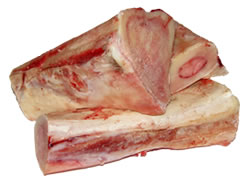
Made 2 big pots of beef broth from bones from an organic, pasture-fed cow
Started a daily NEM supplement (Joint Care +)
Increased my fish oil intake
Acupuncture twice
Went back to eating breakfast, usually a couple of eggs
17 days is nothing – typical recovery from a meniscus injury is 1-3 months depending on the severity. I’d rate mine as low-moderate on the severity scale because for 6 days after it happened, I was hobbling and really aching.
I also missed hockey, which I wouldn’t do unless I was absolutely sure it was a bad idea.
I still wouldn’t load my knee with a heavy squat, lunge or deadlift, but being able to play sports at full intensity is amazing.
And I’ll also be able to start publishing a bunch of different videos that I’d planned that require me to be explosive.
 Squats give you better overall development of your your legs and hips, hitting your glutes, hamstrings and quads. While both work your torso stabilizers. the Deadlift puts more emphasis on your posterior chain, which includes your hamstrings, glutes and back muscles.

 If you’re a fighter or you train MMA, you’ll see these exercises in my Ultimate MMA S&C program and exactly during what phase of training to do them and how many reps and sets to perform for maximum benefits.

 Now I’ll be quite upfront and say I didn’t come close to earning $100K in 2006.
 If you don’t love it, it’s going to be real easy to quit when the going gets tough.



 The first book I read about plyometrics was by Don Chu called “Jumping into Plyometrics”, which was first published in 1992.
 In the classic book “Supertraining” by Mel Siff, he states, “If the transition phase is prolonged by more than about 0.15 second, the action may be considered to constitute ordinary jumping and not classical training plyometrics.”
 That’s why I recommend linear/block periodization (like in the