Sooner or later, chances are pretty likely that you’re going to lose.
For whatever reason, physical, mental, injury or just the moon being in the wrong alignment, you will lose and it will suck. How you deal with it is the important thing.
But we often read or watch interviews with fighters and if they’ve just lost, it’s often the same old, “Well I’ll just have to go back to the drawing board and come back stronger.”
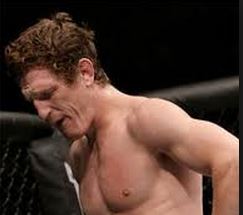
So I wanted to interview my bud Alan Belcher to get some more insights into how pros deal with losses.
His latest bout was against Michael Bisping on April 28 at UFC 159, which he lost due to a Technical Decision after getting poked in the same eye that he almost lost to an injury back in 2010.
Of course, I didn’t want to get in there right away so he’d have time to regroup, but I figured a month and a bit was enough time for him to do his thing.
He was gracious enough to accept my invitation and here’s some of the stuff we discussed:
[green_plus_list width=”100%”]
How much footage of his opponent he watches before a fight
If he watches his fights after they go down
What his mental game was like during the fight with Bisping
BREAKING NEWS about his career plans that might surprise you, especially since he’s still relatively young at 29 years old
What was going through his head after he got poked in they eye
How to get free training with Alan and his team though his new sponsorship program
And a shit load more![/green_plus_list]
It’s 34 minutes long and well worth the listen, so play it now, download it to your iPhone or get it setup so you can listen in the car.
Before we begin, remember that I LOVE “Bodyweight Cardio” workouts.
I use them all the time and do them myself.
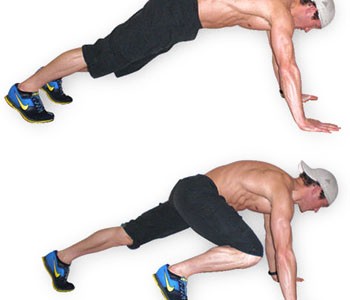
But after getting some questions from a couple of my Kyoudai on the powerDOJO Forum with respect to using exercises like the Push Plank for an interval workout as part of their workout, I decided to shoot this video.
If your goal is to get into top fight shape, watch this video now:
The reasons I give you in this video is why my programs like MMA Ripped, Ultimate MMA and now the powerDOJO Workouts of the Month include both Bodyweight Cardio and traditional cardio.
They both work fine separate, but when put together properly, the results are SYNERGISTIC.
NOTE: what I say about Bodyweight Cardio also applies to any circuit workout that includes traditional resistance training exercises using kettlebells, barbells or dumbbells, too.
QUESTION: for those of you without a science background, did I make the science stuff clear enough for you to understand?
After posting my last article on of ice baths and their effects on various markers of recovery, my buddy Dan (fellow Torontonian) shot me over this article that is in the similar vein on warming up that includes reviews of various studies relating to optimal warmups.
Dan is a trainer and runs his own gym up in north Toronto, where I’ve shot a bunch of videos. It’s the place with the rows of Pullup bars across the wall and turf on the ground – sweet little setup and makes for clean videos.
He also often wears really tight pants and shirts that open up to his navel.
While those sins can never be forgiven, much appreciation goes out to Dan for shooting this short literature review over for those of us who enjoy understanding the science behind the methods.
– Eric
Enter Dan…
Hey there, today I want to talk to you all about how to perfectly start your workouts to enhance your performance.
Would you trade 6 minutes of your time to instantly become a better athlete?
Now while that may seem like a very audacious thing to say the truth of the matter is that the right exercises…
…done at the right time…
…within the right time frame…
…Can and will lead you to your best potential of human performance that you have ever experienced.
What I’m talking about is a specific 6 Minute Sequence that you’ll do before any type of physical activity that will enhance your strength, speed, power, agility, endurance and energy while bulletproofing your body from injuries.
You can do it at anytime and anywhere and it doesn’t require any form of supplements or illegal injections.
It’s 3 step sequence called the Peak Performance Formula and yes, it only takes a total of 6 minutes to complete and yes, it will help you become a better all around athlete.
So take out a pad and pen for some notes. We’re about to get pretty deep on why you should apply this 6 Minute Peak Performance System to your body.
Self Myofascial Release (SMR)
I’m pretty sure you have heard the question:
What came first? The chicken or the egg?
A common argument in the fitness world is: Should you do SMR before or after your workouts?
Well I’m not here to tell you one way or another. I’m just here to tell regardless of whether it is before your workout or after JUST DO IT.
SMR is the perfect way to heal all of the old dysfunctions and adhesions happening in your body.
/START STUDY
Effectiveness of a home program of ischemic pressure followed by sustained stretch for treatment of myofascial trigger points.
Background and Purpose: Myofascial trigger points (TPs) are found among patients who have neck and upper back pain. The purpose of this study was to determine the effectiveness of a home program of ischemic pressure followed by sustained stretching for the treatment of myofascial TPs.
SUBJECTS:
Forty adults (17 male, 23 female), aged 23 to 58 years (mean=30.6, SD=9.3), with one or more TPs in the neck or upper back participated in this study.
METHODS: Subjects were randomly divided into 2 groups receiving a 5-day home program of either ischemic pressure followed by general sustained stretching of the neck and upper back musculature or a control treatment of active range of motion. Measurements were obtained before the subjects received the home program instruction and on the third day after they discontinued treatment. Trigger point sensitivity was measured with a pressure algometer as pressure pain threshold (PPT).
Average pain intensity for a 24-hour period was scored on a visual analog scale (VAS).
Subjects also reported the percentage of time in pain over a 24-hour period. A multivariate analysis of covariance, with the pretests as the covariates, was performed and followed by 3 analyses of covariance, 1 for each variable. RESULTS Differences were found between the treatment and control groups for VAS scores and PPT. No difference was found between the groups for percentage of time in pain.
CONCLUSION AND DISCUSSION: A home program, consisting of ischemic pressure and sustained stretching, was shown to be effective in reducing TP sensitivity and pain intensity in individuals with neck and upper back pain. The results of this study indicate that clinicians can treat myofascial TPs through monitoring of a home program of ischemic pressure and stretching.
/END STUDY
Want another?
OK, here you go:
/START STUDY
Immediate effects of various physical therapeutic modalities on cervical myofascial pain and trigger-point sensitivity.
Abstract OBJECTIVE: To investigate the immediate effect of physical therapeutic modalities on myofascial pain in the upper trapezius muscle.
DESIGN: Randomized controlled trial.
SETTING: Institutional practice.
PATIENTS: One hundred nineteen subjects with palpably active myofascial trigger points (MTrPs).
INTERVENTION: Stage 1 evaluated the immediate effect of ischemic compression, including 2 treatment pressures (P1, pain threshold; P2, averaged pain threshold and tolerance) and 3 durations (T1, 30s; T2, 60s; T3, 90s). Stage 2 evaluated 6 therapeutics combinations, including groups B1 (hot pack plus active range of motion [ROM]), B2 (B1 plus ischemic compression), B3 (B2 plus transcutaneous electric nerve stimulation [TENS]), B4 (B1 plus stretch with spray), B5 (B4 plus TENS), and B6 (B1 plus interferential current and myofascial release).
MAIN OUTCOME MEASURES: The indexes of changes in pain threshold (IThC), pain tolerance (IToC), visual analog scale (IVC), and ROM (IRC) were evaluated for treatment effect.
RESULTS: In stage 1, the IThC, IToC, IVC, and IRC were significantly improved in the groups P1T3, P2T2, and P2T3 compared with the P1T1 and P1T2 treatments (P<.05). In stage 2, groups B3, B5, and B6 showed significant improvement in IThC, ItoC, and IVC compared with the B1 group; groups B4, B5, and B6 showed significant improvement in IRC compared with group B1 (P<.05).
CONCLUSIONS: Ischemic compression therapy provides alternative treatments using either low pressure (pain threshold) and a long duration (90s) or high pressure (the average of pain threshold and pain tolerance) and short duration (30s) for immediate pain relief and MTrP sensitivity suppression. Results suggest that therapeutic combinations such as hot pack plus active ROM and stretch with spray, hot pack plus active ROM and stretch with spray as well as TENS, and hot pack plus active ROM and interferential current as well as myofascial release technique, are most effective for easing MTrP pain and increasing cervical ROM.
/END STUDY
Now keep in mind that most of these research studies were done using therapist based Myofascial Release techniques…
Almost all the research regarding “Self” Myofascial Release has been done by using a foam roller, while being a great way to massage, it is NOT an accurate way to test SMR at all in my opinion.
While foam rolling is an effective way to generally massage yourself it definitely is not the BEST way to do SMR and really dig into those trigger points.
The best way is trigger Self Myofascial Release is to use a Lacrosse ball. The Lacrosse Ball is the perfect way to imitate the pressure and strength used by an RMT’s fingers.
For a cool way on how to use the Lacrosse ball to massage and soothe your trigger points just check out the video below:
Dynamic Mobility Exercises
Dynamic Mobility exercises are short stretches and muscle activation techniques where the main function is to give your body full range of motion as well as activate the muscles that have become dormant due to the ravages of modern society.
Dynamic Mobility exercises are, and should be, an ESSENTIAL part of your workout program and, simply put, they allow your joints and muscles to move freely.
Their function is to repair and regenerate parts of your body including the cartilage.
They do this by increasing your mobility through repair of your joints so you can have the range of motion you were meant to have.
MOST importantly Dynamic Mobility exercises help slow, and in most cases, REVERSE the aging of your joints through the transport of detoxifying synovial fluids into your the key areas of your body.
You especially NEED to do the full body Dynamic Mobility drills BEFORE your workouts and sports because the short stretches give your body maximum range of motion, which will give your body the best peak performance to work in.
/START STUDY
Acute Effects of Different Warm-Up Protocols on Anaerobic Performance in Teenage Athletes
Although pre-event static stretching (SS) is an accepted practice in most youth programs, pre-event dynamic exercise (DY) is becoming popular. The purpose of this study was to examine the acute effects of pre-event SS, DY, and combined SS and DY (SDY) on vertical jump (VJ), medicine-ball toss (MB), 10-yard sprint (SP), and pro-agility shuttle run (AG) in teenage athletes (15.5 ± 0.9 years).
Thirty athletes participated in three testing sessions in random order on three nonconsecutive days. Before testing, participants performed 5 min of walking/jogging followed by one of the following 10 min warm-up protocols: a) five static stretches (2 × 30 s), b) nine moderate-to-high-intensity dynamic movements (2 × 10 yards), or c) five static stretches (1 × 30 s) followed by the same nine dynamic movements (1 × 10 yards).
Statistical analysis of the data revealed that performance on the VJ, MB, and SP were significantly (p < .05) improved after DY and SDY as compared with SS. There were no significant differences in AG after the 3 warm-up treatments.
The results of this study indicate that pre-event dynamic exercise or static stretching followed by dynamic exercise might be more beneficial than pre-event static stretching alone in teenage athletes who perform power activities.
/END STUDY
/START STUDY
Effects of differential stretching protocols during warm-ups on high speed motor capacities in professional soccer players
The purpose of this study was to examine the effects of different modes of stretching within a pre-exercise warm-up on high-speed motor capacities important to soccer performance.
Eighteen professional soccer players were tested for countermovement vertical jump, stationary 10-m sprint, flying 20-m sprint, and agility performance after different warm-ups consisting of static stretching, dynamic stretching, or no stretching. There was no significant difference among warm-ups for the vertical jump: mean 6 SD data were 40.4 6 4.9 cm (no stretch), 39.4 6 4.5 cm (static), and 40.2 6 4.5 cm (dynamic).
The dynamic- stretch protocol produced significantly faster 10-m sprint times than did the no-stretch protocol: 1.83 6 0.08 seconds (no stretch), 1.85 6 0.08 seconds (static), and 1.87 6 0.09 seconds (dynamic). The dynamic- and static-stretch protocols produced significantly faster flying 20-m sprint times than did the nostretch protocol: 2.41 6 0.13 seconds (no stretch), 2.37 6 0.12 seconds (static), and 2.37 6 0.13 seconds (dynamic).
The dynamic- stretch protocol produced significantly faster agility performance than did both the no-stretch protocol and the staticstretch protocol: 5.20 6 0.16 seconds (no stretch), 5.22 6 0.18 seconds (static), and 5.14 6 0.17 seconds (dynamic). Static stretching does not appear to be detrimental to high-speed performance when included in a warm-up for professional soccer players.
However, dynamic stretching during the warm-up was most effective as preparation for subsequent high-speed performance.
/END STUDY
The right type of Dynamic stretching before a physical activity has the ability to enhance every aspect of your performance as well as reversing the age related effects of injuries and tightness throughout the entire body.
For a quick demonstration on how to apply Dynamic Mobility into your exercise program just see the video below:
To not do these types of exercises right before a workout is to give you the keys to a Lamborghini Gallardo but not even driving it.
Both Self Myofascial Release and Dynamic Mobility have the chance to alter your current state of physical health and they are both MUST DO’s in everyones workout program.
Imagine – boosting your strength, speed, flexibility, power and energy while making your body bulletproof to injuries – and doing it in about the same amount of time it takes to buy a coffee at Starbucks.
If you’re not doing them, start. Now.
Dan Go, PTS, NWS
Thanks again goes out to Dan for sharing this info with us.
If you’re not doing what he recommends, you’ve got to start. Your workouts, performance and health depend on it.
Dan has just launch a program that he calls “6 Minute Superhuman” and because it’s the launch, he’s offering it for 50% off right now:
If you’re not using these techniques you’re in the dark ages, so if you want to know exactly how to warmup properly to MAXIMIZE performance and MINIMIZE aches, pains and injuries, check it out.
Primitive man used to hike hundreds of miles up remote mountain paths risking life and limb to chip off a block of ice to bring back to his communal box, hoping to speed recovery from their WoDs so that one day, they might be crowned champion at the Primal Man’s CrossFit Games, only to have their dreams dashed when the ice melted in their hands as they approached their place of training.
Was he foolish in his attempts?
With the popularity of hype shows that depict the training regimens of today’s top fighters and athletes, the ice bath is a tool that is much talked about for improving recovery from tough workouts.
Off the top of my head, I recall seeing Jon Jones, Wanderlei Silva, Big Nog and Junior Dos Santos all jumping into an ice bath after a workout.
“If you say anything about what’s under the ice, I’ll break your arm. Plus, it’s freaking cold in here!”
Now I have never personally had the pleasure of jumping into an ice bath immediately after a workout…
I’ve taken cold showers and hung out in a cold room. I’ve also done the contrast method where I alternate hot/cold either in the shower or by alternating between the cold room/sauna at my gym.
I’ve also run out of a hot tub, rolled around in the snow, then jumped back into the hot tub and enjoyed that tingly feeling on my skin.
But I’ve never dug too deep into the science about it all because I’d heard these methods were useful from coaches I know and trust. So I’ve taken the recommendations personally and since they didn’t require any more time or money, I’ve recommended them to my athletes as well.
Last week, my man Josh posted an abstract link on my Facebook page asking me for my opinion.
This got the wheels spinning and once the wheels are spinning, they won’t stop until I do something about it.
So I decided to do a full-on scientific literature review of the topic of ice baths.
If you’re the type that likes to know the science behind the methods, this article is for you.
Ready?
Then let’s begin.
Do Ice Baths Improve Recovery
from Workouts?
To answer this, I started by looking for articles called “systematic reviews”.
Basically, a systematic review is an article written that is a summary of past research on a certain topic.
For you and me, they are a convenient starting point for any type of research, because really poor quality studies are eliminated and only the best of the best remain.
[FYI – I have access to the scientific journals, so I read the full articles, not just the abstracts. That’s why these posts take so damn long and why I don’t do them too often. Hours of reading studies can be painful as anyone who has done so will tell you.]
In this case, I looked for reviews of the effects of ice baths/cold water immersion (CWI) and cold therapy on recovery from exercise and performance.
I found and read through 3 recent reviews of the literature and am going to quickly summarize the findings from each one, starting with the oldest.
But before we do that, let’s go through some of the theories behind the mechanisms of why ice baths may work:
Exercise causes body temp to increase, and increased body temp is stressful on the body so cooling it may help speed recovery by getting back to normal temp (and a normal, less-stressed body state) faster – this theory is more related to cooling either before or between workouts
It may have an anti-inflammatory effect, thereby reducing the potential for DOMS by speeding mechanical recovery, allowing you to perform better, sooner because you’re not as stiff and sore
It may cause vasoconstriction (decreased blood vessel diameter), which stimulates blood flow and nutrient and waste transportation through the body after exercise, speeding metabolic recovery for greater performance on a cellular level
It may decrease nerve transmission speed and alter receptor threshold, resulting in decreased pain perception
These are just some of the theories as to why ice baths may work.
But do they actually?
Here’s what the literature has to say:
Systematic Review #1
Ranalli et al. 2010. Effect of body cooling on subsequent aerobic and anaerobic exercise performance: a systematic review. Journal of Strength and Conditioning Research, 24(12), 3488-3496.
This review is related to getting the body temperature down before or between workouts, so it’s relevant to you if you train multiple times per day or you’re an athlete that competes in tournaments where you might battle multiple times a day without much rest between, especially if your training takes place in a hot environment.
In this review, the authors boiled down 228 studies to 13 that met their criteria for a good study. All studies used running or cycling as measures for performance.
Both intervals (anaerobic – 6 studies) and steady state (aerobic – 9 studies) tests were used. [If you picked that up that 6+9 = 15 and I said 13 studies earlier, 2 studies looked at both steady state and intervals, you brainiac you]
The aerobic studies involved cooling the body before exercise (either before or during an active warmup, which seems contradictory) or between exercise bouts, mostly with an ice vest or cooling jacket, although a couple studies did use CWI.
They measured things like total distance run in a certain time period, time to finish a certain distance and total work output.
7 of the 9 studies showed significant positive results, as depicted in this graph of performance change after cooling compared to the control group:
Click to Enlarge (that’s what I say to the ladies)
What does this mean to you?
Cooling your core temp down before an aerobic event or between aerobic events can help improve your performance and is something to consider, especially if you’re training or competing multiple times per day and if your event takes place in the heat.
What about the 6 anaerobic studies?
Only 1 showed a significant improvement, while 1 also showed a significant decrease in performance.
BUT – these studies only tested cooling athletes before a performance test, not between multiple performance tests. Thumbs down!
IMO, it would’ve been more useful to see how it helped between anaerobic sessions, to make it more relevant for competitions or 2 or 3-a-day workouts.
I would suggest that based on this review, it is probably beneficial to get your core temperature down for an Aerobic event that takes place in the heat or between aerobic training sessions.
I believe the important point is HOW you cool yourself – in this review, the studies that showed the benefit used an ice vest or cooling jacket, not CWI.
The studies that did use CWI showed minimal to no improvements in performance.
The old ice pack on the neck in between rounds looks to have a bit of scientific clout, here, folks.
The theory behind this is that much like a car that has a governor that limits your top speed, your brain has a governor that can limit your exercise output if your core temp gets too high.
For MMA, if you’re training in a hot gym, it’s probably beneficial to cool yourself down (via an ice pack on the neck) if you’ve got 2 or 3 workouts to do that day.
But CWI?
I’d stay away or at least use it very sparingly between workouts on the same day, for reasons I’ll explain later.
Either way, let’s continue our research and check out the 2nd review…
Systematic Review #2
Torres et al. 2012. Evidence of the physiotherapeutic interventions used currently after exercise-induced muscle damage: Systematic review and meta-analysis. Physical Therapy in Sport, 13, 101-114.
This review looked at cryotherapy as well as massage, stretching and low-intensity exercise (active recovery) and how they affect muscle soreness (DOMS) and various measures of strength, so it’s an interesting comparison at the most popular methods used for improving recovery post-workout.
However, it was a bit different than #1 because the authors performed something called a “meta-analysis”, which combines the results of several studies and draws conclusions based on those combined results.
After sifting through 5790 studies up to February 2011, they got 35 good ones. Here’s the breakdown of the # of studies reviewed and the conclusions from the meta-analysis:
9 massage: significant effect for reducing DOMS at the 24 hour mark after the workout, no effect on strength
10 cryotherapy: not effective for reducing DOMS or restoring strength
9 stretching: no effect on reducing DOMS or restoring strength
7 active recovery: no effect on DOMS or strength
So based on the meta-analysis, it seems that massage is the only effective modality for decreasing DOMS post-workout.
One thing to note throughout these studies is how strength was measured – using either maximal isometric or isokinetic contractions of the knee extensors or elbow flexors. Basically, the leg extension or a bicep curl.
So the strength measures are not very “functional” in nature and even if there were a positive effect, these tests might not translate to real sport (or training) performance.
I still have a takeaway from this study though – massage is probably a good idea post-workout, and your best bet is to FOAM ROLL the muscles you trained after your workout. It’s easy, free and feels (kinda) good.
Unless of course you can afford a $60-100 hit every time you workout. If that’s you, by all means, go for the massage.
I’m not sure what effect happy endings have, though. If you want to volunteer for that study, leave your name and contact info below. 😉
One more thing to keep in mind – stretching isn’t necessarily useless, it’s just not beneficial for decreasing DOMS. If you’ve got muscle/postural imbalances or just want to improve flexbility, it can be useful for those things, just don’t say you’re stretching to decrease soreness because it’s not true.
OK so the first 2 didn’t give us much to chomp on, but the last is more interesting…
Systematic Review #3
Leeder et al. 2012. Cold water immersion and recovery from strenuous exercise: a meta-analysis. British Journal of Sports Medicine, 46, 233-240.
So we’ve got another meta-analysis to look at here.
But it’s not the conclusions that are interesting to me.
It’s what they looked at…
This review looked at studies up to May 2010 and included those that met the following criteria:
Randomized control trials (as the previous ones had been)
Looked at 1 or more of 4 variables: muscle power (vertical jump, sprint), muscle strength (knee extension or elbow flexion), perceived DOMS and creatine kinase (CK), which is a marker of muscle damage – the more CK, the more muscle damage
Measured the variables at 24, 48, 72 and/or 96 hours post exercise
Used cold water immersion (CWI) within 1 hour post exercise
So this review basically included studies that are relevant to any MMA fighter or athlete looking to maximize recovery.
14 studies met their criteria, and here’s what they found:
DOMS: CWI had a moderate effect in reducing muscle soreness at all time points up to 96 h post exercise, especially following what they called “high intensity exercise” at the 24 and 48 hour marks. High intensity exercise included various sports, shuttle runs and intervals – exercises more similar to MMA training than a few sets of eccentric isokinetic bicep curls.
Muscle Power: CWI improved the rate of recovery of muscle power, at 24, 48 and 72 hours post exercise compared to controls. Power tests included various jumps and sprints.
Muscle Strength: CWI was not effective in improving rate of recovery of strength (remember, strength was tested with either isolated knee flexion or elbow extension exercises).
Creatine Kinase: small but beneficial effect in reducing CK, which again, is a marker of muscle damage. So less CK means less muscle damage.
Based on this review, CWI is an effective tool used post-workout.
The specs for CWI range from 5-15 minutes in water anywhere from 5 to 15° C.
The review resulted in contrary findings regarding DOMS compared to #2, but what I find most revealing is the fact that CWI improved high intensity exercise and muscle power, but did not improve muscle strength.
This goes to show the benefit to anyone participating in the combat arts or functional resistance training workouts.
First of all, the power tests are more related to what we do in the MMA world whether it be sparring or an MMA S&C workout instead of an isolated, isometric elbow flexion or knee extension.
Second, muscle power and high intensity exercise is as much related to your NERVOUS SYSTEM as it is to your muscles and local metabolism. This might explain why the tests using the isolated movements show no changes – it’s a very local and relatively easy exercise on the nervous system.
I would LOVE to see some research done on CWI where the exercise protocol is used to drain the nervous system and measurements are taken using tests that really tap into the nervous system.
These tests could be as simple as a handgrip dynamometer test, or use more functional exercises such as a 1RM Deadlift, Olympic Lifts, the shotput, etc.
Direct or indirect measures of nervous system function using things such as heart rate variability would be great to see as well.
Most of the research has focused on the muscles and energetic pathways, but I think the nervous system could play an even stronger role in discovering the true effects of CWI.
I may be totally off-base but hopefully we’ll see some more research come out in the future looking at these variables. If you’re student or researcher, see what you can do. 🙂
One More Interesting Study…
Tucker et al. 2012. Effect of local cold application on glycogen recovery.Journal of Sports Medicine and Physical Fitness, Apr, 52(2), 158-64.
Before we close out, I’d like to go through one more study.
There have been a shit load of studies since February 2011 (the date of the latest study included in the reviews above) to sift through and most corroborate what we’ve already talked about.
So, for the sake of my sanity, I’ve selectively chosen this last one because it’s interesting and can give us one more takeaway…
The researchers looked at the effect of LOCAL cold application on muscle glycogen re-synthesis in subjects after the subjects performed a 90 minute glycogen depleting ride.
During recovery, ice was applied intermittently to one leg and the other relaxed and acted as a control.
A carb drink (1.8 g/kg bodyweight) was given at 0 and 2 hours to restore glycogen.
Muscle biopsies were taken from both the cold and relaxed leg, which means the researchers extracted a sample of muscle and analyzed it.
What they found was that muscle glycogen was significantly LOWER in the cold leg compared to the relaxed leg, which means that the muscle didn’t refuel with glycogen as quickly when it was cold.
What does this mean?
When we look at it in the context of review #1, we see that for multiple workouts in one day, we don’t want to stay too cool for too long, otherwise glycogen restoration might be hampered and you’ll have less energy to burn for subsequent workouts.
If you’re going to use a bath, get in, chill for 5-10 minutes max, then get out.
Or, use an ice vest or neck collar to cool your core temperature down.
But if it’s your last workout of the day or you’re only doing 1 workout, spend 5-15 minutes in an ice bath and you can expect lower DOMS and increased power in upcoming workouts.
Eric’s Ice Baths Research Summary
1. Ice baths are cool and probably work to decrease muscle soreness and hasten recovery of expressing power. Jump in for 10 minutes in water that’s 5-15 °C after hard workouts.
2. If you’re working out multiple times in one day, your safest bet is to wear an ice collar or vest to cool your core temperature down as quickly as possible, which will help you maintain a higher level of performance. Feel free to jump into an ice bath or apply topical cooling to soothe joints or numb pain if necessary, but make sure you don’t do it for more than 5 minutes or you’ll hamper glycogen recovery.
3. Massage after workouts is also a good idea to decrease DOMS. Foam rolling is a poor man’s massage so do that if you can’t afford a massage after every workout. If you’re going to do an ice bath and a massage, do the massage/foam rolling first, then the ice bath. I hope that was obvious.
4. The duck quacks at midnight. Quack, quack.
5. Want to know even more powerful methods for recovery? Whole, natural food and a good amount of restful sleep. Remember – we’re holistic around here, biach.
And I’m Out!
Shit, that was long. My eyes are blurry, my ass is sore, my wife is pissed off at me and I’ve got to take a leak.
I hope this has helped you out a little bit.
Do you use ice baths or any other form of recovery means after workouts?
Or will reading this article change the way you do things?
Let me know below. Or maybe at least hit me with a ‘Like’ – it’ll let me know you dig this kinda content.
Shot this video after coming home from a park workout that involved:
35 Muscleups (not in a row)
30 Chinups
60 Pushups
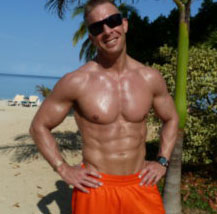
That’s why my arms look so swole lol.
Anyway, in the video I talk about how to lose fat while injured, or healthy based on a question from my buddy Don Wilkerson, who is (or was) recovering from shoulder surgery.
And how to build muscle.
And what to focus on for optimal health.
Enough talk, check out the video:
I just wanted to share some higher level concepts vs. blanket statements to help you learn to fish.
Hope it helped.
BTW, Donnie boy, and anyone else with a bum shoulder or two, make sure you get this if you don’t already have it: Indestructible Shoulder Program (it’s free).
Actually, make sure you read this first, then get the program.
I recently got a question from my man Jose about warming up:
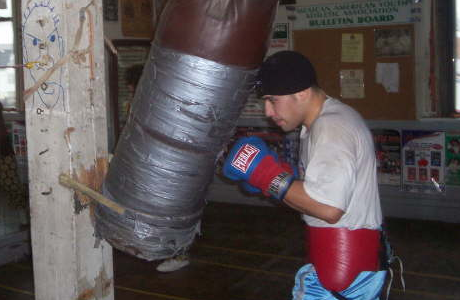
“Hi eric , would you consider working on a heavy bag before hiting the weights a good warm up? And what kind of training the heavy bag is? Power endurance? I like to warm up with the heavy bag so i can train my thai and keep workouts short because i dont have to do that after my work out i just start light and use knees instead kicks so i dont pull everithing while my body its not warm and ready then i just go full when i feel im warm its that ok ? Thanks alot take care.”
So I’ve decided to bring the old “ASK EricWongMMA” videos back:
I also figured I’d post this, which I first posted on my Facebook page, as it’s relevant to the video:
Before I share the research and my experience with rapid fat loss, because I’m generally talking to combat athletes here, I must begin by saying that I’m not talking about cutting weight.
Cutting weight is all about water manipulation and is NOT about losing fat or reshaping your physique long-term.
However, cutting weight is much more effective when you’ve got low body fat, because muscle holds more water than fat.
And obviously it feels better to have a lean body and for MMA performance, relative strength is the key so the less body fat you have the better. Excess body fat is dead weight.
Oh yeah, and that little thing called health.
So if you’re about to embark on a weight/fat loss journey, do you model the tortoise or the hare?
The conventional wisdom is that quick weight loss schemes result in rebound weight gain and the key to long-term weight loss is slow and steady.
But a guy that I met in Florida earlier this year shared some interesting research with me. His name is Shaun Hadsall.
We were discussing nutrition and he told me that he had a simple 3 day nutrition system that was getting some pretty quick weight loss.
I responded by telling him that I’m all about long-term results.
But he said he’d had some research to show me that proved contrary to the conventional wisdom.
He emailed me the study soon after we returned home (he’s from Detroit) but I never got to it until now.
In fact, I wish I’d gotten to it earlier because we’ve just been talking about nutrition quite a bit.
Anyway, here’s a summary of the study (and a link to the abstract for fellow science geeks):
262 subjects were instructed to lose 1 pound per week and were coached for 6 months and re-examined at 18 months.
After the subjects started to lose weight, they were divided into 3 groups:
Average weight loss > 1.5 lbs per week (FAST)
0.5-1.5 lbs of weight loss per week (MODERATE)
Average weight loss < 0.5 lbs per week (SLOW)
Based on the conventional wisdom, you’d think that the fast group would regain more weight than the slow group and would have less success.
But the results show the exact OPPOSITE.
Here’s a table showing the weight loss at 6 and 18 months after the start of the study:
[ws_table id=”3″]
So you see, the fast group not only lost more weight initially, they also kept more weight off after 1.5 years.
The researchers also state that, “the FAST and MODERATE groups were 5.1 and 2.7 times more likely to achieve 10% weight losses at 18 months than the SLOW group.”
After reading this and having my world flipped around, I reflected on the results from some of my programs.
For example, MMA Ripped includes a ‘Priming Phase’ that has resulted in some rapid weight losses of up to 7 lbs in one week in a few cases.
Essentially, it’s a bare bones elimination diet that has you going very low carb and cutting out all processed foods. Most of that weight is water with some coming from fat, but still, MMA Ripped is my most successful program in terms of adherence and physique transformation.
And based on this research, I can see why that is…
Losing weight quickly and seeing immediate results can give you a motivation BOOST that can help sustain your efforts and help you achieve long-term success.
Who woulda thunk it?
This has got me thinking more about the initial approach taken with new athletes and clients.
Whether that be a training tweak to provide immediate KO power, or a breathing tweak to give more stamina, something that gives you instant results could propel you to stick with it long-term and that’s what we’re ultimately all about.
Now, if you’re here reading this and your goal is to lose fat, make sure you check my buddy Shaun’s 14 Day Rapid Fat Loss Plan.
He’s the one to thank for this powerful research and he may be the one to thank after you follow his plan and drop fat quick and finally KEEP it off because of your increased motivation.
It’s a simple system and it doesn’t involve any obsessive-compulsive calorie counting that you’ll probably never do.
Plus, Shaun walks the talk – he’s an older guy (I consider 40+ an older guy lol) and stays as lean as anyone I know, month-in, month-out.
I hate sales letters as much as the next guy. Long, messy and they don’t really tell you much.
So let me do you a favour…
Here’s a screen capture of Alan’s online coaching program, which you’re getting as a free bonus with the Immunity Course 6 DVD set – you’ll see EXACTLY what you’ll be able to learn master when you get the course today:
And here are some comments from people already on the inside:
Grab Alan Belcher’s IMMUNITY Course (on sale Thursday Apr 25 @ 2pm EST – Sat before he shuts it down on Saturday night after his fight vs. Michael Bisping and here’s what I’ll hook you up with (when you grab it through this link RIGHT HERE):
Immunity Course Bonus #1
CAGE Cardio: Advanced Concepts for Combat Conditioning (will be sold for $97) Brand New Recording of the 2.5 Hour Live Workshop [Digital Version]
This is the workshop I recently presented to a dozen trainers and fitness professionals where you’ll discover:
[+] How to harness the true power of KETTLEBELLS with exercises and programming suggestions
[+] My current favourite ‘magic mobility’ exercises for improved, well, mobility as well as injury prevention
[+] 3 distinct energy system based CAGE Cardio workouts: 1) Aerobic + Alactic, 2) NRG and 3) Aerobic + Lactic
An invaluable resource for MMA Strength and Conditioning Coaches and fitness professionals serious about getting the best results for their athletes and clients.
I’ve posted a couple of preview clips here and here.
Immunity Course Bonus #2
Python Power Program For Submission Strength and Stamina (sells for $57)
Follow this 6-week program and you’ll add crushing strength and crucial stamina that will help you catch more subs.
Obviously, technique is more important.
But when matched up against an opponent with similar technical ability, strength and stamina will give you the edge and this program will be the grappling strength and stamina edge you need.
The first 2 bonuses are already over $150 in value, but I thought I’d throw this in because it’s a fun (a relative term) circuit workout that is designed specifically to improve conditioning for grappling, based on Scott Sonnon’s TACFIT Commando program.
It’s a couple years old now but still works just as well as when I first created, although I wasn’t as tuned into the science like I am now (which you’ll learn about in the CAGE Cardio Workshop).
So there you have it – my Immunity Course Bonus Bonanza. After you grab the Immunity Course I suggest you start implementing my materials in the following way:
Read through and follow Python Power
Watch the CAGE Cardio Workshop
When you’re done Python Power, implement the Grappler’s Circuit and the “Power Burst” workout from the CAGE Cardio workshop along with a basic strength program
Don’t forget – the only way to grab my bonus package is to pickup the IMMUNITY Course through this link right here:
Once you’ve grabbed the Immunity Course, just enter your details in the form below so I can make sure you’re tagged through my link and I’ll hook you up with everything.
I’m currently making sure everything is working and running smooth for the launch of the CAGE Cardio Bodyweight Edition program. Everything is looking good and I’m psyched to get this into your hands…
Here’s what you’ll get and the info I’ll be dropping on you in this program:
Why precise, science-based conditioning methods are necessary to avoid the 11 common symptoms of overtraining
My 8 Principles of Strength and Conditioning that will help you reach your fittest self ever
7 unique 4-week bodyweight workouts based on the different energy systems and combinations of energy systems that you can use to get in top fight shape AND as templates to build your own workouts
Instructional and follow along videos of every workout – I don’t just show you the exercises but teach you the finer points of technique through high quality streaming videos so you can do them as well as if you were training with me (without the $100/hour training fee!)
Progressive training templates that are easy to follow that outline exactly how to manipulate reps, sets and rest periods to force your body to adapt and reach new levels of physical performance day in, day out
The two sub-categories of Aerobic + Lactic and Aerobic + Alactic workouts: SYSTEMIC and LOCAL – and how and when to use them
And a heck of a lot more!
If you’re pumped about this program, you’re only half as pumped as I am to share it with you!
Keep your eyes open for an email tomorrow where I’ll be hooking you up at a special launch price (you’ll be shocked when you see it).
CONTEST WINNERS
I also just finished reading through all the responses to the little CAGE Cardio contest I ran over the weekend and I’ve chosen the winners.
They are (drum roll please)…
I chose Andrew because he’s a fighter spending the cash to come back from an injury and I want to help the chap out because I know rehab can get pricey and I also know my programs will help him get back stronger than ever. Best of luck – can’t wait to watch you fight after you get back stronger than ever.
I chose Cole because he’s a Kinesiology student and he’s shown the initiative to learn above and beyond what they teach in school. I highly respect anyone who has a commitment to personal growth – especially young dudes like Cole. Congrats brutha!
I chose Richard because he’s been following my stuff since he started MMA and he’s shown that he’s been paying attention to my teachings by talking about info I dropped years ago! Thanks man and I’m honoured to help you in your career.
If you won – please hit me up via messages on Facebook to claim your prize.
SURPRISE BONUS!
… this includes the winners and anyone who grabs the CAGE Cardio BE program when I launch it tomorrow (you’ll get an email when it goes live).
What is this surprise bonus?!?
You’ll have to watch the video to find out (it’s not that long):
And here are the additional links with more info on what I’ve revealed in the video above:



 Primitive man used to hike hundreds of miles up remote mountain paths risking life and limb to chip off a block of ice to bring back to his communal box, hoping to speed recovery from their WoDs so that one day, they might be crowned champion at the Primal Man’s CrossFit Games, only to have their dreams dashed when the ice melted in their hands as they approached their place of training.


 The theory behind this is that much like a car that has a governor that limits your top speed, your brain has a governor that can limit your exercise output if your core temp gets too high.





 This is the workshop I recently presented to a dozen trainers and fitness professionals where you’ll discover: