Category: Training

  • Submitting Bigger Opponents in BJJ

    Submitting Bigger Opponents in BJJ

    Guest Article by BJJ Black Belt Dan Faggella

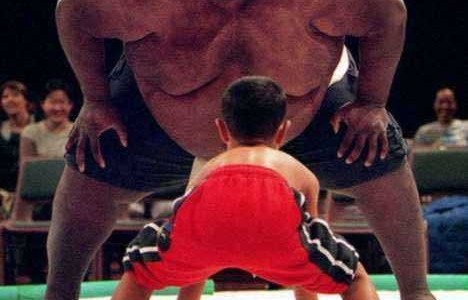
    It’s safe to say that submitting a larger opponent is not the easiest task in the world. With the attribute of strength probably not being on your side in this situation, you have to rely on other things. There is definitely a certain philosophy when it comes to submitting giants.

    The overall and very broad philosophy is this: Play to your strengths, prey on their weaknesses, and use a lot of you against the little parts of them. Sounds simple, but there’s a bit more to it. In order to play to your strengths, you have to figure out what your specific strengths are against that specific opponent. For example, as mentioned earlier, you probably are not going to be able to rely on strength to get your submission. You’re going to want to use speed, mobility, and initiative instead.

    Whether it’s how fast you can slap the submission on, or how fast you can get on the opponent’s back, or how fast you can drop back for the leg lock, you must do everything faster than your opponent if he is stronger than you, and you must do it with initiative.

    Another strength that you will have to tap into is obviously your technique. Like they always say, technique will always beat strength. That is, if your technique is sound. Learning what submissions work for you well against larger opponents is huge, and we will dive deeper into that subject as we progress in this chapter. Once you have figured that out, you must integrate those submissions into your training as much as possible.

    Drilling your giant killer submissions is absolutely essential to being able to hit them in a match or a real time scenario. If during your regular class training time, you go over techniques that your instructor teaches, but do not find time to drill certain techniques that directly relate to beating larger opponents, then it is absolutely essential that you find time to drill those additional techniques.

    Whether it be five extra minutes after class, or an extra hour of drilling with one of your training partners, any amount is better than none. Also, you must find the positions where you are more likely to hit these submissions on the bigger guys. For example, it could prove to be very difficult to attain a submission on a larger opponent from the top half guard position. There are a lot of factors that come into play in this position.

    Yes, you are on top which means you do have gravity on your side, and yes, you do have the ability to drive pressure into your opponent from the top position, but remember, the opponent still might be able to use strength to escape whatever submission you throw at him from there. For example, you could be going for an arm lock of some sort, maybe a kimura or a straight arm lock. Although you are using a two on one grip to control your opponent’s arm, who’s to say that their one arm isn’t stronger than your two from that position, even with leverage in play.

    The same thing goes for side control. Even though side control is one of the most dominant positions and opens up a world of submissions for you, who is to say that those submissions will work the same against a much larger opponent, due to the strength factor.

    A better position to attack with a submission against a bigger guy would be the back mount. For one, all four of your limbs are able to attack, and all four of your opponent’s limbs are facing away from you, giving you a much greater advantage for hitting a successful submission. As far as side control goes, your opponent is much more likely to be able to throw you off of them if they are larger and stronger. Letting your opponent turn into you and letting them think that they are in the process of escaping can allow you to use your speed and mobility to quickly spin behind them, exposing their back and opening the world of submissions for you.

    Mobility is key, guys! I cannot stress this enough, and with submissions, this comes into play big time. Avoiding positions where you have less mobility is key as well. Instead of getting bench pressed from side control, try working from the knee-on-belly position so you can potentially spin to the back or capture an arm for the armbar.

    Holding a bigger and stronger opponent down will be difficult, but being mobile and having the ability to transition quickly when they try to use their strength against you will help you avoid tough situations and will put you in advantageous spots.

    faggella

    Even the mount position can be a tricky one to hit a successful submission from. Though it’s clearly a superior position and you do have gravity on your side, you still have the possibility of being thrown off the top by a larger opponent, just like from the top half guard or side control.

    Generally, the best positions to go for submissions on larger opponents are the back mount, and any leg lock orientation as well. Being able to get to these positions faster than your opponent is a large factor in getting the submission. Another huge factor in getting the tap on a larger opponent is the concept of initial snugness. This is a sometimes overlooked concept in the realm of getting the submission, but it is very essential if you are looking to tap bigger guys.

    For example, let’s say you throw on a straight ankle lock on a much larger opponent. Even though you threw it on your opponent’s foot fairly quickly and got a semi decent grip and snugness on the ankle, they still are able to kick through it and avoid tapping out. Now let’s say for example again, that you throw on the same exact straight ankle lock, this time with very good initial snugness on the ankle, leaving no space for your larger opponent to turn his knee up or kick his foot through. The chances of you getting the tap in the second scenario are far greater than you getting the tap in the first scenario, based solely on the concept of initial snugness.

    This initial snugness is developed through consistent and conscious drilling of these submissions. If you do have certain submissions that you are drilling, it’s important to make sure that with each rep, you are getting perfect initial snugness every time. This will ensure that each time you go for a submission, the likelihood of you finishing it is much higher.

    Dan Faggella is a No Gi Pan Am Champion, BJJ Black Belt, and #1 Jiu Jitsu Best-Selling Author. Check out his full “Giant Killer” BJJ Course Online Here.
  • New Exercise to Unlock Your Hips

    New Exercise to Unlock Your Hips

    DISSOCIATION is not just what happens when you follow Joe Rogan’s advice and take Peyote, it’s a powerful concept that most guys need to train for better movement.

    Often because of repetitive movements from sports we play or exercises we do, certain muscles/movements can get hard-wired together so that whenever one muscle fires or one movement happens, the associated muscle/movement happens.

    A truly intelligent body is one where the correct muscles fire and the rest of your muscles relax to allow your body to move the way it should.

    EXAMPLE: with the hip flexion movement, because of an excess of situps/crunches performed incorrectly, hip flexion always comes along with lumbar flexion.

    These movements are hard-wired so that every time you flex your hips, your lumbar spine flexes too.

    This is TERRIBLE for your low back and is a dysfunctional movement pattern.

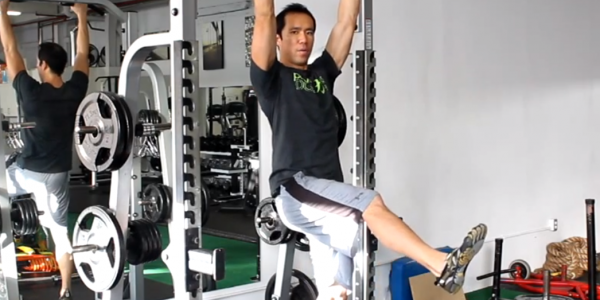
    We’ve got to teach our bodies to flex our hips while keeping our lumbar spine in neutral.

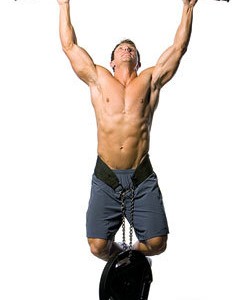
    And one way we can do that is by doing the Hanging 1-Leg Raise:

    This is a key concept integrated into the Hip Flexibility Solution program and one reason why it works so well (and so quickly)…

    I recently emailed my customers asking for a bit of feedback and was overwhelmed when received 18 emails back sharing some amazing results. Here’s a sample of 2 of my favourites:

    Eric,

    First, I’d like to thank you for the program and for the constant updates and support!! It’s nice to have someone who genuinely cares about his clients and their goals. I have been following a 5×5 program since February 2013 in an effort to get stronger as I considered myself to be “weak”! The goal I set almost a year ago was to squat 225 Lbs 5 sets at 5 reps in good form!! For the first few months I made great gains, however 185 Lbs seemed to be my plateau. I would either suffer an injury or drop weight and work back up!

    I never attributed my struggle to my lack of flexibility, I’d do a quick warm up and a little “stretching” (ie Trying to touch my toes) hahaha if I could see myself now. After performing the routines the parking break was released and I busted through that 185 barrier!!

    Today is a special day because today I am throwing 4 plates on the bar and I will achieve my goal!! Just because I will accomplish this elusive goal I’m not gonna stop, 225 is a stepping stone to future progress and I owe you a ton of gratitude for the help!! Your advice has not only helped me in the weight room but has also encouraged me in life to go out and achieve those goals I previously thought unattainable!! Thanks again and I’ll let you know how today’s workout goes!

    Stay Loose,
    Ryan”

    PERFORMANCE is a key reason why I created this program – no point in unlocking your hips to sit around all day, which is why I love feedback like Ryan’s, as well as this one:

    Hi Eric

    The HFS is going well,I’ve been doing it for about 7 weeks now and it has helped my flexibility with Muay Thai training, in fact last Friday night a few people were shocked at how low I was able to stretch when doing the splits compared to how I used to be.

    It’s an awesome program and you should be very proud of yourself for creating it.

    Kind Regards,
    Lee Pentith” 

    LOVE IT!

    Thanks Ryan and Lee and everyone else who has shared their feedback with me.

    You may already know the back story about me creating the HFS program, but to make a long story short, I couldn’t kick worth shit and I really wanted to and none of the conventional advice I followed worked, so I had to dig deep and experiment and finally came up with something that did work.

    HFS is a by-product of my personal quest to be able to throw a decent head kick.

    So if you’d like to reap the rewards of looser hips, get started on the Hip Flexibility Solution today.

  • PERIODIZED Fat Loss Program

    PERIODIZED Fat Loss Program

    Periodization is a concept that’s been around for ages, yet many still don’t take it into account and even most trainers fail to build it into workouts for their clients…

    IMO, one of the culprits is the “Be a Personal Trainer in Just One Weekend” industry that “certifies” anyone who can pay the $500 course fee and show up for a weekend, half asleep and still pass the exam.

    This is going to ruin the industry sooner or later but until then, you’ve got to take matters into your own hands and do your due diligence.

    If like many around the world, January will be dedicated to fat loss, with a little planning ahead you can boost your efforts when the new year rolls around…

    So how would you do this?

    Well, I’ve already thought about this, which is why the last powerDOJO Workout of the Month (pD WoM) was focused primarily on hypertrophy, while the current pD WoM is a combination of hypertrophy and strength.

    Here’s the science behind it:

    By first building muscle mass, you’re adding metabolism boosting muscle to your frame, which will help you “eat up” the excess calories that generally find their way into your mouth around the holidays…

    Then, by following up with max strength training, which involves lower reps, more rest and big compound movements, you “harden” the new muscle you’ve built so you don’t just lose it by transitioning to a cutting style workout right away…

    motoneuron

    Proper max strength training relies on heavy nervous system activation and thus stimulates new neural pathways to your muscles that help you keep muscle you’ve built.

    [Side note: this is also why learning a new movement pattern properly is much better than trying to fix a bad movement pattern – according to Richard Schmidt, author of a couple of textbooks on Motor Learning, it takes a lot more effort and repetitions to break a bad movement pattern (thousands) than build a new movement pattern from scratch (hundreds) – so when you’re learning a new technique or exercise, go slow and do it right.]

    Now, this is a mistake that many people do – they “bulk” then “cut” but because of the hormonal and physiological effects that cutting involves, you’re going to cut fat as well as much of your hard-worked-for muscle!

    Foolishness!

    However, if you follow a Periodized model that I’ve described, which looks like:

    Hypertrophy ==> Strength ==> Fat Loss

    You’ll build lean muscle, keep it while also gaining strength, which will then set you up for the most effective fat loss workouts you’ve ever experienced!

    I’ve tried to break down the science of Periodazation for you in this simple article, does it make sense?

    I hope so. 🙂

    While it’s too late to start on a full hypertrophy phase right now, a hybrid hypertrophy and strength program would be perfect if your main goal in January will be to get shredded…

    This would be especially good if you don’t need to gain much muscle in the first place.

    So if you’re gonna be looking to cut down in January and you want to build the proper foundation to maximize your efforts, I’m setting something up for you that’ll be ready in a day or two. Keep your eyes open for it…

    Eric

  • 1/2 Kneeling Clean and Windmill Press

    1/2 Kneeling Clean and Windmill Press

    Side pressing is great and something unique to Kettlebells – check out this exercise and enjoy the burn:


    If you want to master the fundamentals of kettelbell training and perform KB exercises with proper technique, you’ve gotta check out my friend Chris Lopez’s new Kettlebell Finishers program that includes as a FREE bonus his “Kettlebell Essentials” 17 video tutorial set.

    kb-essentials

    This bonus alone is worth at least $50 and makes the insanely low price of the whole package seem miniscule.

    >> Click Here to Grab These 33 KB workouts and 17 Video KB Essentials Set (on sale!)

    I’m also working on 2 special KB workouts based on my CAGE Cardio system, but it’ll only go to those who grab Chris’ program so make sure you don’t miss the boat. I’ll send everyone who grabs Chris’ program the bonus on the weekend so watch out for an email from me.


  • 3 UNIQUE Pushups in ONE Sequence

    3 UNIQUE Pushups in ONE Sequence

    Was in Barbados for a little business trip, but had to have some fun on the beach…

    You know the old saying, “All work and no play makes Eric a dull boy.”

    And if you want some exercises so your workouts aren’t so dull, then give this new Pushup sequence a shot, that includes 3 Pushup variations you might not have seen before:

    Drop down and gimme 10!

    Actually, if you can do 10 sequences, that’d be pretty impressive.

    However, it’s more about technique and control than how many you can do, so give it a shot and let me know how you fare.

    And if you wanna check out my Hip Flex program, go to www.HipFlexibilitySolution.com and unlock dem tight hips, mon.

  • Submission Secrets from Lovato

    Submission Secrets from Lovato

    Here’s an exclusive video for all EricWongMMA followers who train BJJ:


    And if you’re looking for more free training videos from Rafael Lovato Jr, who just took home silver at the 2013 ADCC tournament, visit the link below:

    lovato-free-videosClick Here for More Free BJJ Training


  • 3 Types of Injuries

    3 Types of Injuries

    nogueira-broken-arm-mir

    If you train MMA, injuries are the norm, not the exception.

    But even if you don’t train MMA but you go to the gym and push yourself to reach higher levels of fitness, sooner or later, something’s gonna happen.

    That’s just the way it is.

    Over the last few years, more and more little aches and pains and nagging things have been coming up.

    Some attribute it to age (I’m 32)…

    I don’t buy it. And neither should you.

    Here’s why:

    Yes, aging makes your tissues less injury-proof and makes recovery take longer.

    But let me ask you a question…

    Let’s say 2 guys workout 3-4 days per week, who would be more likely to experience an injury:

    jack-lalanneThe 60 year old guy with perfect movement mechanics, a deep intuitive understanding of his body and top-notch nutrition, sleep and stress management…

    … or the 30 year old guy who’s got terrible form in the gym, doesn’t listen to his body, eats like crap and has a high-stress job and 2 young kids?

    Exactly.

    Age isn’t the determining factor.

    Plus, there’s nothing you can do about it, so fuggedaboutit!

    Either way, one thing we can all agree on is that injuries are a pain in the ass and can be a real downer…

    Nothing worse than making super gains in some area of fitness, then having to sit out for a few weeks and watch them wither away…

    But as an S&C coach, I’ve shifted my perspective on injuries lately.

    Whenever I’ve had an injury, I’ve learned so much about my body and how it functions. Injuries have a ton of teaching power.

    I’ve gained a deeper understanding of what muscles work during what movements and how my body naturally compensates to avoid others.

    This knowledge has definitely made me a better coach by improving the effectiveness of my cues.

    And having different types of injuries over the years, I’ve come to the conclusion that there are 3 basic types of injuries that we get.


    Injury Type #1: Accidental and Incidental

    These are the types of injuries that happen and when people see it happen they rush over to you and say, “Are you ok?”

    “Ahhhhhhh shit, fuck, #@$#%!” is the typical reply of the person who got injured.

    When I was 18, I got smashed into the boards from behind playing ice hockey and I suffered an SC joint sprain. This was an incidental injury.

    Luckily it wasn’t too bad as I was out of commission for only a few weeks.

    Another hockey flashback – when I was a kid I was playing street hockey with my brothers and as I was running, I tripped and smashed my mouth on the pavement.

    Chipped a tooth, bloodied a lip, but not too bad. You may have noticed I have uneven front teeth – this is why.

    And there was nothing I could’ve done about either injury so there’s not much more to say about accidental and incidental injuries other than they suck.

    Parkour is also a good source for accidental and incidental injuries:


    Injury Type #2: WTF?

    jackie-chanThese are injuries that happen and when they do, you’re like, “WTF?”

    Recently, I was at the cottage and I was walking and all I did was turn my body a little bit and suddenly pain shot through my knee like a lightning bolt.

    I hobbled on one leg over to the couch to assess the damage. I sat down and moved my knee around a bit, thinking the pain would just go away because nothing really happened.

    But the pain didn’t go away. In fact, it lasted for over a week and I just got back to leg training 2 days ago.

    I’ve racked my brain trying to think about what happened and how to prevent it, but I can’t come up with anything.

    All I can do is hope it doesn’t happen again.

    Just like with accidental and incidental injuries, not much you can do, so nothing to think about.


    Injury Type #3: Arrogant and Ignorant

    In this classification system, these are the only injuries you can actually do anything about.

    When I was 14, I had fairly major back surgery that left me lying on back to recover for 2 full months.

    Because a surgeon’s job is to do his thing then send you on your merry way, I didn’t know that I would have to deal with issues like muscular strength and length imbalances.

    So once I got past the stage of working out where my main goal was to pump up my bicepz to impress the honeys and I started Squatting, shit got real.

    Back pain and SI joint pain were common after heavy squat sessions.

    Until I learned why they were happening to me and what to do about it in university under the tutelage of Dr. Stu McGill.

    But before then, I was ignorant to where my problems were coming from and suffered Ignorant Injuries as a result.

    Since I’ve dedicated the past 14 years of my life to studying how to turn the human body into a vicious fighting machine, the amount of potential ignorant injuries has gone down while the potential amount of arrogant injuries has gone up. 

    I say potential because the injuries don’t have to occur, if you take preventative action once you learn what you’re doing or not doing that might result in an injury.

    Lately, my biggest issues have been with my knees…

    For example, whenever I’ve gotten to around 250 lbs on the Back Squat, my knees started to feel it.

    Thing is, I knew what was up.

    ostrichBut like the silly ostrich, I kept my head buried in the sand, hoping it would just go away.
    Unfortunately, this strategy failed.

    Miserably.

    Which is why I’ve dedicated so much time and energy to fixing the problem – my tight ass hips.

    In my next post I’m going to show you how tight hips can cause knee problems, but until then…

    What injuries have you had and based on the 3 types here, how would you classify them?

    Let me know in the Comments below.

  • Get a WAR ready CORE

    Get a WAR ready CORE

    UFC 165 was in Toronto this past weekend, so a bunch of friends and I got together.

    Who do you know from the pic below?

    ufc-crew

    If you guessed Chris Lopez, Vince Del Monte, Yuri Elkaim (striped hoodie) and the black guy you can barely see as Funk Roberts, you guessed right.

    Funk and I had a little wager going on that directly affects you. We’ll get to that in a second…

    Now, if you’ve never been to a UFC, I highly recommend sitting somewhere like we did, not on the ground and elevated in the first section in the middle. You get a good view of the cage and the screen that way.

    It’s not necessarily about the view anyway, as you end up watching the screen most of the time.

    It’s the energy in the building when someone lands a big punch. Or the champ steps into the cage, ready for battle:

    [jwplayer player=”8″ mediaid=”8116″]

    Speaking of being ready for war, I’ve got a killer little workout for you.

    It’s a superset you can use “finisher” style, just like my previous post where I showed you an Advanced ABS Ladder.

    If you like the feeling of tight abs after you’ve torched them and it didn’t take 5 ba-zillion situps to do it, then you’ll love this workout, too.

    And most importantly to all you ass-kicking mixed martial artists, dynamic core stability is an uber-important ability to train and if you do this workout and the last one I showed you, your core is guaranteed to be rock-solid.

    So peep the video below:

    How’d you like it?

    Let me know below by hitting the ‘Like’ button at the bottom of this post.


    EricWongMMA vs. FunkMMA

    Now, I mentioned earlier that Funk and I had a little wager going on for the main card…

    Based on our non-standard rules, I took it 3-1.

    EricWongMMA vs. FunkMMA

    And because I won, instead of getting another beer, I decided to use it to get Funk to hook you up with an insane price for his Elite MMA S&C program – I got him to hook you up for only $29 instead of the regular price of $99.

    Pretty sweet deal.

    “Eric, how does Funk’s Elite MMA program compare to your Ultimate MMA program?”

    Good question.

    Here’s how they stack up…

    Ultimate MMA S&C lays out an exact plan to follow, week-by-week, to lead you into a fight.

    If you don’t have a fight, then you just go through it like you do have a fight.

    Funk’s Elite MMA program is more dynamic and could be seen as following the conjugate system of periodization, whereas my Ultimate MMA program is based more on linear periodization, aka the “block” method.

    My program has more background info and scientific explanations behind it. It’s basically like an entry level course in kinesiology for MMA.

    Funk’s program isn’t as science based, but has more workouts than mine. The Elite MMA videos are also really high quality.

    So in terms of getting you ready for a fight, I do believe my program to be superior.

    If you’re not fighting, Funk’s program offers more variety and will be more fun if you like that sorta thing.

    Now, if you have more than 12 weeks in between fights, then following his program will be a great idea during that time, then you can follow my 12-week plan to get yourself ready for your fight.

    And for $70 off, it’s a no-brainer if you’re a serious mixed martial artist.

    But you can only get this price from this special link, so go for it.

    You won’t be disappointed.

    funk-mma-elite

  • Advanced ABS Workout Finisher

    Advanced ABS Workout Finisher

    Here’s the video of the Advanced ABS Workout Finisher:

    Perform the workout ladder style from 6 reps down to 1 rep:

    1. L-Chinups (or Fetal Position Chinups)
    2. SB Prone Rollup (or SB Rollouts)

    The key is maintaining NEUTRAL spine, which trains your core to protect your back and be in the position for maximal power transfer.

    >> Click here for 51 more Workout Finishers like this one <<

    If you’ve got a fight coming up, I recommend using these types of workouts, which train the Aerobic + Lactic energy systems, from 12-8 weeks out.

    As you get closer, you want to focus on the Aerobic + Alactic, then the NRG System Complexes.

    If you don’t have a fight, do these types of Aerobic + Lactic workouts in 4-week blocks.

    For more info on scientifically training the 3 energy systems for MMA, click here.

    Questions or comments?

    Hit me up below.

  • Should You Be Doing Roadwork For Cardio?

    Should You Be Doing Roadwork For Cardio?

    First, let’s define what ROADWORK is traditionally defined as…

    “Roadwork is jogging at a slow, steady pace for 3-5 miles, often at a frequency of 3-6 times per week used by boxers and other combat athletes to develop cardio.”

    I’d like to add that roadwork keeps your HR in the 140-150 bpm range, giving you lots of room before you hit the anaerobic threshold. You’ll know you’re doing it at the right intensity if you can talk fairly easily during it.

    Now, the classic definition may or may not include a gang of Filipinos joining you…

    Manny Pacquiao Running

    If you don’t have access to a group of Filipinos who want to follow you on your runs, don’t sweat it. I’m pretty sure it’s not a requirement.

    Roadwork has been used in boxing forever, but has received a backlash since the emergence of Tabata’s and HIIT methods, which alternate moderate-to-high intensity intervals with recovery intervals.

    Let’s talk about the benefits of each…

    Benefits of Roadwork

    Roadwork provides a few different benefits that interval training methods don’t:

    • Develops cardiac volume, which helps your heart’s chambers get bigger, which allows the heart to fill with more blood and then have more blood pumped through your body
    • Can do it without getting sore or taking too much out of the nervous system, allowing you to get more training in without hurting recovery too much
    • Can speed recovery from more intense training and even serve as a form of meditation for you

    So you see, it’s not useless or pointless and can help you reach your fitness goals.

    Now, let’s look at interval training…

    Benefits of Interval Training

    • Develops cardiac power, which helps your heart get stronger and pump more blood through your body
    • Takes less time and can go by super fast because you’re forced to be focused on the task at hand
    • Increases strength and power of the muscles involved

    When it comes to interval training, there are many different methods to use, with anywhere from 5 second super high-intensity work intervals to up to 8-10 minute moderate-intensity work intervals.

    Recovery intervals can also range anywhere from 10 seconds to 2-3 minutes.

    The exact method to use depends on the phase of training you’re in, i.e. how far out from a fight/competition you are.

    If you’re not training for a fight or competition, the key is to strategically order the phases so each builds upon the last.

    Enough background.

    Let’s cut to the chase.

    The bottom line is (drum roll please)…

    Roadwork is useful for boxers and other combat sport athletes, as are intervals.

    I know everyone likes cut and dry answers like, “You pussy, you don’t need to run slow. Just do HIIT!”

    But I’m not like that.

    yin-yang-ganjaMaybe it comes from my Chinese-Canadian-Jamaican background (Google – you’ve got every image I could ever ask for and more), or maybe it comes from reading Tao of JKD and The Importance of Living (by Lin Yutang) over and over that influenced my thought patterns to avoid black and white and dogmatic thinking and be open and free to all possibilities.

    Actually, it’s all of that (and more).

    Either way, while it can be more complicated to adopt this mindset, do so, commit to educating yourself and you’ll learn to fine-tune to get better results in less time.

    Now, when it comes to roadwork, you don’t need to be doing it everyday.

    In fact, I recommend you do traditional roadwork 1-3 times per week, max.

    Much of your actual combat training, especially more technical classes, will give you similar benefits to roadwork, so you don’t need to be doing them for conditioning.

    However, if you need to drop a lot of weight (put those cheezies down, NOW), a higher frequency is beneficial because it helps you burn fat without smoking your muscles and nervous system.

    Just know that there are minimal conditioning benefits beyond 1-2 times per week, as long as your sessions are 40-60 minutes long (the less time you spend, the more sessions you need – aim for 1-2 hours of total roadwork per week).

    Because your main goal is making your heart adapt, you can use any type of cardiovascular exercise or even other exercises (like my A+A workouts) – so when doing a more traditional form of roadwork, switch it up between things like jogging, boxing, stairclimber, skipping, etc in 10 minute blocks. I first learned this method from Joel Jamieson, who is a brilliant strength and conditioning coach.

    Here’s an email I got from Rocci Williams, a bloke who I’ve profiled on this site before, about his experience with roadwork:

    Dude, so as I informed you I aint followed your program since last year in fact exactly a year a go, and yesterday I joined an MMA club for a “fitness assessment” now I kind of guessed what this was gonna entail

    A personal trainer trying to fuck me up with various pieces of equipment and make me give up, now the thought of this did make me panic a little, but however I have been doing over the last 2 months 2- 3 sessions a week on the stationary bike 30-45mins at 150bpm just as you outlined.

    you said that cyclists have a good cardiac output, well this got tested last night and I am pleased to say I felt awesome, there was at one point a little sick coming on up, but on the whole I kept on it and pushed through harder on the ten second countdown at every station.

    he basically had me do a minute on everything, then 1min, 45s, 30, 15 then back up again over and over changes the exercises every round.

    just want to say a massive thank you, for helping with my fitness, preventing me from looking like a complete bellend in front the rest of the team and also helping me gain a new confidence in my ‘cardio’

    Regards
    Rocci

    As you can see, the hype behind the, “Cardio is DEAD” movement is not built on solid ground.

    Next comes interval training, which I generally recommend you do twice per week. [The right # of intervals, work and recovery periods depend on the phase of training and I outline exactly what to do in all of my programs]

    powerful-heartDo this and your heart and lungs will get stronger and more powerful.

    And don’t forget, circuit training is another thing to throw into the mix.

    Depending on how you setup your circuits, they can be more like interval training or more like roadwork.

    Not to mention resistance training… But now we’re getting off topic.

    The key thing is that you’ve got to have an open mind and take a wholistic approach to your training.

    You’ve got to use the best available methods at the right time, not just throw workouts and training phases together randomly, hoping to come out on top.

    Yes, doing something and training hard will get you in shape.

    But there’s a way to refine it all down to the minimum necessary so that you can train less while achieving more.

    And that’s what I’ve done with all of the programs I’ve created.

    I’ve applied the best of science and experience and laid it out in a step-by-step format that you can easily follow.

    So if you want to take your training to the next level, choose one and follow it through to the end and you’ll see what it feels like when you train smart.

    [ezcol_1third]master-manual-3D-small[/ezcol_1third] [ezcol_1third]p4p-cover-3d[/ezcol_1third] [ezcol_1third_end]3d-cover-small[/ezcol_1third_end]

    MMA: Ultimate MMA S&C Program

    Boxing: The Program 4 Pugilists

    Advanced Conditioning Methods: CAGE Cardio Bodyweight Edition