Category: Training

  • TRXercise: 1-arm Power ROWtation

    TRXercise: 1-arm Power ROWtation

    The weather is getting nice which means I’ll start doing some more outdoor workouts.

    So I’ll be toting my TRX around and banging out a bunch of these:

    As I mentioned in the video, this trains something called the Posterior Sling system.

    Here’s a diagram showing you how it works:

    posterior-sling

    As you can see, the glute is attached fascially to the opposite lat.

    When you reach forward with your arm and opposite knee like when you run, it stretches this system and allows you to take advantage of the stretch-shortening cycle so when your foot lands and you drive off the ground, you can drive with more power.

    For punching, you can take advantage of this in the second punch of a combo, for example, you throw the left hook then follow up with the right cross, stretching the left lat during the left hook, then ripping the arm back to unleash the full power when you throw the right cross.

    Just another way to think to help you develop more power in your strikes.

    Got a Q or comment? Hit me up below.

  • Do the Deadlift the WONG Way

    Do the Deadlift the WONG Way

    There are exercises for strength and there are exercises for 3D movement. You cannot expect to maximize both within a single exercise.

    We all know and love the Deadlift. Come on, who doesn’t like lifting heavy-ass weights off the floor and putting them back down again. It’s obviously to develop strength.

    But the Deadlift is a sagittal plane exercise only, meaning it works in one dimension.

    And then there’s the 1-leg Stiff-leg Deadlift. You know about this exercise if you’ve followed any of my programs before.


    THROWBACK video of the week lol!

    They’re a staple in my programs because they’re so good at improving single leg balance as well as muscular balance in the hips.

    Plus, it trains your body to work in three dimensions: the sagittal, frontal and transverse planes, placing a unique load on the neuromuscular system and results in the creation of new neural pathways.

    Now, one is not better than the other and both can be used together to produce superior results.

    It’s all about SYNERGY.

    Yes, Strength is important. But so is symmetry.

    Like my rhyme?

    Those who say that all you need are Squats and Deadlifts for the lower body have never had to fight a guy off while hopping around on one leg to defend a single leg takedown attempt.

    takedown-defense

    That’s why if you’re into MMA or another combat sport or you want your body to be developed like an MMA fighter, you can’t just listen to the powerlifters or bodybuilders for training advice – their goals are different and incomplete (or excessive) for the needs of the combat athlete.

    I was playing around in the gym and tried a variation of the 1-leg SLD out that really helped my single leg balance, as well as the springiness in my feet.

    I noticed it most when playing ice hockey – I’d always had trouble crossing my left leg over my right – it never felt as solid as the other way.

    But after a few weeks of doing the 1-leg SLD the WONG way, it improved.

    This is a problem I’ve had since I started playing hockey when I was 9 years old. Amazing! Super! Fantastic!

    This exercise increases both the transverse and frontal plane loads, which increases the need for the deep hip stabilizers to work, as well as the tibialis posterior.

    Notice how contraction of this muscle raises your arch.
    Notice how contraction of this muscle raises your arch.

    I name the tibialis posterior muscle not to sound smart but to make the point that this muscle is important in creating the arch on your feet, and is important for having quick feet as it gives you the spring.

    This is also important for power.

    Anyway, check out this video, give it a try, then feel the benefits of improved single leg balance and perhaps cure your flat feet:

    Do this exercise twice a week, at the end of your workout, for 2-3 sets of 3-5 reps.

    Each rep takes about 6-10 seconds, and you want to go slow to groove the proper motor pattern.

    What do you think about doing the 1-leg SLD the WONG way?

    Hit me up below with a ‘Like’ or Comment.

    Would love to hear how it goes for you.

  • Metabolic Workout Syndrome: The Cancer of Modern Fitness

    Metabolic Workout Syndrome: The Cancer of Modern Fitness

    “Don’t strain yourself Rick. You don’t want to hurt yourself.”

    Pic from my wedding. Figured I might as well use it - I paid enough for the damn thing!
    Pic of me and Mom from my wedding. Figured I might as well use it here – I paid enough for the damn thing!

    Words oft spoke to me by my Mom when she used to come down to check on me in the basement after hearing grunts and groans while straining under a heavy lift.

    Heavy being relative – back in my early lifting days a 155 pound Bench Press was massive…

    I’d reply, with slight annoyance, “Don’t worry, I’m fine. This is what working out is all about.”

    With a mildly concerned look on her face, she’d return upstairs while I finished my workout.

    Despite her lack of a fancy personal training certification or accreditation, my Mom would probably be able to help a lot of fighters out with her over-protective and conservative attitude towards training.

    You see, in this day and age, science is taking a back seat to marketing and hype.

    “Metabolic <cough, vomit, cough> workouts” dominate the landscape and are promoted as the cure-all for your strength, power, fat loss, muscle building and uninspiring erectile performance needs.

    If there were a manual for being a Metabolic Workout CoachTM, it would read like this:

    1. Pick 4-20 exercises (on the spot at random is fine).
    2. Perform each exercise until form breaks down, then continue with the same exercise for another 30 seconds before moving on.
    3. Keep rest between (death) circuits as short as possible by yell at your (torture) subject to start again.
    4. Repeat for the duration that you are paid for then say to your subject, “Great workout eh? I bet you’ll feel it tomorrow!”

    Just because you read on a website about a (shitty) study talking about something called EPOC and how it helps you burn calories for 432 days after you finish your workout, allowing you to feel good as you sit on the couch chewing on Funyuns, doesn’t mean it’s true, no matter how badly you want to believe it.

    Now I’m not saying that these types of workouts are all bad.

    But the way they’re designed mostly sucks.

    There’s often little to no thought behind them, or the thinking is on a very elementary level ie. what exercise order will be most painful.

    And for fighters, if all you’re doing are “metabolic  workouts” to improve your conditioning, you’re impeding the progression of both your fitness and technical fighting skills.

    We come from a world of “no pain, no gain” and because these types of workouts suck ass, we figure they’re good.

    Well sometimes they are.

    The way that most “metabolic workouts” are performed are heavily draining on both the nervous system and local metabolic pathways.

    This in turn, limits your ability to drill and learn your MMA skills.

    Your body can’t learn new skills, whether that skill is strength, power or a new combo, when it’s spending its energy on recovery.

    And done to excess and without proper recovery can result in a new disease that I’m calling Metabolic Workout Syndrome.

    Here are some of the symptoms of MWS:

    • Injuries, especially those ending in ‘itis’
    • Trouble falling asleep
    • Trouble waking up
    • Muscles that are constantly sore
    • Low motivation/drive to train
    • Irritability
    • Strength loss
    • Muscle loss
    • Difficulty learning new skills and frustrated coaches
    • Feeling of working hard but going nowhere

    I’m sure there are more.

    But when your nervous system is drained and your muscles are overtrained and not recovered, you’ll experience at least a few of the above.

    So what’s the cure?

    TAKE YOUR DAMN REST!

    Rest periods are becoming the bastard child of the training variables.

    We’re manipulating exercise order, reps and sets, but we’ve totally thrown poor rest out the window.

    I’m not going to give you any specific recommendations in this article.

    I’ve created both free and premium programs that address this by outlining just how much “metabolic” training you should do.

    I also scientifically describe my workouts instead of using the catch-all term metabolic.

    My goal with this article was simply as a reminder to those who have already followed my teachings, and to open the eyes of those new to my world to the dangers of MWS.

    We’ve got to fight this “more is better” mentality.

    Instead, let’s adopt the mindset of “less is more”.

    The less you can do to get your desired result, the better.

  • The Turkish Getup

    The Turkish Getup

    Guest Article by Grant Lofthouse, RKC

    If you checked out Eric’s recent post The 6 Fundamental Movement Patterns you learnt that it’s not about training the muscles in isolation but rather focusing on movements to develop athletic potential. Or in words – ‘moving with flow’ as opposed to a robot.

    If you think about the typical common exercises such as the squat, bench and deadlift, it’s very one dimensional a.k.a robot like.

    Squat – sit down, stand up.

    Bench Press – pull bar to chest, push it away.

    Deadlift – stand up with the bar.

    All these common movements are performed in the sagittal plane which is only moving forward and back.

    However there are 2 other planes of motion that also occur in human movement and they are…

    • Frontal plane – moving from side to side (like a lateral lunge)
    • Transverse plane – rotational movement; think or Eric’s one arm plank he performed in this video:

    In MMA all movements in all 3 planes of motion occur so it would be handy to be strong in all three planes and not just one. That being, just sagittal.

    If you follow Eric’s recommendations in his book – The Ultimate MMA Strength and Conditioning Masters Manual you would know that you should only strength train 2 times a week to allow for optimal recovery due to also having to handle work, life and mat training.

    So if you only strength train 2 times a week you will want to get the most bang for your buck correct?

    Now I’m not a fan of sport specific stuff however, this exercise that I’m about to introduce to is about as close to “sport specific” you can ever get.

    It’s called the Turkish Get Up – and once you do it you’ll soon find out why it is so effective.

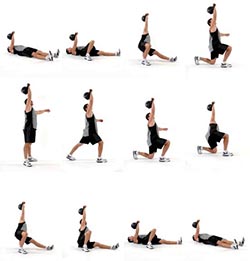
    So let’s do a Get Up…

    1. Start in the fetal position with the kettlebell on your side. Pierce your hand through the handle, hug it to your lower ribs and roll back.
    2. Use both hands to press the bell up and only take the other hand away once you have stabilised the bell and you’re confident.
    3. If you have the bell in your left hand you will have you left knee bent and slightly outside the line of your body. Your right hand will be down on a 45 degree angle and in line with your hip.
    4. Push off with your left heel and roll in the same direction as your right hand and post up onto the elbow. Once you are posted – stabilise, suck your shoulders together and make sure the right shoulder is packed (down away from your ear).
    5. “Squash the spider” with your right palm and extend the elbow until straight. Once you are posted – stabilise, suck your shoulders together and make sure the right shoulder is packed (down away from your ear).
    6. Take your right foot and drag it over to your left. Now drag your right knee over towards your right hand.
    7. Bring your torso up so that you are in a lunge position.
    8. Straight the front and back leg up, push off the back leg and stand up with feet in a squat stance.
    9. Congrats, you’re half way there!
    10. Take a big step back with your right leg (think of a reverse lunge) and touch the knee on the ground gently.
    11. Windscreen wipe the back right leg and fold at the hips whilst placing your right hand back on the ground.
    12. Swing your right leg through and sit down. Check that your right shoulder is still packed.
    13. “Unsquish the spider” and fold back down onto the elbow. Check that your right shoulder is still packed.
    14. Lye back down onto your back gracefully. Place both hands onto of the kettlebell and bring it back down to your chest.
    15. Roll to the same side you got it from and place the bell on the ground.

    That’s one!

    As you can see there are so many exercises in one it’s a really great ‘bang for your buck’ movement. Also you’ll notice that because you’re in so many different positions during the get up, the shoulders become strong and stable which is great news if your shoulder is ever forced into a nasty position i.e. an arm bar.

    So there you have it. Now you have an exercise that covers all movements, stabilises and strengthens not only the shoulders but the entire body AND a great time efficient exercise.

    It is truly the best exercise for MMA. Give it a go and post your comments or questions below.

    Grant Lofthouse is an RKC and the founder of Cardio Haters Training. He specializes in getting people sexy without cardio and has a current mission to help 100,000 cardio haters set themselves free from the treadmill grind. Grant has been featured in Australia’s Women’s Health & Fitness, Muscle & Fitness and Oxygen magazine. For more info visit www.CardioHaters.com.

    Eric’s Comments…

    The TGU is a great exercise, although I’m not one to call any exercise “the best” for anything, as there’s no such thing. That being said, it’s a great movement to incorporate into your training that I feel provides the biggest benefit in terms of shoulder stability. It’s one that I have as a Fitness Skill requirement in powerDOJO once you get to the Orange Belt level.

    Throw it in more near the end of a workout as opposed to the front because you don’t want to tax your shoulder stabilizers before any heavy lifting. I like 2-3 sets of 2-3 reps per side.

    Thanks goes out to Grant for the great breakdown of proper technique for the TGU!

  • The 6 Fundamental Movement Patterns

    The 6 Fundamental Movement Patterns

    These are the 6 major movement patterns that athletes should focus on developing vs. thinking about muscles.

    Yes, some of the exercises will be the same as if you’re training focused on muscles.

    But it’s the mindset that makes the difference when it comes to program design.

    Thinking “movement patterns” not “muscles” is going to be old hat for those of you who have followed any of my programs.

    But a refresher never hurts, plus I give some other details here and there that might help you move better.

    Check it out:

    When you look at sport (or life) as a series of movements, you can see how these movement patterns apply.

    So instead of thinking about walking up stairs as using your glutes, quads, calves and hamstrings, in which case you’re missing a whole shit load of stabilizer muscles working when you’re balancing on one foot, you simply see it as a Lunge movement pattern.

    Minimalism at its best.

    Sure there are times when thinking about muscles is necessary. I’m not saying throw it out.

    For example – if you sit on your butt all day, your glutes are likely in a coma.

    So, activation exercises specifically for your sleepy glutes is a great idea, especially as part of your warmup before any lower body work.

    But for the most part, thinking movements, not muscles, is going to be more beneficial for you.

    Good to go?

    Hit me up with a ‘Like’ to let me know.

    Muchas gracias, mi amigo.

  • Exercise to Help You Escape the Mount

    Exercise to Help You Escape the Mount

    This exercise is a simple and powerful one that you can use to develop strength and power in a similar movement pattern that you use when trying to escape the mount.

    Obviously, escaping the mount is more than just strength and power.

    You’ve got to know the proper technique.

    Can anyone direct me to this gym. I’d like to do some, uhhh, tutorials.

    But even more so, you’ve got to make your opponent think you’re doing something else before you try to escape, to throw him off.

    LOL

    You sneaky devil, you.

    So you could crank his neck down so he postures up then bridge and shrimp out.Or you could fake going for a kimura then when he goes to defend his arm with his other arm, you could bridge him off.

    Those are just two simple ideas that you can try.

    Whatever you do, don’t telegraph your move.

    Be relaxed, then BAM – explode with your escape attempt.

    With this exercise, when you’re on the ground, relax everything, including your arm. Just let it rest on your body.

    Then BAM – explode up.

    This will train the exact movement pattern and relaxation-activation you need to surprise opponents to escape their mount.

    And now, the exercise you’ve been waiting for. I call it the Hip Thrust + Press:

    You likey?

    Me likey when you likey!

    So please click likey below!

    PEACE

  • The Fat Loss Plateau ‘Double Whammy’

    The Fat Loss Plateau ‘Double Whammy’

    I’m writing this post to you from the lounge at Billy Bishop airport in downtown Toronto. My wife and I are waiting to board a plane to Mont Tremblant for a short snowboard trip. If you’re ever flying out of Toronto and can use this airport, do it – it’s so convenient to downtown and the lounge rules.

    In the lounge, the airline Porter hooks you up with free cappuccinos, nuts and other tasty snacks. Naturally, I like to come early to take advantage of the freebies. You can take the man out of China, but you can’t take the Chinese out of the man…

    It’s about 15 degrees Celsius here in Toronto, but our destination is hovering around zero, so hopefully the snow doesn’t all melt. Either way, it’s a trip, which is always a good mental break from the daily grind.

    I’ve been working closely with a female boxer prepping for a provincial championship tournament, which is a qualifying tournament to fight for the chance to represent Canada.

    She’s a highly skilled athlete, tough as nails and can push herself as hard as anyone I’ve trained.

    The biggest thing we’ve got to work on right now is cutting weight. Like most elite fighters I’ve worked with, when she puts her mind to it, she can achieve amazing things. And what makes her put her mind to it is an impending competition.

    But the world is Yin and Yang. While she has the tenacity to do this, the mental focus, energy and sheer willpower it takes to train and diet like an animal for months on end leading into a tournament is draining and can lead to losing control when the big bout is over. In fact, that’s what’s happened before, which has lead us to entering this vicious cycle again.

    Perhaps you’ve had this experience, too?

    You set your mind to a goal that is achievable but requires you to really be on point, you achieve it, then you say to yourself, “Man, that was great. I achieve my goal. Now, I just want to relax. I deserve it”

    And then, the old habits that forced you to summon the powerful focus to achieve your goal come back with a vengeance and quickly, you find yourself back at square one (or worse).

    This, my friends, is a stressful way to live, both mentally and physiologically. The more you do this, the harder it becomes to do it again in the future.

    So this is what I’ve been planning for, this time. Breaking out of this cycle.

    My boxer is a young athlete and has a long career ahead of her. All she needs to do is stay healthy and stay on point and she’ll be able to build and build until she’s untouchable, as opposed to having to fight her way to get back to her previous peak.

    This is the concept – stop fighting yourself. Stop fighting just to get back to what you’ve already achieved.

    Be more patient.

    Get there in flow and you will be able to stay there and build.

    Now, here are some ‘insiders’ tips for you to put into practice or just contemplate to help you to achieve your goal AND remove yourself from this draining cycle so that when you do achieve your goal, you can redirect your focus and energy to keeping it and building upon it.

    Tip #1 – Don’t Try to Be ‘Perfect’

    If you try to stick to a diet 100%, you’re only restricting yourself and setting yourself up to rebound and binge like a starving wolf unleashed at a Chinese buffet.

    I’ve found the most successful people with diets don’t eat perfectly. The ones that do eat perfectly (for a period of time, say prepping for a fight or competition) ALWAYS go bonkers after the fight.

    My wife has been doing a lot of research on this in the scientific literature and it’s not just my opinion – it’s scientific fact that restrictive dieting leads to binge eating.

    And in university, my room mate was a competitive mountain biker and he was pretty tight with his diet. But sometimes, when I felt like it, I’d buy some ice cream. It’d be in the freezer for a while as I don’t eat a lot or very often. Until…

    When he saw it, he’d destroy the whole 2 liters or whatever was left because he just couldn’t control himself. Being so restrictive caused him to binge. [I’d get pissed at him, but it was kinda funny at the same time]

    Allow ‘cheat’ meals into your schedule. You can do this by following the 90% rule – if you’re eating 5 meals a day for example, that’s 35 meals per week (5 meals x 7 days), so allow yourself to eat foods that aren’t on your plan 3 or 4 times. You can plan them in, like if you’ve got a party to go to, or you can just let them happen and keep track.

    That could be one breakfast of Captain Crunch, a burger and fries for lunch and a big serving of spaghetti and meatballs for dinner and maybe a dessert thrown in there somewhere.

    Or you can do a cheat day, which you just dedicate one day a week to eating whatever.

    Either route you choose, because you know you’re eating this and planning for it, you can better control your portions, vs. when your willpower breaks and you just go nuts.

    Or if you’re a pro athlete, you might want to do what I’ve done with my boxer and specifically plan macronutrients to strategically up-regulate fat burning hormones such as leptin and replenish glycogen stores for better training.

    For example, the liver holds anywhere from 50-100 grams of glycogen, so on a low carb diet, replenishing this would take around 2-3 servings of fruit for the fructose that goes straight to the liver.

    The rest of your body can hold anywhere from 200-400 grams of glycogen so we can get some good starchy carbs and glucose that will help to replenish this, say a cup of oats, a cup of rice and a sweet potato, should do the trick, depending on your size of course.

    NOTE: your glycogen stores don’t totally empty out on a low carb diet, as your body converts protein to glycogen when carb intake is low.

    Of course, what I’ve just shared is getting a little more scientific and technical than most of you will need, so for those of you, just stick to the 90% rule or Cheat Day and you’ll be good to go and you won’t need to stress out about what you’re eating.

    Tip #2 – Don’t Expect Linear Results

    In the ideal world, our results would perfectly match our efforts and would be 100% predictable.

    But I hate to break it to ya – we don’t live in an ideal world and expecting to lose exactly 1 pound of fat per week when taking in 1800 calories per day and burning exactly 2300 calories per day is a pipe dream, at best.

    I’ve always been wary of calorie counting as food and preparation methods are so variable.

    And calculating calorie expenditure is another dubious notion, as it’s impossible to factor in all of the variables that go into how much energy one burns (lean muscle mass, resting metabolism, hours of sleep, exercise intensity, % of muscle mass used during any particular exercise, etc).

    Make a plan, stick to it, and as long as you’re moving in the right direction, be happy. Sure you may not hit your goal by your target date, but if you’re on the way, that’s an indication your actions are good, so just keep them up.

    If you’re not going in the right direction after 2 weeks of sticking to your plan (that includes the 10% of not being an anal-retentive diet nazi), try something different and assess your progress again after 2 weeks.

    But whatever you do, don’t do this:

    Tip #3 – Avoid the Fat Loss Plateau ‘Double Whammy’

    The fat loss plateau double whammy is something that so many people do to break through fat loss plateaus that makes logical sense, but screws up your body and is actually counterproductive to you achieving lasting results.

    The fat loss plateau double whammy is when you hit a plateau, you decide to simultaneously cut calorie (and/or carb) intake and exercise more and/or harder.

    If you’re already following a low-ish calorie/carb plan (which is generally what works best for fat loss), cutting calories or carbs further will not help. It will only go to further screw up your hormonal profile, keeping the fat burning hormone leptin low, while increasing the hormone cortisol, which leads to fat storage (and other problems, such as getting sick).

    And, on top of this, if you’re of the ‘more is better’ mentality and you try to exercise more and/or harder, you’re going to further increase cortisol, while increasing recovery demands, which will NOT be met, since you’re not taking in the calories needed to support those demands.

    So avoid the fat loss plateau double whammy, and instead, try one of these ideas to successfully kickstart stalled progress:

    • Have a higher carb/calorie day, which is also relatively lower in fat. So replace some fat calories with carbs and add some more. Keep protein more or less the same, or even a bit more.
    • Follow this with a lower carb/calorie day and some good training. You’re carbed up and now -it’s a good time to fast, either until lunch (eating after your workout would be best) or dinner (train in the morning when you’ve got more energy and take some BCAA’s before and after to avoid muscle breakdown).
    • Decrease volume of exercise for a week while maintaining or increasing intensity. If you know you need more recovery, decrease volume while maintaining, otherwise, decrease volume while increasing intensity, which could lead to a surge in the anabolic hormones that support fat loss.

    These are just a few tips that you can try that are far superior to the fat loss double whammy.

    OK, my flight is about to board and I don’t want to miss it.

    I hope this has been an insightful and useful article for you and I hope it helps you achieve and KEEP your goals.

    Wish me luck on the slopes. I’m gonna be a bit rusty.

    PEACE
  • ANACONDA Chinups – Catch Crazy Subz!

    ANACONDA Chinups – Catch Crazy Subz!

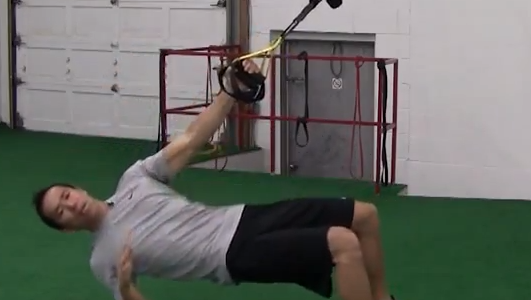
    Not much needs to be said about this exercise that I’ve just come up with other than the fact that it’s FUCKING AWESOME.

    If you can do this, you’re a boss.

    If you’re not currently able to do this, focus and consistency will get you here, if you want to get here.

    And why wouldn’t you want to get here?

    This is the next level. It’s waiting:

    Da link I mentioned: Here I Am

    What do you think?

    Stupid or awesome?

    Let me know, with a Like or Comment, brutha.

    ~PEACE

  • ADVANCED Plank Variations

    ADVANCED Plank Variations

    My last post on plyometrics was a long one.

    The video was even longer…

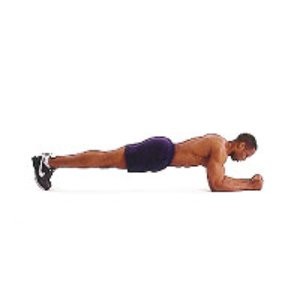
    So, to ensure you’re getting variety in your diet of fitness and training info from me, here’s a short, to the point video showing you some advanced plank variations you can use to develop a rock solid core:

    Stability training should make up at least 50% of all the direct core work you do.

    Holds of anywhere from 10-30 seconds are good.

    Aim for a total time under tension of anywhere from 3-5 minutes, so that would be 6-10 reps @ 30 seconds.

    Or 3 sets of 6 reps when holding for 10 seconds.

    Either way, just make sure the math works.

    If you have trouble figuring it out, find a local Chinese guy to help you out. They can often be found in Chinese restaurants and/or laundromats. If there are none, any other Oriental with slanty eyes should do fine.

    If you liked this video, let me know with the handy ‘Like’ button that was designed for such a purpose.

    And answer me this:

    What’s your #1 core exercise?

    Look forward to your response.

    PEACE~

  • The TRUTH About Plyometrics

    The TRUTH About Plyometrics

    PLYOMETRICS.

    You’ve heard the term before.

    Countless articles and videos have been published extolling the virtues of plyometrics for developing explosive power.

    I’m here to tell you that most of what you’ll read and watch about plyometrics is completely WRONG.

    The reason is because a lot of people call any type of jump a plyometric exercise. But this is inaccurate and will not help you understand where true explosive power comes from.

    But as a reader here, you’re all about doing things RIGHT, so now, you’re going to understand what plyometrics really are and how to do them properly.

    In this article, I’m going to explain the science behind plyometrics, how to use it to improve your explosive power and show you the difference between a simple jump and a plyometric exercise, and give you a few exercises you can use.

    Let’s begin.

    A Brief History of Plyometrics

    The first book I read about plyometrics was by Don Chu called “Jumping into Plyometrics”, which was first published in 1992.

    It’s a book big on exercises but short on background info. However, some of the background info is very good and accurate, even though many of the exercises contradict it.

    When I first read it, I did probably what most would do and skimmed the 2-3 pages of background info to go right to the exercises.

    But it’s not just about the exercise, it’s the precise way you perform the exercise that makes it effective. The thinking that goes into it.

    While Chu’s book was the first big taste the west got of plyometrics, they were studied and being used in Eastern Europe since the 60’s, led by famous Soviet coach Yuri Verkhoshansky, who passed away in 2010 (RIP).

    But the Europeans did not use the term plyometrics; instead, they used the term “shock method”, speaking specifically about the Depth Jump exercise.

    It makes complete sense why, once you understand the physiology.

    Physiology of Plyometrics (Translated from Geek)

    True plyometrics harnesses the power of the stretch shortening cycle (SSC). If you’re not familiar with the SSC and you want some more depth, read this article, then come back here to continue.

    To summarize, the SSC is a result of 2 phoneomena:

    1) When a muscle lengthens at a rapid rate, invoking something called the myotatic stretch reflex, which is an automatic muscular contraction of a muscle when it is quickly stretched.

    A common example of the stretch reflex is when the doctor plunks below your kneecap with a hammer and your quads contract, causing the knee jerk reaction.

    To use this in training or to improve explosiveness, you rapidly lengthen the muscles involved in the movement you want to perform,  then quickly decelerate and contract those muscles to perform the desired movement.

    2) Elastic energy that is created from stretching the elastic components of muscles (cross bridges, actin-myosin) and tendons.

    Just like the stretch reflex, rapid lengthening and QUICK deceleration right into your movement is key.

    And it’s these reasons why most exercises you see that are labeled as plyometrics are not actually so – because the time from lengthening to concentric contraction is too long to induce the stretch reflex and causing the loss of all elastic energy.

    Supertraining by Mel SiffIn the classic book “Supertraining” by Mel Siff, he states, “If the transition phase is prolonged by more than about 0.15 second, the action may be considered to constitute ordinary jumping and not classical training plyometrics.”

    This is why the Europeans refered to this as the “shock method” – because of the rapid change of direction of muscle action, the neuromuscular system must be as fast as lightning to coordinate the proper muscular action. Also, because of the rapid change, high forces must be controlled, which can be a shock to the body.

    That’s why any true plyometric training must be performed by individuals who possess a base level of strength and have trained regularly, so their tendons and ligaments are ready for the high forces involved.

    Strength Guidelines for Plyometrics

    For lower body 2 foot plyometrics, a minimum level of strength required is a 5RM Back Squat with bodyweight. For 1 foot plyoz, I’d up that to at least a 5RM Back Squat of 1.5 x Bodyweight.

    Without these minimum levels of strength in the Back Squat (or comparable exercise), the knees will get hammered and you risk a meniscus injury or problems with your patella, since the muscles won’t be able to absorb the force and it will all go into the other joint structures. And there’s nothing worse for explosive power development than injuring a ligament or meniscus.

    For upper body plyometrics, a 1RM Bench Press of 1.0 x Bodyweight would be the minimum I’d recommend, for the same reasons as the Back Squat, except here it will be the shoulder and elbows taking the beating.

    With these principles in mind, you now have the knowledge to distinguish between a simple jump and a true plyometric movement.

    Now there is NOTHING wrong with simple jumping exercises. They train acceleration and force absorption.

    But I’m sick of hearing simple jumps referred to as explosive plyometrics. Let’s get the terminology and science correct.

    Now, I’m going to further your knowledge and give you a few exercises to work on in the video below. It’s quite a long vid (about 15 minutes), so watch it when you’ve got the time to take it all in at once.

    Before we do that, you’ve got to understand the THINKING that goes into these exercises…

    The best way to approach a plyometric exercise is to think of yourself as a ball – if you’re not bouncing like a ball would, you’re not utilizing the stretch reflex and/or elastic energy.

    If this is not happening, you either need to build your strength, start with a lower intensity exercise., do fewer reps, or rest more between sets. Each and every rep should be bouncy.

    Think quality, not quantity, my friends.

    Now, the video:

    Again, when doing plyoz, every rep must be good – once they’re no good, you stop.

    In fact, this is a principle that applies to ALL exercises. Don’t program your neuromuscular system with bad motor patterns. You’ve been warned.

    So that means short sets (15 secs or less), long rest (2-3 min) and a low number of total sets (3-6) and total exercises (2-3 at most, decreasing in intensity/complexity as you go).

    When it comes to programming, think in BLOCKS.

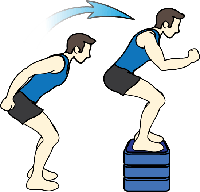
    Phase 1 (4 weeks) – Warmup, Plyoz (1 simple exercise like a standing Tuck Jump), Strength (2-3 exercises)

    Phase 2 (4 weeks) – Warmup, Plyoz (2-3 exercises), Strength (1-2 exercises)

    So a base strength phase then followed by a plyometrics-dominant phase works best performed 2 days per week, especially for fighters who are doing a bunch of other training (MMA, grappling, Wing Chun or whatever) on top of S&C.

    That’s why I recommend linear/block periodization (like in the Ultimate MMA S&C Program)– because I only want you training strength or plyoz 2 days/week so you have energy and recovery ability for the rest of your workouts.

    And that concludes my article and video on plyoz.

    Thoughts?

    Do you fully understand the concept?

    If not, what don’t you understand?

    I’m also interested in seeing if YOU can find on YouTube some exercises that are called plyometrics, but now knowing what you know, aren’t. Leave the link in the Comments below.

    One last thing…

    It’s good to be back.

    It’s been too long since I wrote a solid training piece for ya’ll.

    Missed you. 🙂

    I’ve been focusing my efforts on my Kyoudai, who are the members of my new project called powerDOJO, FYI.

    For now, I’m out, brutha.

    PEACE~


    Plyometrics QnA

    As I was writing this post, I asked peeps on my Facebook page if they had any questions about plyoz that they wanted answered.

    I received a flood of questions, so I’ve added those that I feel I haven’t addressed in the article above here.

    Enjoy and if you’d like, connect with me on Facebook, too.

    Satya asks, “Are plyometrics for agility or strength?”

    Plyoz are for explosive power and agility, not so much strength. Because you’re training the elastic ability of muscles/tendons and you’re not loading up with heavy weights, they won’t build strength, but can help with strength building by making you faster.

    Andy asked, “What are the best plyometric exercises for footwork, and Agility ladder for footwork for MMA/striking?”

    Basic drills like the Pogo Jump are excellent for developing the ability to bounce in and out of striking range.

    The agility ladder can help people learn to relax and coordinate their feet. But I find most people are too tight when doing the ladder and it then becomes ineffective.

    Footwork in general should be trained more relaxed and bouncy and non-patterned, so I love shadowboxing to some good hip hop (I’m really feelin’ J Cole right now) and just getting into it more like dance. Be smooth and relaxed, not tense and rigid.

    Nicolas asked, “How best to mix (if at all) “very heavy” squats/deadlifts + olympic lifts + functional light weight/bodyweight plyometrics? How to balance plyometrics and (strength) endurance training?”

    I think I answered that above, think in blocks. Once you reach an intermediate/advanced level of training, trying to do everything at once is near impossible, unless all you’re doing is training and your recovery and nutrition are PERFECT.

    I would do a strength block, then o-lifting block, then plyometric block personally as a good model periodization.

    Chris asked, “Why are plyoz placed at the start of a workout? Are there better exercises for quickness vs. explosive strength?”

    Plyoz are done first because they are the most neurologically demanding exercises and can only be done effectively when your nervous system is fresh.

    Kathryn asked, ” My question is, how can we tell when we have reached the appropriate amount of stretch for the rebound?”

    The stretch reflex is activated through decelerating either a fast moving and/or heavy load, because you must change the direction of movement and it will either be a brief eccentric or an isometric muscular contraction before changing to concentric. So the muscle might not stretch perceivably. You know if you’re doing it right if you feel bouncy.

    Mike asked, “Can you get equally fast doing sprints?”

    Plyoz are not so much about pure speed, but power and quickness – the ability to change direction and/or explode.

    Naomi asked, “Are they worth it (risk to benefit ratio) for the older (50+) crowd?

    Depending on your goals, if it is general fat loss, not really. If it is to continually improve fitness, development of the strength base then moving towards plyoz is a possibility without injury, it’ll just happen slower and you’ll do less volume and lower intensity exercises.

    Micayla asked, “How much more effective are plyoz than traditional weight lifting?”

    If your goal is to develop explosive power, then they go hand in hand. You can get away with strength training to a point, at which your explosive power would be more further developed through the introduction of plyoz.

    But they are not a replacement for traditional weight lifting if your goal is explosive strength and power.

    Nikki asked, “Can you use plyoz for mass?”

    Not really, because you’re not stimulating the muscles enough. You need weight training with controlled movements to properly stimulate your muscles to grow.

    Lloyd asked, “How do plyometrics affect adolescents and, what is the minimum age they can do them?”

    I don’t really recommend them as most adolescents don’t have the proper body control to handle the forces, nor the desire or attention span required to properly learn how to perform them.

    I could see most adolescents watching the video I posted and getting bored after 30 seconds because nobody almost died or got kicked in the balls.

    For most youth, I would focus on strength training and proper movement patterns and general motor skills until about 16 years old, at which point if they’re strong enough, they can start to learn true plyometrics.

    [Psssst – extra karma points if you hit ‘Like’ below. Extra super bonus karma points if you use the ‘Share’ button]