Category: Pain and Injuries

  • Treat a Pulled Hamstring | Shoulder Impingement Stretches

    Treat a Pulled Hamstring | Shoulder Impingement Stretches

    I’ve got two new articles on PrecisionMovement.coach this week, focusing on:

    1. Helping you treat a pulled hamstring – what are the symptoms of a hamstring strain and a few strategies to help treat it
    2. Shoulder impingement – why does it happen and 3 powerful stretches to ease the pain


    New PMc Article #1:
    How to Treat a Pulled Hamstring

    how-to-treat-a-pulled-hamstring-painAlways feeling this intense pain in the back of your leg when you go jogging? Read this article to learn how to treat and prevent this common injury.

    Read More >>

    New PMc Article #2:
    3 Powerful Shoulder Impingement Stretches For Pain Relief

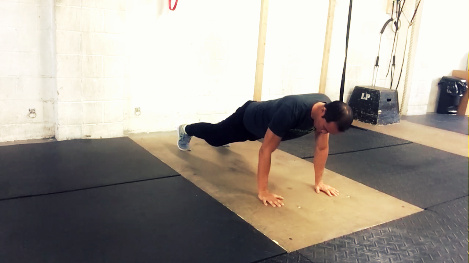
    shoulder impingement stretches - hovering pushup

    If you’re dealing with a shoulder impingement, these 3 quick stretches will help you eliminate the pain and more importantly, they will help you prevent this condition.

    Read more >>

    Got any questions? Leave them in the comments below.

  • Patellar Tracking Disorder | Shoulder Rehab | Sitting Exercises for Hip Mobility

    Patellar Tracking Disorder | Shoulder Rehab | Sitting Exercises for Hip Mobility

    Here’s what I’ve got for you on PMc this week:

    1. A thorough guide on what Patellar Tracking Disorder really is and why fixing this issue won’t help your knee pain.
    2. How do rotator cuff injuries happen and some effective exercises to rehab an injured shoulder.
    3. 4 awesome Hip Mobility exercises you can do WHILE sitting – so if you’re feeling too lazy to get up and exercise, you don’t have an excuse 😉


    New PMc Article #1:
    The TRUTH About Patellar Tracking Disorder

    patellar-tracking-disorder-human-kneeAre you experiencing persistent knee pain? Learn what’s actually causing your pain and why treating Patellar Tracking Disorder won’t help with this.

    Read More >>

    New PMc Article #2:
    Top 6 Supraspinatus Exercises for Rehabbing an Injured Shoulder

    An injured shoulder is no joke. It can hinder your ability to lift your arm and perform even the most simple day-to-day activities. These 6 supraspinatus exercises are a great way to rehab your shoulder so you can safely speed up the healing process and prevent re-injuries.

    Read more >>

    New PMc Article #3:
    4 Hip Mobility Moves to Do When Sitting

    hip mobility exercises while sittingSpending hours sitting down at your desk is likely causing your low back pain and movement limitations. Here are 4 simple hip mobility exercises you can do to address these issues (you can even do these while sitting down at work!).

    Read More >>

    Got any questions? Leave them in the comments below.

  • Heal a Sprained AC Joint | 5 Exercises for Healthy Knees

    Heal a Sprained AC Joint | 5 Exercises for Healthy Knees

    This week on PrecisionMovement.coach I’ve got 2 great articles covering:

    1. What to do if you’ve sprained your AC joint and a few tests to help you determine whether you’ve got an AC joint dysfunction or a shoulder impingement.
    2. A short anatomy lesson on the knees and 5 great techniques to help alleviate achy knees if you’ve got diagnosed with patellofemoral pain syndrome.

    Here they are:

    New PMc Article #1:
    Sprained AC Joint? 7 Things You Need To Know…

    sprained-ac-joint-shoulder-painAre you experiencing shoulder pain after a recent fall? Here are a few tests to help you differentiate between shoulder impingement and an AC joint injury and what to do in case you’ve sprained your AC joint.

    Read More >>

    New PMc Article #2:
    5 Patellofemoral Pain Syndrome Exercises for Healthy Knees

    patellofemoral pain syndrome exercisesKnee pain? We’ve all been there…Read this article to discover what patellofemoral pain syndrome is and 5 effective techniques to help you get some pain relief – plus, if you follow these techniques systematically, you’re going to see a major improvement in your knee’s health.

    Read More >>

    Got any questions? Leave them in the comments below.

  • Best Hip Stretches for Runners | Treat Subacromial Bursitits

    Best Hip Stretches for Runners | Treat Subacromial Bursitits

    I’ve got 2 new articles for you on PrecisionMovement.coach, covering:

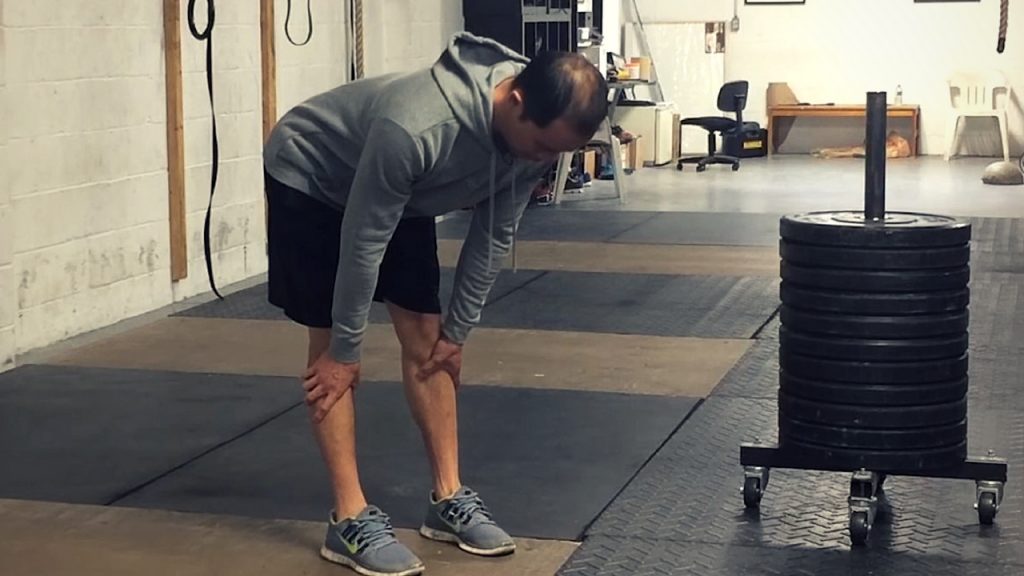
    1. The Best Hip Stretches for Runners – learn why running and tightness go hand in hand and what you can do to prevent that.
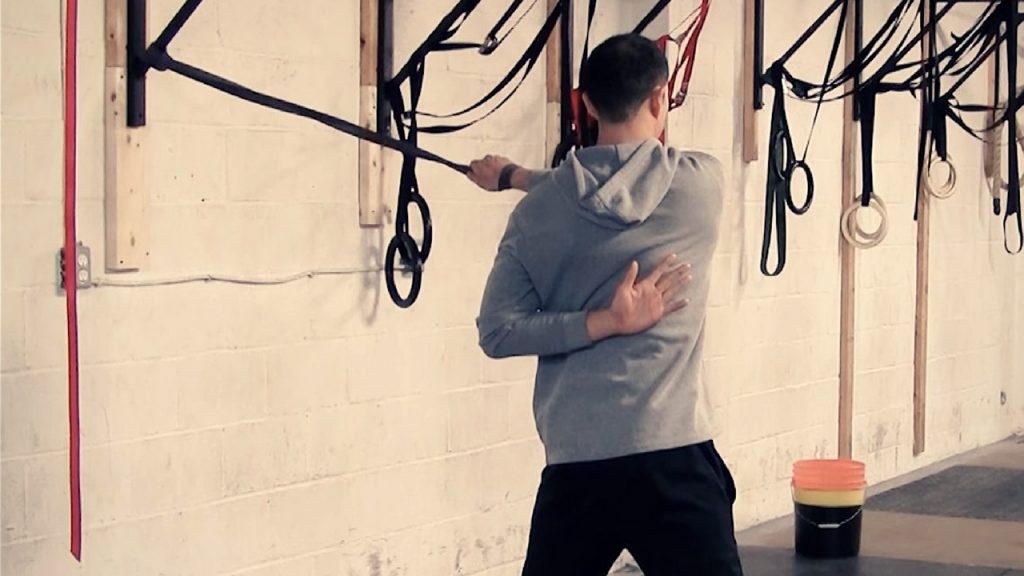
    2. How to Treat and Prevent Subacromial Bursitits – what causes subacromial bursitits and a 5 step plan to keep your shoulders healthy and free of pain.

    New PMc Article #1:
    The 5 Best Hip Stretches for Runners

    hip stretches for runners

    Do you love running but you can’t fully enjoy it because of pain and mobility limitations? Read this article to find out how running leads to hip flexor tightness and how you can train your body more efficiently for running.

    Read More >>

    New PMc Article #2:
    5 Step Plan to Treat and Prevent Subacromial Bursitis

    If you’re dealing with subacromial bursitis, there are a few ways you can get rid of that restrictive pain and discomfort in your arms. Learn what’s causing this issue first and follow my 5-step plan to treat and prevent subacromial bursitis.

    Read More >>

    Got any questions? Leave them in the comments below.

  • Master the Pistol Squat | 3 Techniques to Decrease FAI Pain

    Master the Pistol Squat | 3 Techniques to Decrease FAI Pain

    I’m covering 2 new topics on PrecisionMovement.coach this week:

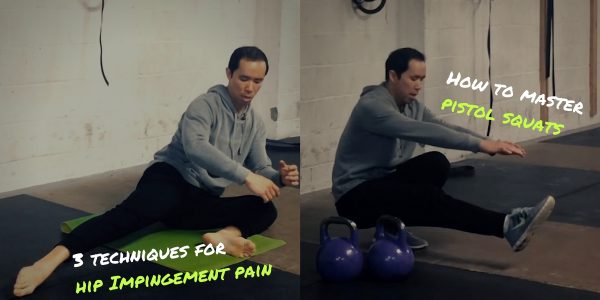
    1. Hip Impingement – what are the signs of femoral acetabular impingement and 3 techniques to help you manage the pain.

    2. Pistol Squats – 3 key benefits to adding them to your workout routine and 3 new pistol squat progressions to improve your technique by helping you gain more balance and control.

    Here they are below:

    New PMc Article #1:
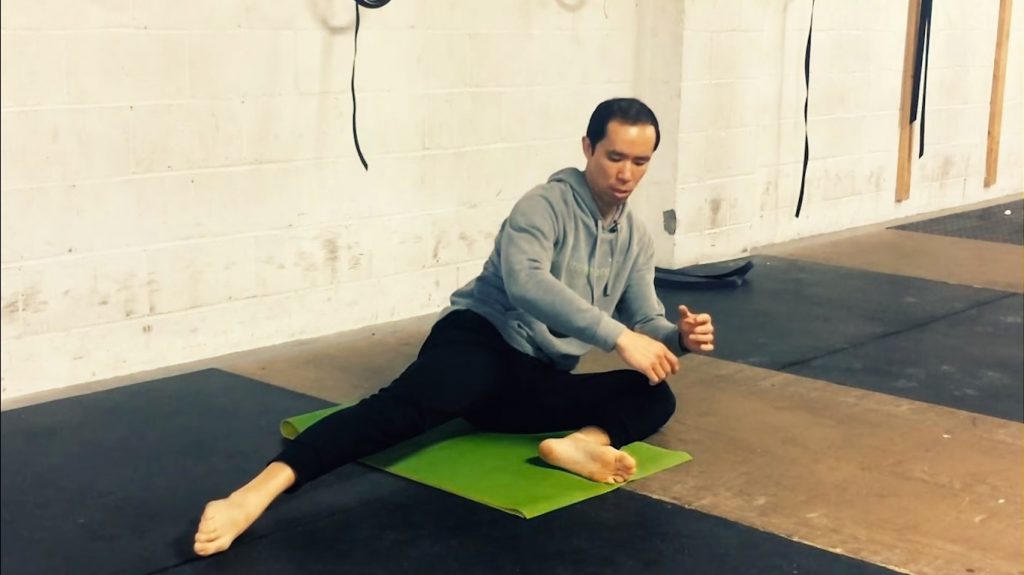
    3 Techniques to Decrease Femoral Acetabular Impingement Pain

    hip impingement butterfly reaches

    Ever feel a very localized, pinching-type pain in the front of your hip in a deep squat, especially with a wider stance? Then FAI may be the culprit and although doctors will tell you you’re screwed, I’m living proof you’re not and the 3 techniques in this post will help. 

    Read More >>

    New PMc Article #2:
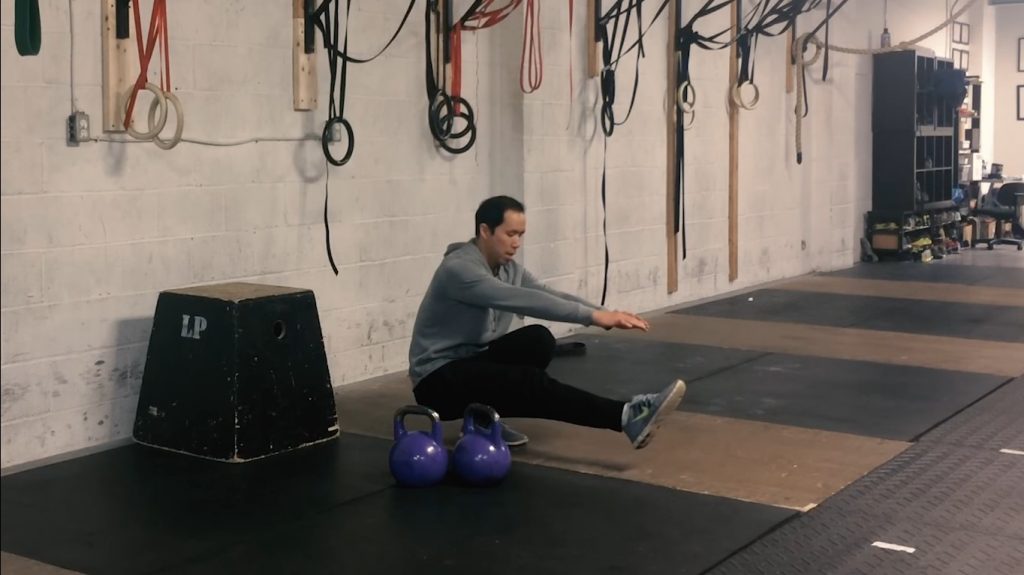
    3 Part Pistol Squat Progression for Mobility, Balance & Strength

    For most people, the top half of the pistol squat is no problem. But if you want to see some improvements in the bottom range of the squat, you need a solid pistol squat progression that can re-program the 3 key elements of the pistol squat: mobility, balance and strength.

    Read More >>

    Got any questions? Leave them in the comments below.

  • New Site for Pain, Injuries and Flexibility Problems

    New Site for Pain, Injuries and Flexibility Problems

    I’ll be taking a break from posting new content here on powerDOJO.com for a while as I focus on building up PrecisionMovement.coach – my new site that will be all about helping you with pain, injuries and flexibility problems.

    There are already over 10 blog posts to help you out and we’re adding 2-3 new articles every week including articles to help you recover from low back pain and sciatica, improve your posture, loosen tight hamstrings, fix chronic musculoskeletal pain and more.

    www.PrecisionMovement.coach

    New assessments and questionnaires will also be published to help you figure out the root cause of your problems and thus, help you get to a PERMANENT solution instead of just applying band-aids when issues surface.

    I look forward to continuing this never-ending journey of improving the way we move together.

    – Coach E

  • 7 Tips to Minimize Pain and Speed Healing

    7 Tips to Minimize Pain and Speed Healing

    Pain is often a signal that we’re taught to ignore…

    Messages like “No pain, no gain.” or “Stop being such a pussy!” are common in the world of sport and sure, achieving excellence in sport sometimes requires athletes to temporarily disregard pain.

    But the keyword there is “temporarily” because ignoring pain forever will only result in more pain in the future.

    For those of us who aren’t professional athletes or aren’t trying to win medals, the sooner we can deal with pain, the better.

    So here are 7 tips to help you minimize bodily pain and speed healing.

    Tip #1: Adopt the “PIC” Principle

    You’ve probably heard of RICE – Rest, Ice, Compression and Elevation to deal with acute pain, acute being within 7 days of doing something that causes pain and/or an injury).

    Instead of RICE, this is a better strategy to speed up healing:

    P – Pain-Free Movement
    I – Ice
    C – Compression

    As you can see, I suggest you drop the idea of rest in favour of pain-free movement, ideally with the affected area but if that’s not possible, just moving whatever way you can without pain.

    The more you move, the more circulation occurs and the faster the healing.

    This is most important for joints, because the only way that joints receive nutrition and can heal is through movement, so the quicker you can give it what it needs, the better.

    It could be passive movement (i.e. someone else moves your affected joint or you use gravity somehow) or active movement where you move the joint under your own strength, but make sure this movement doesn’t elicit pain, otherwise you’ll create a dysfunctional movement pattern.

    I’ve also dropped elevation because I’ve found it doesn’t help that much and is typically impractical, but if you can do it, it won’t hurt.

    Tip #2: Avoid Refined Foods

    Drop refined foods from your diet, especially sugar, high omega-6 vegetable oils (soy, canola, sunflower, safflower) and flour.

    don't eat these

    These cause inflammatory effects in your body and can delay your healing.

    Plus, they’re just generally good things to avoid, so your overall health will improve as well.

    Tip #3: Take Fish Oil

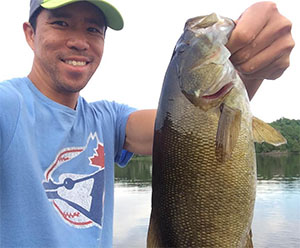
    Taking around 3 grams of combined EPA+DHA (not 3 grams of fish oil total) will help decrease achy joints and blunt inflammation.

    My good friend, MMA and BJJ stud Jeff Joslin swears by this as when he takes it, he can train hard multiple times a day without joint pain but notices the pain when he’s not on it and I’ve noticed the same thing.

    The key is going for the combined EPA+DHA, not total amount of fish oil.

    I suggest liquid form with good brands being Carlson, Nordic Naturals and Ascenta – if you’re using these brands, it’s about 4 tsp a day.
    fish

    Or if you’ve got the skills to feed yourself with fresh fish daily, do so. 😉

    Tip #4: Eat More of These 3 Foods

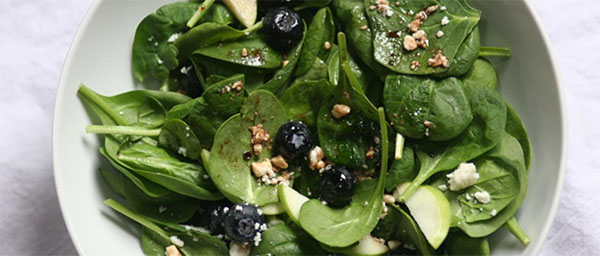
    Leafy greens, blueberries and garlic are tops for fighting inflammation.

    For the most efficient method, I suggest can eating them all at the same time in a great salad by adding some garlic to lightly heated olive oil, stirring till fragrant, then add some honey and balsamic vinegar to make a tasty honey-garlic dressing that you can throw on a bed of greens and blueberries.
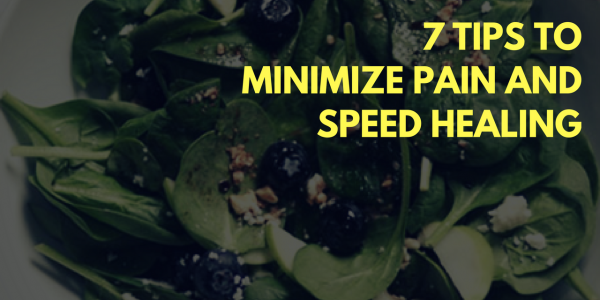
    anti-inflammatory-salad

    Make a big batch of the dressing ahead of time for even greater efficiency and feel free to throw some mixed nuts on top (but avoid the cheese as cheese is pro-inflammatory).

    Tip #5: Take a Turmeric Supplement
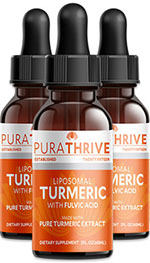
    purathriveI don’t use turmeric when I cook so I simply take a supplement when I have an injury, as it’s one of the most well-researched and proven anti-inflammatory and joint pain supplements out there.

    PuraThrive is the only turmeric supplement I’ve used and it’s a good one but feel free to look to other sources if you want.

    Definitely worth keeping in your cupboard because if you can start supplementing right away you can prevent the pain-cycle from messing up your movement patterns.

    Tip #6: Get Sufficient, Consistent Sleep

    First, you need the right amount of sleep for you, anywhere from 7-9 hours being typical for most people.

    This is important because you recover and regenerate when you sleep.

    And just as important, you want your sleep to be consistent.

    This means going to bed and waking up at the same time.

    Obviously if it’s your best friend’s bachelor party you’re not going to bed at 10pm, but do your best to get back on schedule as quickly as you can.

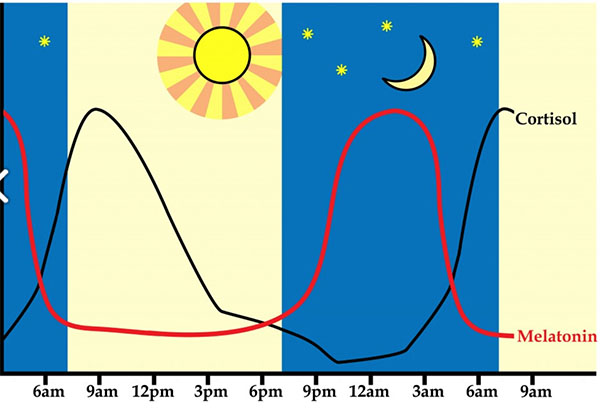
    Inconsistent sleep and wake times throws off your circadian rhythm, thus throwing your hormones out of whack.
    circadian-rhythm

    This can result in increased cortisol, which is the opposite of what your body needs to heal old and build new tissue.

    Tip #7: Decrease Your Overall Training Intensity/Volume

    If you’re training as if you’ve got a fight coming up and you’re not healing, there’s no wonder why.

    I find CrossFitters and runners to be the absolute worst with this – for some reason these athletes don’t know how to dial it back a notch, with CrossFitters always going hard on intensity and runners unable to give up volume.

    Tone it down for even a week to allow your body to divert some of it’s energy to healing and you’ll avoid plateauing your recovery process.

    There you have 7 tips to minimize pain and speed healing.

    Put them to work for you!

  • Simple Exercise to Balance Your Hips

    Simple Exercise to Balance Your Hips

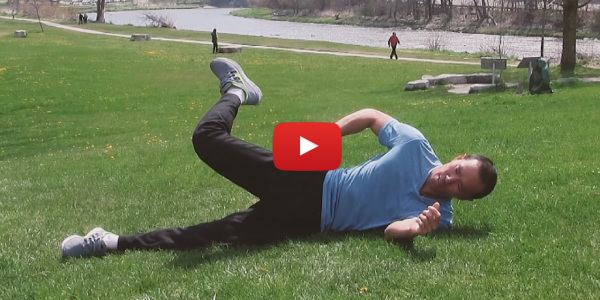
    This simple exercise is designed to strengthen your internal hip rotators, and will help to balance your internal vs external hip rotators since if we’re doing squats, deadlifts and lunges, our external rotators are likely stronger.

    Watch the video once through, then watch it again and do the exercise along with me.

    After that, I suggest you do it daily for at least 1 week before dropping down to a 3 times/week or so schedule.

    Hold for 10-30 seconds without excessive co-contraction and aim for 2-3 minutes of total work every time you do it and pay attention because you’ll experience some benefits, the specifics of which depend on your particular make-up and training history.

    Can’t see this video? Watch on Facebook or YouTube instead.

    I know it doesn’t look like much but statics are never very sexy, however, they’re so effective for activation and building strength at end ROM, we should all be doing them more often.

  • No Pain, No Gain?

    No Pain, No Gain?

    The fight world is full of tough guys.

    Even just to spar requires a level of toughness that most people don’t have.

    But the “no pain, no gain” mentality that’s promoted can often mess you up.

    So we talk about this concept in today’s video, as well as my current wrist injury and compensatory movement patterns:

    Can’t see this video? Click here to watch it on Facebook.

  • Compensatory Movement Patterns

    Compensatory Movement Patterns

    In my last year of university (12+ years ago now – yeesh), there was this guy in one group project I was a part of that did absolutely NOTHING.

    Total SLACKER!…

    Instead, he played lots of video games, smoked pot, drank beer… but at least he worked out.

    He would show up at group meetings without any of his tasks complete.

    And he barely knew what the class was about, let alone the project.

    Because the rest of the group members didn’t want to get a bad grade, they picked up the slack and did all of his tasks on top of their own.

    I’m sure the mark was lower than if all cylinders were firing and I bet the added stress to the other members affected other areas of their lives too.

    And this is exactly what happens when you’ve got something that’s not working right, whether it’s a weak muscle, restricted range of motion or pain that stops you from performing a certain movement – something else picks up the slack.

    Because you’ve still gotta eat, brush your teeth and wipe, your brain works its way around this and figures out a way to get it done.

    Fitness and rehab peeps refer to this as a
    Compensatory Movement Pattern…

    … a movement pattern you use to get around issues that prevent you from executing the movement properly (or at least how you’d normally do it).

    For example, if you’ve got a stiff thoracic spine (area of your spine between your shoulder blades) with limited thoracic extension, to push a barbell overhead, you’ll either:

    A) Tear up the anterior aspect of your shoulder joint
    B) Hinge at your lumbar spine so you don’t tear up your shoulder joint

    Great options.

    So which to choose?

    Easy… NEITHER.

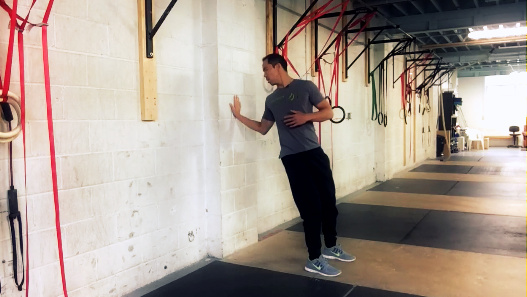
    Instead, you’d choose NOT to push a barbell overhead in favour of something else, perhaps an Incline Dumbbell Press but there’s no one saying you have to swap a push for a push so you could do a Seated Row or better yet – the Twisting Wall Press (my recommendation as it addresses the root cause).

    Do this and you’ll be avoiding using a compensatory movement pattern and avoid options A and B.

    Another problem with compensatory movement patterns is that even if they don’t result in an injury, if you keep using them over time, they become your new normal and at the very least, that lowers the ceiling on your potential and is an inefficient way to move.

    On Friday I’ll be sending you a video showing you exactly what I’m talking about because I’m dealing with a bum wrist right now that is limited in extension and radial deviation (thumb to forearm movement) so I can show you exactly what it looks like.

    I just wanted to lubricate your mental gears a bit and teach you the definition so when you get the video you’re ready to soak it all up.

    Understand this concept and it may help to prevent you from suffering this pain in the bum-bum where you either get injured or have to spend time reprogramming this pattern.

    The one thing I’ll mention now is the most common cause of a compensatory movement pattern is PAIN, so if you’re dealing with any pain right now, getting the concept you’ll learn in Friday’s video may save you a lot of time and frustration down the road.

    We’ll talk then.

    PEACE~

    Coach E

    P.S. That guy was me. I like to think I’ve matured since then. 😉