My buddy Yuri just released a new cookbook and it looks great and you can get it for FREE.
Watch the video below for details:
.
.
.

My buddy Yuri just released a new cookbook and it looks great and you can get it for FREE.
Watch the video below for details:
.
.
.
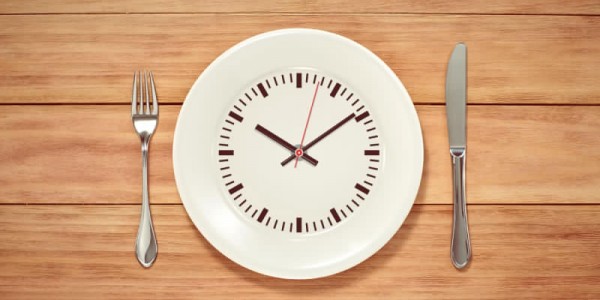
Since we’re at the (furry, white) tail end of Easter weekend, I figured this would be a relevant topic to cover…
You’ve probably heard the term intermittent fasting, right?
If you haven’t, it’s basically a way of eating that includes prolonged periods where you don’t eat any food, versus the traditional approach of eating 3 square meals a day or the “bodybuilder” approach of eating every 2-3 hours.
As with any new dietary protocol, it’s popularity skyrocketed and was probably at its peak when when Rodale, publisher of magazines like Men’s Health, put “The 8 Hour Diet” on the marketplace a few years ago.
Now if you go to Amazon and search for “fasting diet” or “intermittent fasting” you’ll find thousands of books…
Most of these books are written by authors out to cash in on the latest diet craze but don’t give any new or solid info (this book on the other hand was first published in 2007 and has been updated numerous times over the years as new research has been published).
And this is a big reason why I see people get messed up with respect to dieting, nutrition, a “healthy lifestyle”, or whatever term you want to use to refer to the act of putting food into your mouth then swallowing…
It’s that they get caught up in the crossfire between all of these competing expert opinions, which causes confusion and paralysis by analysis.
Once this happens, all hell breaks loose.
The 1st key is to understand that we’re all individuals with a biochemistry as unique as our fingerprints.
Science is on a quest to figure out exactly how we work but this will never happen (it’s still a worthy path) because we are way too complex and there are things that we will never be able to explain (nor would we want to) and too many variables interacting.
And food is made up of so many chemicals and enzymes and vitamins and phytonutrients and our bodies have so many systems and cells and cellular reactions that trying to figure out exactly how our bodies are going to react to eating a certain food is impossible.
I’ve learned this lesson with the experience I’m still going through with respect to my daughter’s eczema…
She’s not out of the woods yet but has constantly improved and what we’ve all learned on this journey thus far is that no matter what rules or probabilities exist, an individual can react completely different to a food than those rules state.
For example, we figured that coconut milk would’ve been good for her because it’s touted to carry all sorts of anti-bacterial and anti-fungal properties, but she flared when drinking it.
Once you realize that there are actually no hard and fast rules, you’re FREE…
That’s where books and information and advice helps – they inform you of rules to follow and give you a starting point – it’s then up to you to pay attention and tweak as you see fit.
But what typically happens is that people shut their brains off, follow rules blindly and when things go awry, because they weren’t listening and paying attention (and probably only focused on one thing – the # on the scale), they ditch the diet completely and move on to the next one.
Instead of taking the learnings and EVOLVING them in the next phase, they start over.
So how do you get off the wheel?
Follow the 2 keys – the first key we talked about already, which is to drop the notion of finding the perfect diet because no one diet can serve everybody perfectly.
The 2nd key is to come up with a plan, do some research about it that you can to give you the understanding you need to move forward (but don’t go crazy), then commit to it for a period of at least 28 days.
Follow the plan and pay attention to see how you’re responding.
And don’t just limit your attention to a single variable like weight lost but pay attention to everything including your energy, sleep, how your stomach feels, your skin quality, mood, etc because if you lose weight but you feel and look like crap, then it probably won’t work too well for you long-term.
After that, continue or tweak, but don’t totally ditch it unless it was a total failure.
Make sense?
Cool, so let’s talk about FASTING now…
I’ve tried 2 approaches:
1) My buddy Brad’s “Eat Stop Eat” protocol where you basically don’t eat anything for 24 hours once or twice a week.
This experiment didn’t last long as my energy was low and I felt too hungry.
It’s worked for many others but not for me.
However, his book is the single best source of the latest scientific research on fasting available, covering not only research that supports his particular protocol, but also many others.
2) The “LeanGains” approach by Martin Berkhan where you basically don’t eat breakfast and eat only within an 8 hour window (perhaps noon to 8pm).
This worked great for me for a year or 2 until my daughter Livia arrived, then things changed and I felt that eating breakfast worked better for my body and new lifestyle.
Nowadays, I typically eat 3 square meals and 1 or 2 snacks.
I’ll throw in a 16/8 day here or there and if I eat like an absolute hog, like at big family get together, then I’ll probably fast until dinner the following day.
I do think it’s a great idea to give your digestive system a break once in a while regardless of gluttony, so try doing a 24 hour fast in every once in a while.
Outside of the physiological effects, the mental aspect of going without food for a 24 hour period may be just as important…
Being able to feel the sensation of a hungry stomach but not be controlled by it, or get “hangry”, is a skill we all need.
Plus, we have an abundance of food available while not everyone is so lucky, so fasting can help us remember our good fortune and help us add a little Gratitude to our day, which is always a good thing.
That’s all she wrote.
Have a great Monday.
PEACE~
EW
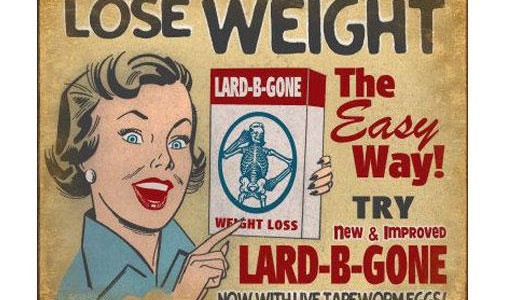
To begin, here’s what we’re NOT going to be talking about:

If these are the kinds of things you’re looking for, I suggest you click away now…
.
.
If you’re still here, kudos to you and your 90+ IQ…
Now, what we are going to talk about are the things I believe have contributed to me being able to maintain a <10% body fat since I began measuring it at 16 in my high school gym class and having gone through the struggle to build a successful business, marriage, having a baby and dealing with my baby’s severe health issues.
That’s almost 20 years.
I don’t deny the contribution my genes have had on my ability to maintain a lean frame…
However, I have family who carry extra body fat be so it’s clearly not the only reason.
It’s just one of many.
I’m going to share as many of these reasons as I can in this post, but I’m not going to tell you what to eat.
I know you already have a good idea of what to eat that will help you lose fat, right?
Instead, the points I’m going to list below are those that have helped me to continue to eat in the way I know and want to eat, based on my goals.
So come from that perspective instead of, “Just give me a diet to follow” because the looking for the right diet is a leading indicator of someone whose weight will yo-yo up and down over time.

OK there’s enough for you to digest already so I’ll stop.
Take from it what you will but just notice that there’s not much about the actual foods to eat, how often, how much or in what combinations because those things are in my opinion no more or less important than the rest.
1) If you’ve been struggling with nutrition, what are your thoughts about what I shared in this post? Does anything particularly resonate with you?
2) If you’ve been consistent with your eating, do you jive with anything here or have anything to add?
Please let me know below and also, Pearl Jam’s song “Daughter” just came on AccuRadio and I’m loving it because I haven’t heard it in so long. 🙂
Don’t need too much preamble as the title of this post tells you exactly what we’re about to talk about.
For more information about powerDOJO, visit the link below:

In Part 4, we’re going to talk about the MICRONUTRIENTS, which include:
[green_plus_2_list width=”100%”]
Here are some links to the different supplements I talked about:
Probiotics: BioTrust | Garden of Life
Digestive Enzymes: BioTrust | Garden of Life
NOTE: I make a referral commission from BioTrust, but not the Garden of Life stuff. With respect to any supplements I take including these, fish oil and protein powders, I always switch brands to avoid becoming intolerant to a brand, which can happen over time, which is why I typically always recommend 2 or 3 different brand names.
After publishing each of the first 2 parts of the nutrition-itsu video series, I’ve been getting a few questions, which is AWESOME because it shows you’re thinking about this content.
Yesterday, I got a question from Jordan asking me to reconcile the fact that in my original nutrition-itsu PDF (which I wrote in 2009) I recommend the old eat 5-6 small meals throughout the day, while lately, I’ve been talking about how I’ve been following the 16/8 method of Intermittent Fasting.
In today’s video, I talk about this and also talk more about the macronutrients: protein, carbs and fat.
Check it out and leave any questions you may have in the Comments section at the bottom of this page.
In today’s nutrition-itsu video, we’re going to talk about the second level on the pyramid – YOU AS AN EATER.
This is where we’ll talk more about nutritional psychology and your mindset and thoughts around food.
You’ll also discover the single most important question to ask yourself about nutrition that if you answer it correctly, eating will cease to be a source of frustration for you.
Here’s the video:
I’m creating this content as I go, so I’m wondering what BURNING nutrition questions do you have that you’d like me to answer?
Got any more questions?
Let me know in the Comments section below and if this video resonated with you, hit the ‘Like’ button to let me know.
nutrition-itsu is the title of the first ebook I wrote about nutrition back in 2009…
It’s been read thousands of times and I’ve gotten quite a bit of great feedback about it.
In looking over the content I’ve been publishing in my newsletter, here on my blog and inside powerDOJO, I see that I haven’t talked nearly enough about nutrition, especially considering the huge impact it has on your life and your performance.
When it comes to nutrition, you’ve got think about how it affects these 3 areas:

The only way to get LASTING results is by eating in a way that improves all 3 areas.
Focus on energy through the use of stimulants (caffeine) and stimulant-like foods (sugar) and you may have loads of energy and be able to get lean, but your health will deteriorate and you’ll eventually get sick.
If the only reason you eat is for body composition then you may be starving yourself to be thin or over-stuffing yourself to be big, both of which are unhealthy and unsustainable practices.
Even if you only focus on health, such as by following the popular Calorie Restricted Optimal Nutrition (CRON) diet, you may live longer but you won’t be living a full and vibrant life full of energy (or fun).
That’s why if you want lasting results, you’ve got to follow an approach that takes the 3 areas into consideration.
Well, I’ve recently revamped my principles a little bit and now my approach to nutrition is based on this model:

Over the course of the next week or so, I’m going to be breaking this pyramid down in a way that if you follow what I teach you, you’ll be ahead of 99% of the population struggling to find a diet that works for them.
Part 1: nutrition-itsu Overview and the Foundation
Here’s the link I mentioned in the video (right click to Save As):
Eric’s nutrition-itsu eBook (PDF)
I’m creating this content as I go, so I’m wondering what BURNING nutrition questions do you have that you’d like me to answer?
Leave ’em in the Comments section below and hit the ‘Like’ button on the way down and I’ll address them in subsequent videos.
Thanks and talk soon!
Eric
I’ve gotten a few questions like, “Eric, what should I eat before my workout?”
So I decided to shoot this video for you.
Ch-, ch-, check it out:
.
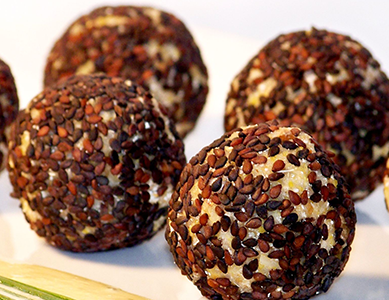
And since you’re a loyal blog follower, you get a special bonus – one of the recipes from my wife’s healthy desserts and snacks recipes guide.
This recipe is PERFECT for a pre-workout snack where your goal is PERFORMANCE. Consume 30-60 minutes before for optimal results.

Servings: 6 truffles (1 truffle per serving)
Ingredients
Directions
Hit ‘Like’ if you dig wicked recipes like this.
And do you want more?
Then visit www.thedessertangel.com – you’ll never go back to sweets that aren’t chock-full of energy and health again.

Before I share the research and my experience with rapid fat loss, because I’m generally talking to combat athletes here, I must begin by saying that I’m not talking about cutting weight.
Cutting weight is all about water manipulation and is NOT about losing fat or reshaping your physique long-term.
However, cutting weight is much more effective when you’ve got low body fat, because muscle holds more water than fat.
And obviously it feels better to have a lean body and for MMA performance, relative strength is the key so the less body fat you have the better. Excess body fat is dead weight.
Oh yeah, and that little thing called health.
So if you’re about to embark on a weight/fat loss journey, do you model the tortoise or the hare?

The conventional wisdom is that quick weight loss schemes result in rebound weight gain and the key to long-term weight loss is slow and steady.
But a guy that I met in Florida earlier this year shared some interesting research with me. His name is Shaun Hadsall.
We were discussing nutrition and he told me that he had a simple 3 day nutrition system that was getting some pretty quick weight loss.
I responded by telling him that I’m all about long-term results.
But he said he’d had some research to show me that proved contrary to the conventional wisdom.
He emailed me the study soon after we returned home (he’s from Detroit) but I never got to it until now.
In fact, I wish I’d gotten to it earlier because we’ve just been talking about nutrition quite a bit.
Anyway, here’s a summary of the study (and a link to the abstract for fellow science geeks):
262 subjects were instructed to lose 1 pound per week and were coached for 6 months and re-examined at 18 months.
After the subjects started to lose weight, they were divided into 3 groups:
Based on the conventional wisdom, you’d think that the fast group would regain more weight than the slow group and would have less success.
But the results show the exact OPPOSITE.
Here’s a table showing the weight loss at 6 and 18 months after the start of the study:
[ws_table id=”3″]
So you see, the fast group not only lost more weight initially, they also kept more weight off after 1.5 years.
The researchers also state that, “the FAST and MODERATE groups were 5.1 and 2.7 times more likely to achieve 10% weight losses at 18 months than the SLOW group.”
After reading this and having my world flipped around, I reflected on the results from some of my programs.
For example, MMA Ripped includes a ‘Priming Phase’ that has resulted in some rapid weight losses of up to 7 lbs in one week in a few cases.
Essentially, it’s a bare bones elimination diet that has you going very low carb and cutting out all processed foods. Most of that weight is water with some coming from fat, but still, MMA Ripped is my most successful program in terms of adherence and physique transformation.
And based on this research, I can see why that is…
Losing weight quickly and seeing immediate results can give you a motivation BOOST that can help sustain your efforts and help you achieve long-term success.
Who woulda thunk it?
This has got me thinking more about the initial approach taken with new athletes and clients.
Whether that be a training tweak to provide immediate KO power, or a breathing tweak to give more stamina, something that gives you instant results could propel you to stick with it long-term and that’s what we’re ultimately all about.
Now, if you’re here reading this and your goal is to lose fat, make sure you check my buddy Shaun’s 14 Day Rapid Fat Loss Plan.


He’s the one to thank for this powerful research and he may be the one to thank after you follow his plan and drop fat quick and finally KEEP it off because of your increased motivation.
It’s a simple system and it doesn’t involve any obsessive-compulsive calorie counting that you’ll probably never do.
Plus, Shaun walks the talk – he’s an older guy (I consider 40+ an older guy lol) and stays as lean as anyone I know, month-in, month-out.