Author: Eric Wong

  • The Supine Hip PNF: Best Hip Flexibility Exercise?

    The Supine Hip PNF: Best Hip Flexibility Exercise?

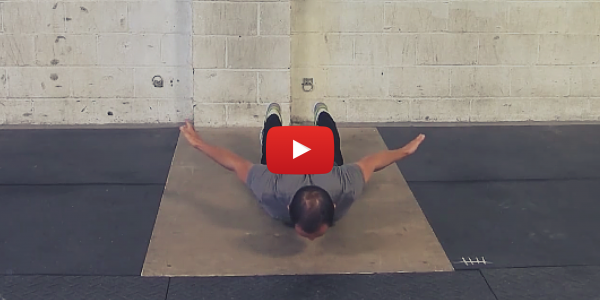
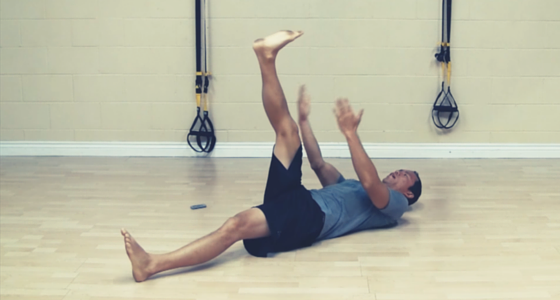
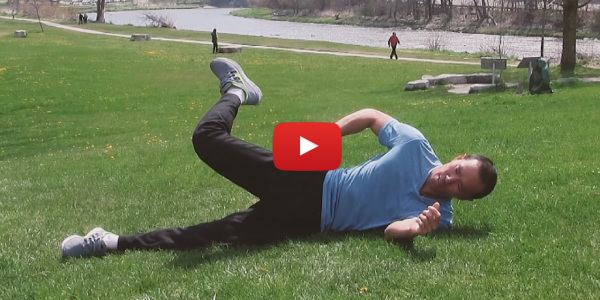
    This exercise will lengthen your hamstrings, adductors and hip rotators, mobilize the joint capsule and activate pretty much all of your hip muscles.

    It’s a great bang for your buck technique, so be THANKFUL you landed here because your hips are going to feel renewed after doing the exercise I’m sharing with you.

    Lucky you. 🙂

    I call it the Supine Hip PNF because you’re lying down on your back (this is what supine means) and PNF stands for Proprioceptive Neuromuscular Facilitation, which is not just about stretching, but a system of exercise and movement that trains muscle activation, joint stability AND flexibility.

    I first learned about PNF from the book Supertraining by the late Mel Siff and in the book Siff lists 23 principles of PNF and the exercise you’re about to do today includes (but not limited to) these important ones:

    1. Use of spiral and diagonal movement patterns
    2. Motion crossing the sagittal midline of the body
    3. Recruitment of all movement components, especially flexion-extension, adduction-abduction and internal-external rotation
    4. Movement free of pain, but not free of effort

    To summarize, here are some of the benefits of doing this exercise and thus applying these principles:

    • No equipment – do it anywhere you can lie flat on your back
    • Anyone can do it regardless of level of fitness
    • Strengthens muscles in end ranges of motion where most people are extremely weak
    • Works rotational and diagonal movement patterns (PNF), which fully integrates your left and right brain hemispheres

    So, watch the video in FULL and if you have any inkling that you might benefit, I urge you to do the exercise as soon as possible, ideally, right now.

    Don’t just watch it then leave – this is what most people who watch exercise videos online do, which is why most people are inflexible and out of shape.

    But I mean, if you landed here and for some reason thought you were going to watch a Mike Chang video, then you don’t have to do it as I can understand your supreme disappointment. 😉

    For the rest of you, it’s GO TIME:

    [thrive_leads id=’22497′]

    Ideally perform 3 reps in both directions on each leg, but even 1 rep on each side is better than none.

    Once you’ve tried it out, you qualify to leave a comment, so hit me up when you’re done.

    Can’t wait to hear from you, champ. 🙂

    And if this exercise does feel great, please SHARE it because everyone these days is so tight from all the damn sitting! I’m sure you know at least a few people who will really appreciate getting this from you so don’t be shy.

  • On Rest and Recovery

    On Rest and Recovery

    My daughter and wife have had colds for the past week or so…

    Stuffy (and snotty, crusty) nose is the main symptom, which has led to some early mornings where I’m up with Livia somewhere between 4:00-5:30am.

    Because of this, I’ve been a bit more tired and when I’ve been able to sneak in a 20-30 minute power nap, I’ve felt much better and operate normally.

    But when I haven’t my energy has definitely been sub-par.

    On Friday, I had a resistance training session scheduled but cancelled it in favour of doing some mobility work because I had absolutely no gas in the tank.

    Back in the day, I probably would’ve ignored my tiredness and “manned up”…

    Nowadays though, a little older, a lot less hair and hopefully a tad bit wiser, I realize that I’m not going to win any trophies and there’s no rush, so I have no problem not doing workouts if I think it’ll serve me better in the long run.

    Every workout you do depletes your energy and strains the tissues worked. Basically, you’re stressing your body out.

    It’s after eating and sleeping for a day or two that your body adapts and comes back stronger from that workout.

    But if we go into a workout already tired or in an energy-depleted state, we’re essentially going into it with elevated cortisol.

    Cortisol is a stress hormone that when elevated, inhibits the immune system leaving us open to getting sick and down regulates the function of the digestive and reproductive systems (more bloating, more constipation, less sex).

    So to get through a workout when we’re already drained, our bodies being ever-so-accomodating, get us fired up by activating the full “fight or flight” response.

    Think about it – we’re already tired now we’re going to go and lift 250 pounds on our backsor do a bunch of Chinups like we’re climbing a tree to escape a vicious lion – our bodies definitely see this as a fight!

    So, here’s what happens HORMONALLY in our bodies (and how we often react) when we get into the fight or flight response to workout when tired:

    1) We get an initial energy rush, fueled by the stress hormones adrenaline and/or norepinephrine, which can make us think, “See, all I needed to do was come to the gym. I feel great now.”

    2) Cortisol then gets further increased, which ensures that all energy is directed to the fight/flight muscles and not the other systems, giving us energy for the entire workout. “I feel perfectly fine and I’m just as strong as always.”

    3) We ride this hormone “high” for the course of the workout and end it by thinking to ourselves, “I knew it – all I needed to do was workout, I feel so much better now. No excuses!”

    And while it’s true that you probably feel better, it’s not a healthy better, but a stress-hormone induced improvement in alertness, energy and focus.

    One problem that you might not realize with this is that adrenaline in particular is great at dulling pain – so you may be injuring yourself and not realize it until afterwards and you won’t know why.

    But the big problem with this is that when you fail to see this and continue to use this strategy (workout as normal when you’re already exhausted), you’ll soon “break” this system and then you’ll be on the sidelines for a while.

    Adrenal fatigue is a term used to describe the syndrome of your adrenal glands (they produce the stress hormones) getting burnt out from being asked to do too much.

    It’s definitely not a state you want to be in, so I suggest you listen to your body when it’s telling you you’re dead tired and you’ve got a workout scheduled.

    Sometimes, it’s good to ignore it, especially if you know you’ve got lots of R&R time soon after, but sometimes, it’s good to listen, so you don’t burn yourself or your adrenals out.

    It just takes a little experimentation and observation of how your body reacts in either scenario to know what’s the right move at the time.

    Hopefully, this has enlightened you a bit and helps you not feel bad for “skipping” a workout, only when you’ve got a valid reason, of course.

    There’s obviously zero value in being a lazy bum, but I know you already know this otherwise you wouldn’t be here on this VIP Newsletter list. 🙂

    Anyway, just thought I’d share as this has been what’s been up in my life for the past little bit, hope it helps.

    Coach E

    P.S. Instead of my workout, I did a combo of the Kneeling Routine from the Hip Flexibility Solution and the Overhead Routine from the Shoulder Flexibility Solution, as well as some improv, but any work that is more about mobility, technique and activation is perfect for this kinda situation.

  • Simple Exercise to Balance Your Hips

    Simple Exercise to Balance Your Hips

    This simple exercise is designed to strengthen your internal hip rotators, and will help to balance your internal vs external hip rotators since if we’re doing squats, deadlifts and lunges, our external rotators are likely stronger.

    Watch the video once through, then watch it again and do the exercise along with me.

    After that, I suggest you do it daily for at least 1 week before dropping down to a 3 times/week or so schedule.

    Hold for 10-30 seconds without excessive co-contraction and aim for 2-3 minutes of total work every time you do it and pay attention because you’ll experience some benefits, the specifics of which depend on your particular make-up and training history.

    Can’t see this video? Watch on Facebook or YouTube instead.

    I know it doesn’t look like much but statics are never very sexy, however, they’re so effective for activation and building strength at end ROM, we should all be doing them more often.

  • New Pushup technique that doesn’t RUIN your shoulders

    New Pushup technique that doesn’t RUIN your shoulders

    The Pushup is one of the first movement patterns we learn as babies.

    It was amazing to watch my daughter Livia struggle through a one-rep max to push herself up off the floor and hold her oversized balloon head up so she could look around.

    livia

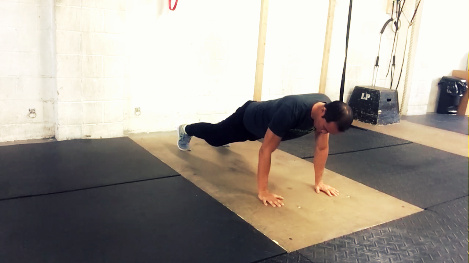
    But too many Pushups (horizontal push + internal rotation) without working the opposite movement patterns (horizontal pull + external rotation) can lead to muscle imbalances, postural dysfunctions, poor performance and pain.

    That’s why today’s technique, which I call the Airplane Pushup, is one you’ll want to add to your workout repertoire.

    Try it out along with me even just for a set or two to see how it feels and then use it in your workouts to keep your shoulders balanced and healthy.

    Before you go – if you have friends that exercise, please share this post with them using one of the buttons below so they don’t ruin their shoulders and can stay fit and healthy just like you. Thanks!

  • Advanced Scapular Strength and Control Drill

    Advanced Scapular Strength and Control Drill

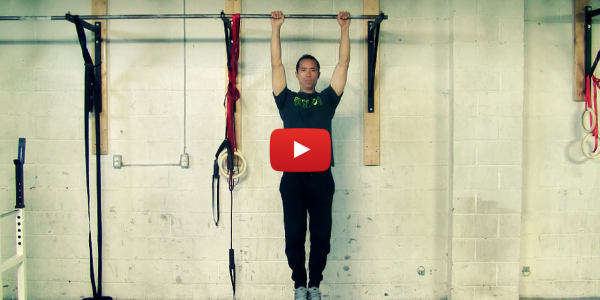
    Scapular strength and control is necessary for long-term shoulder health and to maximize your performance in exercises like Overhead Presses, Chinups, Muscleups and more.

    But we don’t often train it in isolation and it’s even more rare to train it with arms overhead and even MORE rare to train it hanging like in today’s video.

    When hanging, it’s a closed chain exercise, which elicits greater activation from stabilizer muscles.

    Now, I call this drill advanced just because you have to be able to hang from a bar to do it, but you can also do it with some support, for example, use a strength band hooked onto the bar and rest a knee in the band so it supports your weight.

    And just try it with your arms up overhead, too, just to get the general idea. When you do it this way, ensure you’re moving from the scapula, because it’s easier to compensate when you’re not hanging out.

    Sound good?

    Cool – give it a go:

  • No Pain, No Gain?

    No Pain, No Gain?

    The fight world is full of tough guys.

    Even just to spar requires a level of toughness that most people don’t have.

    But the “no pain, no gain” mentality that’s promoted can often mess you up.

    So we talk about this concept in today’s video, as well as my current wrist injury and compensatory movement patterns:

    Can’t see this video? Click here to watch it on Facebook.

  • Compensatory Movement Patterns

    Compensatory Movement Patterns

    In my last year of university (12+ years ago now – yeesh), there was this guy in one group project I was a part of that did absolutely NOTHING.

    Total SLACKER!…

    Instead, he played lots of video games, smoked pot, drank beer… but at least he worked out.

    He would show up at group meetings without any of his tasks complete.

    And he barely knew what the class was about, let alone the project.

    Because the rest of the group members didn’t want to get a bad grade, they picked up the slack and did all of his tasks on top of their own.

    I’m sure the mark was lower than if all cylinders were firing and I bet the added stress to the other members affected other areas of their lives too.

    And this is exactly what happens when you’ve got something that’s not working right, whether it’s a weak muscle, restricted range of motion or pain that stops you from performing a certain movement – something else picks up the slack.

    Because you’ve still gotta eat, brush your teeth and wipe, your brain works its way around this and figures out a way to get it done.

    Fitness and rehab peeps refer to this as a
    Compensatory Movement Pattern…

    … a movement pattern you use to get around issues that prevent you from executing the movement properly (or at least how you’d normally do it).

    For example, if you’ve got a stiff thoracic spine (area of your spine between your shoulder blades) with limited thoracic extension, to push a barbell overhead, you’ll either:

    A) Tear up the anterior aspect of your shoulder joint
    B) Hinge at your lumbar spine so you don’t tear up your shoulder joint

    Great options.

    So which to choose?

    Easy… NEITHER.

    Instead, you’d choose NOT to push a barbell overhead in favour of something else, perhaps an Incline Dumbbell Press but there’s no one saying you have to swap a push for a push so you could do a Seated Row or better yet – the Twisting Wall Press (my recommendation as it addresses the root cause).

    Do this and you’ll be avoiding using a compensatory movement pattern and avoid options A and B.

    Another problem with compensatory movement patterns is that even if they don’t result in an injury, if you keep using them over time, they become your new normal and at the very least, that lowers the ceiling on your potential and is an inefficient way to move.

    On Friday I’ll be sending you a video showing you exactly what I’m talking about because I’m dealing with a bum wrist right now that is limited in extension and radial deviation (thumb to forearm movement) so I can show you exactly what it looks like.

    I just wanted to lubricate your mental gears a bit and teach you the definition so when you get the video you’re ready to soak it all up.

    Understand this concept and it may help to prevent you from suffering this pain in the bum-bum where you either get injured or have to spend time reprogramming this pattern.

    The one thing I’ll mention now is the most common cause of a compensatory movement pattern is PAIN, so if you’re dealing with any pain right now, getting the concept you’ll learn in Friday’s video may save you a lot of time and frustration down the road.

    We’ll talk then.

    PEACE~

    Coach E

    P.S. That guy was me. I like to think I’ve matured since then. 😉

  • ACTIVE Hands Behind the Head

    ACTIVE Hands Behind the Head

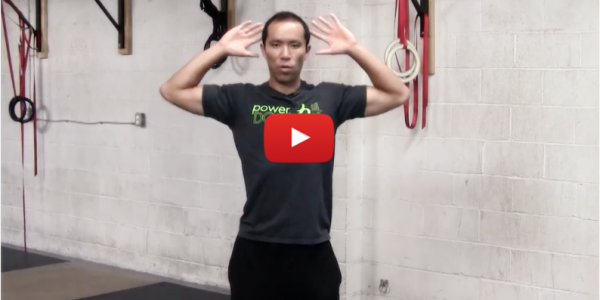
    Open your chest, strengthen your delts and scap stabilizers, breathe deeper, now GO:

    >> Discover the 6-Step System to Release Your Tight Shoulders HERE <<

    Whachu think?

    LMK below~

  • Unique Rotator Cuff Strengthening Exercise

    Unique Rotator Cuff Strengthening Exercise

    When you think of a rotator cuff exercise, you probably picture some type of external rotation move.

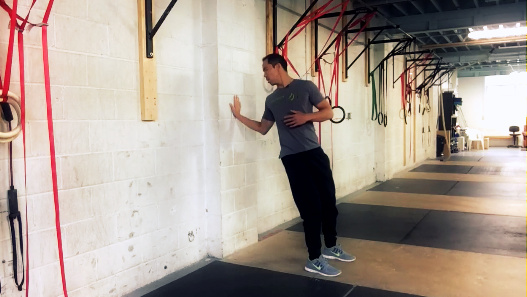
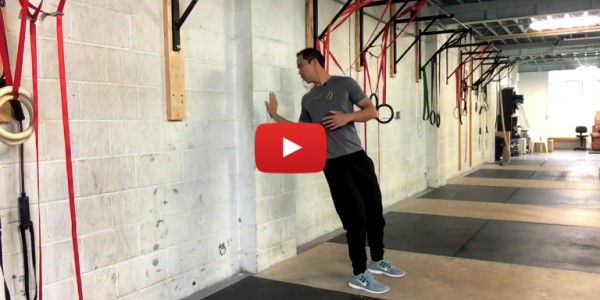
    While these exercises are great and should be used, I’ve been playing with and have had success using a new type of exercise that I call the “Twisting Wall Press”.

    This one is going to be a staple in my healthy shoulders diet for myself and those I work with.

    It’s different than your typical rotator cuff exercises because it’s a closed chain vs. an open chain movement (I explain more about this and the benefits in the vid).

    The rotator cuff stabilizes your shoulder girdle and ensures the scapula (shoulder blade) and humerus (upper arm bone) move in concert with each other and this exercise trains this ability very well.

    Watch the vid and try it out with me then let me know what you think or if you’ve got any questions.

    I’d definitely add this exercise in either at the start or end – it’s gentle and non-fatiguing but will help you activate the rotator cuff and scapular stabilizer muscles for proper movement patterning as part of your warmup, or ensure proper patterning/posture post-workout.

  • How to Set the Tone

    How to Set the Tone

    Last night I didn’t have the most restful sleep because I had to pee.

    I woke up in the middle of the night and while it felt like 5 or 6am, I hit the light button on my little clock and the face lit up in a soothing blue and I discovered it was only 3am.

    But instead of doing the wise thing and giving in to my urge to tinkle, I ignored it and went back to bed.

    I then woke up because I wet myself!…

    .

    .

    KIDDING

    Anyway, I’d set my actual alarm for 6:28am and got up then.

    I did my morning gratitude routine, which is to think of ONE thing I’m grateful for while still lying in bed after waking up.

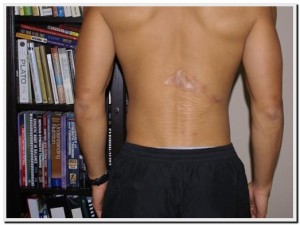
    Today, I expressed my gratitude for the back surgery I had and how it taught me so many lessons about the body and helped open up a career that I love.

    back scar

    Through this painful experience, I’ve discovered the power that injuries have to teach us about how the body works.

    The lessons are way more powerful than anything you could learn in a textbook or a university degree.

    If you hurt your knee for example, you can test different positions of weight bearing with the injured knee forward while keeping most of your weight on your back leg and/or supporting yourself with your arms and see what hurts and how activation of the glutes might eliminate the pain.

    This is just one simple example and the key is the underlying concept:

    Use injuries as a tool for greater awareness of and how better to control your body…

    … and not something you feel depressed and get all upset about and use as an excuse to switch your diet to sugar, cheap vegetable oils, salt and as many artificial flavourings as possible.

    Instead, make lemonade out of lemons and on top of the lesson of how to prevent the injury in the first place, it puts experiencing an injury pretty high up on the list of the top coaches of movement and exercise in the world.

    Note the word “experiencing” instead of “suffering” in that paragraph above…

    Let’s change that language we use around injuries so we’re not dooming ourselves from the start.

    Which brings me back to waking up…

    a healthy bodyWhat’s the first thing you do to set the tone of the day?

    If you’re hitting snooze repeatedly, you’re starting off the day procrastinating.

    If you wake up and think to yourself as you get up, “I’m sooooo tired,” you’re starting off the day in a state of low energy and resistance.

    Or if you get up and everything is on auto-pilot, you’re starting the day off unconsciously and habitually.

    These things are fine and if they’re working for you keep going, but I suggest you try starting your day with a little gratitude and you might find it’ll upgrade your days.

    It’s a conscious, mindful practice that gets you in a state of being thankful for what you have instead of living mindlessly and not being present as you’re thinking about the future or things you want.

    I used to use a journal where it asked me to write 3 things I was grateful for, but I found this process cumbersome and it became mechanical where it didn’t mean anything more than another task to complete, so I ditched it in favour of the process I’ve described here.

    It’s easier and I found dropping from 3 things to 1 increases my enjoyment of whatever it is I think about.

    It doesn’t take long but might require you to wake up a few minutes earlier if your current routine is very habitual, but it’s well worth those couple of minutes.

    The POWER of Simplicity

    If you want to give it a shot, mark your start day in the calendar then give it 28 days and stick to it, then re-assess to see if it’s been worth it.

    Don’t marry this idea yet – just give it a fair chance for 28 days then make up your mind.

    This is what I and my Inner Circle members refer to as the Lifestyle Experiment (LE) – something simple where you track your performance for 28 days then decide if you want to keep it going.

    The beauty of this is that it’s easy to stick to since it’s just 28 days and if you do decide to continue, you’re 80% of the way to making it a habit and you’ll just need another 2-4 weeks of attention to make it one.

    Do you have any simple things you do in your life that you think makes it better?

    If so, please share them below.

    I’m always running Lifestyle Experiments and need lots of good ideas and who better to ask than someone smart, fit and in alignment with my own values than you. 🙂