Tag: stretching

  • Try this exercise to improve your BALANCE

    Try this exercise to improve your BALANCE

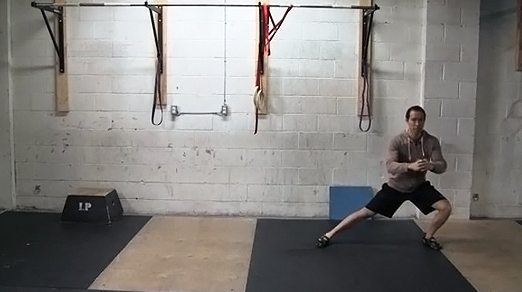
    The video I’m sharing with you today includes a couple of variations of the Lateral Lunge exercise, which you likely know.

    These variations will both improve your balance with the second variation a simple technique that you can use with any exercise to improve balance, proprioception and kinesthetic awareness.

    Those last 2 words may be foreign so here’s what they mean:

    Proprioception: how your brain knows the position your body is in

    Kinesthetic Awareness: how your brain knows where your body is in space

    Please let me know what you think after you give it a whirl.

  • Deadlift Back Pain | HFS + Strength | Trigger Point Fix [ASK ERIC]

    Deadlift Back Pain | HFS + Strength | Trigger Point Fix [ASK ERIC]

    In today’s QnA video, I answer the following questions:

    What excercises do you recommend to strenghten the core when you have a herniated disc.

    Thank you.

    Luis Licea, Alhambra, CA – USA [1:16]

    =======

    I have really been struggling with lower back pain over the last few weeks.

    Mainly following deadlifts but it’s rolling into session two/three days later.

    Could there be a potential injury or is it something I can fix with more mobility work?

    Ross Perry, St Helens, Merseyside – England  [1:26]

    =======

    I just started your Hip Mobility Program and have also started a new strength program that includes deadlifts, bench press, overhead press, squats, and bent over rows.

    Should I avoid any of these exercises (or modify them) until my hip is stronger & more flexible?

    Or is it best to do these programs in conjunction with each other?

    Kim Guthrie, Midway, Utah – USA [4:26]

    =======

    I was just wondering, do you have any tips for planning a good conditioning regimen for someone trying to get back into martial arts?

    Currently with my schedule, I can’t take any martial arts lessons.

    But soon once it clears up I plan to start back up, but I want to make sure to be in shape so I can keep up.

    Thanks for any info you can provide!

    Chris Walker, Camp Pendleton, CA – USA [5:47]

    =======

    I have levatar scapular / trap muscle problems.

    I’ve been trying the neck stretch from last Q&A, but my problem is more in the shoulder area. (like a golf ball in my back)

    Any ideas for stretches?

    Jesse Bull, Moncton – Canada [6:16]

    =======

    In one of your videos you mentioned that you shouldn’t hold a neck stretch for more than 15 seconds.

    What is the ideal hold time for stretches?

    Does it differ from body part to body part?

    Ravikumar Sundaram, Chennai – India [7:49]

    If you’ve got a question about training for MMA or martial arts, nutrition, injuries or anything else that you’d like me to answer in a future QnA video, submit it here.

  • Low Back Stretching | 1 Strength Session/Week | Fitness Trackers | [ASK ERIC]

    Low Back Stretching | 1 Strength Session/Week | Fitness Trackers | [ASK ERIC]

    In today’s QnA video, I answer the following questions:

    What are some good ways to stretch your lower back?

    – Jesse Davila, San Antonio USA 
    [00:29]

    If you have only time to do one strength training session a week (besides all the MMA skill and conditioning work), which exercises would you include when the focus is building general strength?

    – Alex Poppeck, Dachau Germany  [03:02]

    Hey Eric, With the slew of fitness trackers out there, push, omsignal, fitbit, etc… Have you tried any ? With yourself or clients ? Would you recomend any ?

    – Sergio Pichardo, Calgary Canada  [06:12]

    Have you trained any one with a heart condition? I love the martial arts. I am a blue belt in Karate and was just told i will not advance to purple or brown or even get a shodan. Is there any option or is my martial arts training done? Thanks for your time.

    –  Joe Wurzee, Ketchikan USA [09:00]

    If you’ve got a question about training for MMA or martial arts, nutrition, injuries or anything else that you’d like me to answer in a future QnA video, submit it here.

  • BIOMECH Breakdown: Torres vs. McDonald

    Today’s BB is not about the KO that McDonald laid on Torres, despite it’s awesomeness

    I was watching the fights with my buddy Dan at a pub on the Danforth (Greek town in Toronto) and I was pretty pumped about the Torres/McDonald bout.

    McDonald is a young fireball with a ton of potential and it looks like he’s about to go on a roller coaster as opposed to go into a fight – he’s always having a good time.

    Anyway, study this for a moment then we’ll continue:

    UFC 145 Torres vs. McDonald

    After looking at it what do you note?

    Other than the age difference, the 6″ reach advantage that Torres has over McDonald is a big deal, especially since they’re the same height.

    Now, check out this still image from their fight:

    Torres vs McDonald fight at UFC 145

    What do you notice?

    OK, here’s what I see…

    Miguel has an extremely exaggerated kyphotic (rounded) thoracic spine and forward head. It’s almost as if he doesn’t have a neck.

    I call this the turtle posture for obvious reasons…

    Compare this to McDonald, who many might say stands pretty straight up.

    The turtle posture has a few benefits – such as making your body a smaller target and it helps you keep your chin tucked down.

    But it also has some major drawbacks, such as moving your head and chin a bit closer towards your opponent. This totally negates Torres’ significant 6″ reach advantage in this fight. His chin is 2-3″ closer to McDonald compared to if he didn’t have forward head posture. This probably contributed to McDonald landing the big uppercut punch that lead to the KO.

    I first made a note of this when watching Pacquiao vs. Margarito. Pacquiao gave up 4.5″ in height and 6″ in reach, but Margarito’s forward head posture helped Manny reach him a lot easier than if he’d stayed tall and used his range. Here’s pic showing you what I mean, look at the rounding in Margarito’s back:

    When you’re in turtle posture, your abdominals (specifically rectus abdominis and external obliques) are contracted to bring your rib cage down and round you forward.

    When they’re in this shortened position, they’re not as strong as when they’re in neutral position, thus, you can’t generate as much force form your core for your punches.

    The other thing when you’re in turtle posture is that you’re basically in the worst possible posture for shoulder and neck health.

    Excessive thoracic kyphosis and forward head are a part of something called Upper Cross syndrome, which I talk about and give you solutions for in my Ultimate MMA S&C Program. I also talked about this in the free INDESTRUCTIBLE Shoulder Injury guide.

    The bottom line is that being in this posture not only makes you look like an old man, but it makes shoulder and neck problems very likely.

    In fact, I just received this email from Chris, an amateur mixed martial artist who wants to have a pro fight:

    “Hi Eric.

    I purchased your strength and conditioning program and love your blog and all the info you pass along I have found it most helpful and it definitly has raised my game over the last year. I am now faced with an injury (not sure if that is the correct term) that will not go away. I have had a MRI and the sports medicine doc says I have disc degeneration in my neck C5/C6 and should quit MMA. I am 38 years old and I have had a couple amateur fights and my goal was to get at least one pro fight before I hung up the gloves. My question to you is in your professional opinion can I reverse this to a point where I can compete at a high level or should I just give up? Really I guess is it even reversible to a point where I am not in pain? I love mma but I do not want to quit eventually I thought I would teach as well but I don’t want to be crippled later in life. I am trying to stenghten my back more and have aopted your 3 to 1 push/pull work out plan in order to get my dumbell rows to equal my dumbell press.  I have also been stretching my chest, lats and neck and I have really focused on getting rid of bad forward posture but abviously as you have stated the fighting stance is not really the best posture ever…not to mention the stress on my neck from rolling. Anyway I am just curious to see what you think as I definitly respect your opinion. Thank you so much for all the time and energy you put in to providing free info for your blog subscribers. It is greatly appreciated.

    Chris”

    First of all, from my vantage point of not knowing the extent of the degeneration, not having assessed you fully in person and I don’t know what your pain is like, I can’t say for certain. All I can do is talk in general terms, which may help if you apply them.

    To my knowledge, you can’t really reverse disc degeneration. But you don’t necessarily need to. In fact, most people above the age of 30 have discs that would be classified as ‘degenerated’, yet are symptom free.

    And it’s not really a disease, but a process that occurs naturally with age and is sped up through excessive stress on the discs when they’re in bad posture, like forward head.

    The key thing is minimizing the stresses on the discs that are causing pain. You’ve obviously been paying attention since you’re  doing some things that will help, namely working your pull muscles more and stretching your chest, lats and neck. Thoracic spine mobilizations are also important. The chin tuck stretch I show you in the Shoulder guide is HUGE.

    But you’re probably going to have to adapt your fighting style and training to minimize the stress on the neck by keeping the neck in neutral posture – that means no more turtle posture.

    That means asking your training partners not to crank your neck, or rip you around the ring with a Thai clinch. Basically anything that really aggravates is out. You’ve got to remove all of these things for healing to occur, then only do them if they don’t aggravate you further.

    You also might have to change your fighting stance to stand more upright. If you think this isn’t possible or is dangerous, just look at guys like Anderson Silva, GSP and Machida to realize that you can excel without the turtle posture. In fact, as I mentioned earlier, standing a little taller will help you generate more power with your hands because your abs are in a better position for generating force.

    This is one of the hardest things for guys to do – change up their old, ingrained habits. But this situation might necessitate it – not everyone’s body can handle the torture that turtle posture wreaks on it.

    Some more things to do include various yoga postures such as the bow pose that I show you in the video below (bow pose @ 5:59):

    Yoga postures like this one are a part of my 3D Flexibility model, because they affect part the fascia component of soft tissue.

    All about fascia.

    A fascinating book detailing fascia and its anatomy and functions in the body is Anatomy Trains by Tom Myers. The basic premise is that the fascia, which is the saran-wrap like cover over our muscles, runs from head to toe and there are various fascial lines, or trains.

    Somehow, thousands of years ago, some Indian guy started moving his body into weird looking postures that just happen to specifically target these fascial lines.

    An example is how the bow pose I show you above hits what Tom Myers calls the Superficial Front Line.

    There are a ton of different postures in yoga and the best bet is to figure out what feels like it’s working well for you.

    The only way to do that is to try out a bunch of different postures.

    And here’s where I”m going to reveal what I’ve got planned for those who want to start working on their kick height right now.

    *********** BIG ANNOUNCEMENT **********

    I’ve decided to start a small group coaching program where over the next 4 weeks, I direct you to what you need to do to kick higher with more power.

    It’s based on my 3D Flexibility model of addressing the 3 main factors of flexibility: soft tissue, neuromuscular and strength. 

    I’m also all about value and making sure you get MORE than what you paid for.

    I could easily charge $97 for this, but here’s what I’m going to do (this is ridiculous and I should kick my own ass for doing this)…

    There are 3 steps to joining the VIP High Kick Coaching program:

    Step 1Pickup the yoga program here (I even negotiated a discount for you)

    Step 2Enter your invoice # on this page to verify that you picked up the program. 

    Step 3 – Wait for the 1st email from me that will come Monday, April 30, 2012 to kick off the coaching program. 

    Grabbing the yoga program here not only gives you your ticket to my VIP coaching program, but it also gives you a wealth of yoga moves that you can go through to determine where you may be limited by your fascia.

    I’ll also be directing you to perform specific stretches from the program as part of the VIP coaching program.

    PLUS – when I launch the 3D Flexibility program in a couple of months, you’ll get a discount equal to the value of the Yoga program! So it’s basically like getting the Yoga program and my coaching for FREE (if you’re planning on getting the 3D Flexibility program when I launch it).

    Space is limited and the deadline for signing up is Thursday at midnight, so follow the instructions above and get in now!

    Can’t wait to start coaching you to higher and more powerful kicks!

    – Eric

  • New Approach to Stretching: 3D Flexibility

    I’ve been busy at work putting all of my research and ideas on flexibility together in a way that makes it as easy to understand as possible.

    Einstein said, “Make everything as simple as possible, but not simpler.”

    That’s what I strive to do because most of you don’t have a degree in science and I’m betting that you probably appreciate me translating science-geek into plain English.

    Consider me the bridge between the geeks and the regular peeps.

    So after I scribbled everything down on paper and stepped back to take a look at the big picture, it all came together in one neat package: 3D Flexibility.

    Yes, it’s a cool name that will market well.

    Yes, it’s a name for the approach I’m going to use going forward when addressing flexibility issues.

    And yes, it makes complete sense, once you understand the background behind it… which is what I’m going to explain to you right now.

    What is 3D Flexibility?

    In the first article, I gave you 7 critical flexibility concepts to understand, which lay the groundwork for the 3D Flexibility system.

    Within the 7 critical components, I gave the the 3 main factors that you must address if you’re ever to achieve improved functional flexibility.

    Not just the ability to hold a static stretch (which you’ll get as well), but the ability to smoothly use your full range of motion (ROM) with speed and power.

    There are 3 main factors to address to improve your flexibility:

    1. Soft Tissue Length
    2. Neuromuscular Control
    3. Strength

    So the name 3D flexibility makes sense, no? But wait – shit gets deeper – I’ll explain in a second,  but first…

    These 3 main factors are not completely independent of one another, but any of them can limit your ability to achieve your flexibility potential.

    In writing the previous sentence, that term sticks out for me – flexibility potential – because not everyone is capable of drinking a bottle of Coke using their feet.

    Remember from last article, I mentioned that your flexibility can be limited by your ligaments,  which you may not want to stretch because of potential joint instability problems, and your bones and joint architecture, which won’t change despite your best efforts.

    But luckily, this isn’t the case for most functional ranges of motion that we want to achieve, such as kicking a guy in the head.

    However, using myself as an example, I’ve been able to determine that the only way I can do the front splits is if I stretch my iliofemoral ligament – not something I want to do because I’d rather have a stable hip joint. I’d imagine that hip dislocations aren’t much fun.

    Now beneath each of the 3 main factors, there are 3 sub-factors that you address to regain lost flexibility or achieve flexibility you’ve never had.

    The 3D Flexibility Factors

    Soft tissue: fascia, muscle, joint capsule

    Neuromuscular: pain threshold, unconscious reflexes, conscious ability to relax

    Strength: prime movers, the core muscles, joint stabilizers (muscles that provide stability at that range of motion)

    When things wrap themselves in neat little packages like this you have to run with it.

    So we’ve got 3 main factors and 3 sub-factors beneath each, which gives us a total of 9 (3×3=9 for those of you who skipped the multiplication component of early childhood education) factors to address.

    As I mentioned, each factor may be the one limiting your flexibility.

    You may be worriedly thinking, “Does that mean I have to do 9 different things to improve my flexibility?”

    Not necessarily. Because there are certain techniques that hit multiple factors at once. I’ll give you an example of it in this article.

    IMPORTANT ANNOUNCEMENT!

    Since writing this article, I’ve released a program to help anyone who has tight hips called the Hip Flexibility Solution.

    If your hips limit you from kicking, grappling, squatting ass-to-grass or deadlifting with proper form, check it out:

    www.HipFlexibilitySolution.com

    Before we do that – let’s talk about static stretching – the most well-known method of stretching – and what factors are affected when performing a static stretch. Let’s also discuss the limitations of static stretching based on the 3D Flexibility model.

    Static Stretching vs. 3D Flexibility

    When you hold a static stretch, a few of the 3D Flexibility Factors come into play to affect what exactly is being stretched.

    If you’re unable to relax the muscle being stretched, say, due to one of the neuromuscular factors, you may be stretching out your tendons (SEC).

    Here’s an analogy so you can see why this is so:

    Imagine a spring (your muscle) that has a rubber band connected on each end (tendons).

    Now imagine that the spring is glued together or so tight that it can’t stretch.

    If you pull the rubber bands apart, what is being stretched?

    Come on, think about it, don’t wait for me to give you the answer…

    .

    .

    .

    If you said the rubber bands, which represent your tendons, you’re correct. Gold star for you.

    On the other hand, if you can achieve total relaxation of the muscle involved, you may be stretching the PEC – the muscle fibers themselves.

    Now if you need to stretch the SEC – you can purposefully perform a stretch where you hold an isometric contraction at the end ROM.

    If you need to stretch the PEC, your goal is to stretch while the muscle is totally relaxed.

    The thing is, you don’t always have perfect conscious control of the contraction of the muscle.

    Neuromuscular reflexes such as the myotatic stretch reflex, which automatically contracts the muscle if it is lengthened too quickly can prevent you from achieving total muscular relaxation.

    Strength of the muscle dictates what rate of lengthening the myotatic stretch reflex occurs at.

    If your muscle is very strong at that ROM, then the myotatic stretch reflex doesn’t kick in as soon as it does if you’re stretching a muscle that is weak.

    This is an ingenious protective mechanism that our bodies have built-in that prevent us from tearing muscles apart. But it can also limit us from achieving peak flexibility if we don’t know how to overcome it.

    Strength also controls your ability to enter and exit the ROM, so when you do increase flexibility, you’ve got to ensure that you simultaneously increase strength, to make sure you don’t make your active:passive flexibility deficit any bigger.

    Can you see how deep the rabbit hole goes?

    Let me give you some ideas to address most of the issues presented above…

    First, it’s impossible to tell if it’s your SEC or PEC limiting your flexibility. Either way, if you need to increase your flexibility, stretching both is a good idea. Except in certain cases where you don’t want to lose stiffness, such as the calf/achilles complex, where stretching the muscle is OK but you want to leave the tendon alone for power generation.

    There’s an ancient Chinese concept called “surrounding the dragon” where you do everything that you know of to fix the problem you’re dealing with. You don’t worry about isolating variables. That’s exactly how we should address our flexibility problems, if we really want to deal with them quickly.

    So to stretch both the SEC and PEC, you could perform the Contract-Relax method of stretching.

    To do this, you simply enter the stretch, then when you’re at the end ROM, you contract the muscle being stretched for 5 seconds at anywhere from 50-75% of max contraction. Then you relax and go deeper into the stretch, holding for another 5 seconds. Repeat this process 3 times. This hits both the SEC and PEC components of the soft tissue.

    However, if the muscle being stretched is tight due to the myotatic stretch reflex, ensure that you enter the stretch slowly. Remember – the myotatic stretch reflex responds to the speed at which you lengthen the muscle. Entering the stretch slowly negates this reflex. This is a little tweak that will make the difference between an effective and ineffective stretch.

    Bingo, now we’re stretching the SEC, PEC and we’ve taken care of one of the neuromuscular factors – the myotatic stretch reflex.

    But what if your inability to relax the muscle isn’t due to the stretch reflex, but simply a tonic (facilitated) muscle? [NOTE: a tonic muscle is one that fires and takes over when it’s not supposed to]

    We can throw in a contraction of the antagonist, to invoke the law of reciprocal inhibition. 

    The law of reciprocal inhibition states that when you contract a muscle, the opposing muscle group will relax.

    So instead of just a contract-relax stretch, we can perform a contract-relax-antagonist-contract stretch. That term is kinda messy, so I like to call it dual contract relax (DCR) stretching.

    This way, you can further address the 3D Flexibility Factors. Not to mention that you’re now strengthening both the agonists (muscle being stretched) and the antagonists!

    Talk about efficiency. 🙂

    Now, there are a few factors I haven’t addressed: fascia, conscious relaxation and dynamic strength. But I wanted to give you an idea of my mode of thinking and how a deep understanding of the background of a topic allows you to come up with efficient solutions to your problems. 

    I also mentioned last email that I was going to think about what to do in the meantime for those of you who want to increase your flexibility now, but don’t want to wait a couple of months for my 3D Flexibility program to launch.

    Well, after much thought, I’ve come up with it, and it’s pretty cool.

    I’ll be spilling the beans next week. [Hint: the focus of the ‘program’ will be to improve kick height, speed and power]

    And as always, I’d love to hear your feedback about this article, so hit me up in the Comments section with your questions, thoughts and ponderings.
  • 4 Critical Stretches for MMA Fighters

    Stretching. Could there be anything more boring?

    I don’t know anybody who really looks forward to stretching, myself included.

    But I also don’t know anybody who doesn’t like how it feels after, and I don’t know any mixed-martial artist who doesn’t need to stretch.


    nice-stretch
    This is my favourite stretch. Ever.

    We definitely don’t want to waste our time since we’ve got so much to train, not to mention lives to live. Wasting time is one of my pet peeves – I have an impatience for sitting on hold, waiting in lines to buy something, or waiting for equipment when I’m training.

    So that’s why I’m just going to show you in the video the 4 key stretches that every fighter MUST be doing. Anything else is just a bonus.

    As always – I value your feedback and input – leave your comments below!
