An injured shoulder is no joke. It can hinder your ability to lift your arm and perform even the most simple day-to-day activities. These 6 supraspinatus exercises are a great way to rehab your shoulder so you can safely speed up the healing process and prevent re-injuries.
Spending hours sitting down at your desk is likely causing your low back pain and movement limitations. Here are 4 simple hip mobility exercises you can do to address these issues (you can even do these while sitting down at work!).
The sole focus on PrecisionMovement.coach this week has been the shoulders and I’ve got a ton of tips for you on how to keep them healthy to help you avoid issues like impingement or scapular winging.
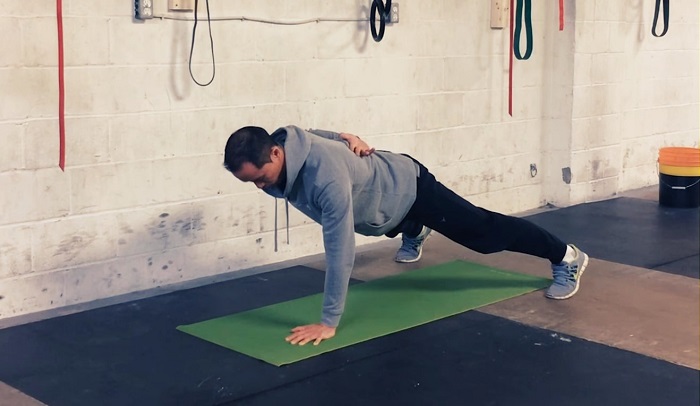
Do you have winged shoulder blades that stick out in the back? Chances are weakness in your serratus anterior muscle might be causing that. Read this article to discover the important role of this muscle in keeping your scapulae healthy and try these exercises to prevent issues like shoulder impingement or scapular winging.
If you’re into weight lifting, swimming, or playing baseball or any other sports that involve rapid overhead arm movements, you’re at risk for rotator cuff injuries. Here’s what you should know if you’ve been injured and follow this 7 step plan to help you recover from a strained rotator cuff.
In today’s QnA video, I answer the following questions:
Do you have some recommendations for differentiated/supplemental cardio?
I’m training mma twice a week along with the workouts but my cardio isn’t where I want it. [00:48]
Kyle Spencer, La Junta, Colorado, US
================
I have rotator cuff tendonitis. I had stopped all upper body strength training.
Am starting back again with some easy kb clean and presses, push ups, pull ups and rows.
Wondering whether I should start you rotator cuff routine instead or wait until my shoulder is less sore? [05:31]
Many thanks.
Adam Cotterill, GB
If you’ve got a question about training for MMA or martial arts, nutrition, injuries or anything else that you’d like me to answer in a future QnA video, submit it here.
So it looks like shoulder injuries are the most common injury affecting all EricWongMMA readers and subscribers, so that’s what we’re going to talk about.
I gives the peoples what the peoples wants, just like the People’s Champ:
But I’m not going to show you the same old shit of some wimpy little rotator cuff exercises with a rubber band that is somehow supposed to get your shoulder back into shape so you can knock mofoz out with a big right hand.
Oh no. We do things different ‘round here.
I’m going to give you the BIG PICTURE of the shoulder, why it gets hurt, how to fix it when it does and most important of all: how to prevent it.
click meOne caveat – all the talk about injury prevention is great, but the reality is that in a combat sport like MMA, you’re going to get hurt sooner or later. If you don’t, you’re probably doing something that can be better described as Cardio Kickboxing rather than MMA.
What I’m going to show you is how to minimize the amount of stress on your shoulder and ensure the muscles around the shoulder are all working as they should to minimize non traumatic injuries. Ya dig?
This is going to be a 2 part series on shoulder injuries.
Part 1 (what you’re reading here today) is all about the big picture so you’ve got an idea of my total approach.
Part 2 will be shoulder injury exercises and programming. There will be video. That will be coming later this week.
NOTE: If you’re not on my email list yet, get on the damn thing so you don’t have to waste time coming back to my site every few hours, hoping, just hoping that I’ve made an update. OK?
Now, let’s get started…
There are a couple of basic acute injury principles that I’ve got to remind you of, in case you’ve recently hurt yourself or if you do in the future.
Basic Acute Injury Principle #1 – If you hurt yourself, icing it as soon as possible is generally a good idea. Ice for 10-15 minutes on, 5-10 minutes off for an hour once or twice daily for a few days after you first hurt yourself. Ice again after anything that aggravates it.
Pain in your shoulder due to inflammation is a great way to screw up motor patterns and timing because your body will compensate to avoid the pain. Icing helps minimize pain and compensatory patterns, so do it.
Basic Acute Injury Principle #2 – If a movement hurts, stop. If you tweak your shoulder and it hurts to throw a punch, stop. You’re only screwing yourself up more. The 2, 4, 8 or 12 weeks of avoiding these painful activities is a drop in the bucket if you want to be fighting or training for the long-term. I know “no pain no gain” and all that but there’s a difference between being tough and being stupid. Be tough, don’t be stupid.
I just hit the heavy bag for the first time since mid-January because of my messed up hand (first MCP joint) and while it’s sucked, it would suck more hurting my hand repeatedly and having to have surgery and be out for 6 months. I have been able to work on other aspects of my game, such as conditioning, footwork, head movement, etc – so there is always something else you can do and probably need to be doing more of anyway. Spend your time on those things and stop wasting time and energy worrying about what you can’t do.
To understand shoulder injuries, rehab and prevention, you’ve got to know a bit about the shoulder. I’m not going to give you a boring anatomy lesson, I’m just going to break down the important info for you in a way that you understand. That’s how I do.
When we think of the shoulder, we usually think of the ball and socket joint. While this is the main part of the shoulder, other areas are important, including:
The scapula
The clavicle
The thoracic spine
Everything must work together properly to keep your shoulders healthy: joints must have necessary mobility, muscles must have proper balance of length and strength and good activation patterns. These things all work to ensure the ball moves smoothly in the socket. If something’s not working, nerve impingements, grinding out the capsule or wear of the ligaments occurs. Nasty stuff.
This is a big reason why shoulder injuries happen
so often – there’s a lot of range of motion and a lot
of muscles are needed to control the motion properly.
One common misconception about the shoulder is around the area of the rotator cuff. Because of the name, people think that these muscles are designed for rotational movements. While they do perform these movements, their main job is control and stability of the ball in the socket as you go through real-world movements. So isolating these muscles all the time won’t help train them for the function they are built for, although isolation is needed when imbalances are present (as we’ll talk about in a second).
With respect to direct joint mobility, thoracic spine mobility is the most important to work on and needs to be worked on regularly by anyone who uses a computer, drives a car, watches TV or participates in a sport like MMA or boxing. That means YOU.
Chronic Shoulder Injuries: Practical Demo
Here’s an example of the importance of the thoracic spine on shoulder mobility, particularly shoulder flexion (raising your arms up overhead):
First, hunch over like you’re depressed because your wife or girlfriend just told you, “Sorry honey, it’s true, I have been faking it all this time.”
Next, slowly raise both arms up overhead as far as you can, keeping arms straight and close to your ears.
Now, stand up tall and proud and do the same thing.
Notice how hard it is to get your arms overhead when you’re hunched over and how much more range you have in good posture?
This is what happens when you’ve got chronically bad posture, specifically a hunchback, or the more scientific term “excessive thoracic kyphosis”.
When you’re hunched and your arms are overhead, the ball is getting jammed up in the socket, grinding the capsule and impinging nerves. Not good.
One exercise to address T-spine mobility isthe extension exercise over the foam roller that I show you here, in this classic era EricWongMMA video:
A better exercise for this that I’ve been using now is the Bench Extension warmup exercise, (found in the Mobility Warmup of the Olympic Lifting Mastery Course).
The other joints are controlled more by the active and passive muscle activation patterns at the shoulder vs. limitations in the joints themselves.
I mentioned earlier that “muscles must have proper balance of length and strength and good activation patterns.”
The balance of length and strength across a joint determines the resting position of the joint.
Just like with the thoracic extension example, if your shoulders are rounded forwards (protracted), the same problems at the shoulder will occur: grinding of the capsule and nerve impingements.
This problem is commonly due to something that world-famous therapist Vladimir Janda coined Upper Cross Syndrome.
Upper Cross Syndrome is when the pecs and some posterior neck muscles are strong and tight, while the opposing muscles groups, the deep neck flexors, serratus anterior, rhomboids, lower and middle traps are long and weak.
So what’s the cure?
Lengthen and loosen the strong and tight muscles while activating and strengthening the weak muscles.
Simple, but effective.
Doing so will put your shoulder girdle back into a neutral resting posture, which makes for one happy shoulder joint and one sad orthopedic surgeon.
So far, we’ve talked about the importance of thoracic mobility, addressing muscular imbalances and ensuring that the muscles are activated.
Specific exercises and strategies covering all of these topics to come in Part 2…
You also need gross strength balance across your shoulder joint. Again, the concept is simple. You’ve just got to put it into play. Simply equalize the amount of weight you can lift in a flat dumbbell bench press with the 1-arm dumbbell row. So if you can dumbbell press 80 lbs for 3 reps, you should be able to do at least the same with the 1-arm dumbbell row (if not more). If you’re pressing a lot more than you’re pulling, you’ve got an imbalance that may contribute to a shoulder problem down the road.
The other type of strength you need is absolute strength. In particular, I’ve found that people with shoulder injuries are extremely weak in the Side Lying External Rotation exercise.
First, you need super strict form. Any cheating totally negates the benefit of this exercise and shifts the emphasis on other muscles.
Here’s a video of something I see a lot with this exercise – a lack of ROM:
The big dude is doing the exercise OK, but notice his total lack of ROM. You need more than that – at least 60 degrees, like this girl here:
Important points: go slow, keep your wrist straight throughout and do your first set with a light weight, like 3-5 lbs, so you can see what kind of ROM you can get with a light weight before challenging yourself. You’ll find form quickly deteriorates if the weight used is even slightly too heavy. Any guy who fights should be getting 15-20 lbs for 8-12 reps if they want to bulletproof their shoulders. Girls should be in the 7.5-10 lbs range for 8-12 reps.
The final topic I want to talk about in this article is specificity.
Because we’re mixed martial artists here, we need to address punching and joint locks.
Let’s start with punching.
The first thing that you have to understand is why you don’t do exercises like this:
For punching, the highest risk for the shoulder is at the very end of your punch when you change directions from throwing it out to bringing it back in. At the end (of a good punch) you turn your fist (internal shoulder rotation) to add that last bit of power. Bringing your fist back is reversing all of the power you put into the punch, starting with external shoulder rotation, which means you need to brake (eccentric) then pull it back.
To train this, you can use an exercise like this:
While it doesn’t look like a punch, it trains the specific strength of the external shoulder rotator muscles needed for when you’re punching hundreds of times a day to prevent throwing your arm out of its socket or overloading the muscles and causing a strain.
Finally, with respect to joint locks, if you’re training and rolling, what I said earlier applies, “Be tough, don’t be stupid.”
One tip that can help is to roll more relaxed. When you’re fighting and grinding away with your training partner, your muscles tend to be more tense. When your muscles are tense, you lose flexibility and if you get caught in an omoplata or something and you’re all tense, you can easily strain or sprain something.
So chill out, work on technique and if you get caught, try to escape but if you’re stuck, tap early, especially with things like shoulder locks.
Phew, that was a long one.
Any feedback, thoughts, comments or questions?
Let me have it in the Comments section below, but first remember to hit ‘Like’ or any of the other fancy sharing buttons below. Thanks for reading and your feedback!
UPDATE
Part II has been published. Check it out before I regain my wits and actually charge for this:

 Are you experiencing persistent knee pain? Learn what’s actually causing your pain and why treating Patellar Tracking Disorder won’t help with this.
 An injured shoulder is no joke. It can hinder your ability to lift your arm and perform even the most simple day-to-day activities. These 6 supraspinatus exercises are a great way to rehab your shoulder so you can safely speed up the healing process and prevent re-injuries.
 Spending hours sitting down at your desk is likely causing your low back pain and movement limitations. Here are 4 simple hip mobility exercises you can do to address these issues (you can even do these while sitting down at work!).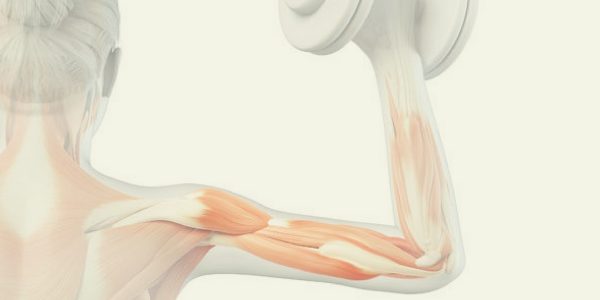
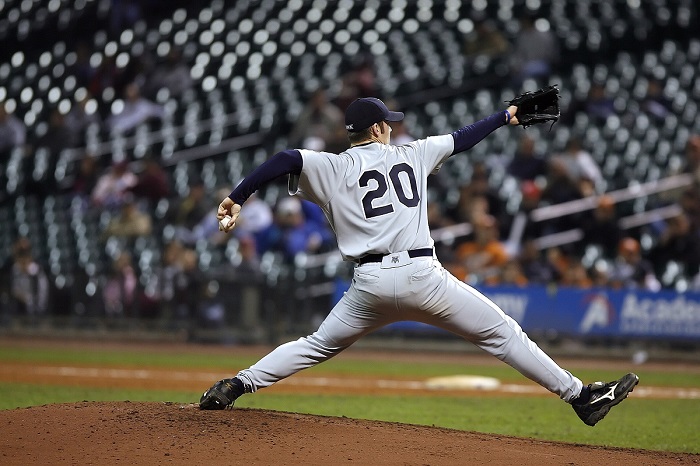 If you’re into weight lifting, swimming, or playing baseball or any other sports that involve rapid overhead arm movements, you’re at risk for rotator cuff injuries. Here’s what you should know if you’ve been injured and follow this 7 step plan to help you recover from a strained rotator cuff.
![MMA Cardio | Training with Rotator Cuff Problems [ASK ERIC]](https://www.powerdojo.com/wp-content/uploads/2015/04/mma-cardio-2-600x300.png)


