Tag: serratus anterior

  • Serratus Anterior Exercises for Healthy Shoulders | Rehab a Strained Rotator Cuff

    Serratus Anterior Exercises for Healthy Shoulders | Rehab a Strained Rotator Cuff

    The sole focus on PrecisionMovement.coach this week has been the shoulders and I’ve got a ton of tips for you on how to keep them healthy to help you avoid issues like impingement or scapular winging.

    Here you go:

    New PMc Article #1:
    5 Serratus Anterior Exercises for Healthy Shoulders

    serratus anterior exercises

    Do you have winged shoulder blades that stick out in the back? Chances are weakness in your serratus anterior muscle might be causing that. Read this article to discover the important role of this muscle in keeping your scapulae healthy and try these exercises to prevent issues like shoulder impingement or scapular winging.

    Read More >>

    New PMc Article #2:
    The Fastest Way to Rehab a Strained Rotator Cuff

    baseball pitch - strained rotator cuffIf you’re into weight lifting, swimming,  or playing baseball or any other sports that involve rapid overhead arm movements, you’re at risk for rotator cuff injuries. Here’s what you should know if you’ve been injured and follow this 7 step plan to help you recover from a strained rotator cuff.

    Read More >>

    Got any questions? Leave them in the comments below.

  • Exercise to Strengthen Scapular Stabilizers + Stretch Pecs

    Exercise to Strengthen Scapular Stabilizers + Stretch Pecs

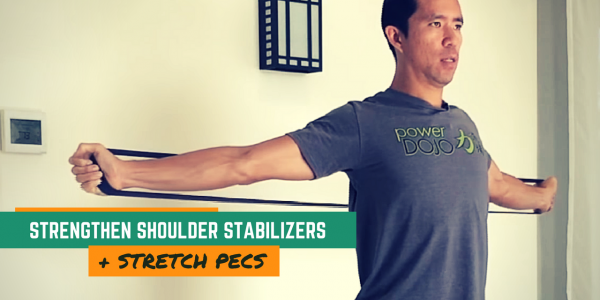
    The title of this post says it all…

    This exercise primarily strengthens your serratus anterior and rhomboids, two muscles that are crucial to scapular stability and shoulder health.

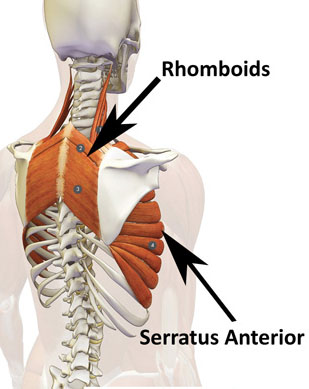
    These 2 muscles work together to keep the scapula flush to your ribcage and prevent winging.

    Look at the image below and you’ll see that these muscles have the same line of pull and essentially blend into one another, with the rhomboids anchoring the scapula to the spine and the serratus anterior anchoring the scapula to the ribcage.

    rhomboids-serratus

    When they both contract, they pull the medial border of the scapula tight to the body, which is what we need to happen for a stable shoulder joint.

    The exercise we’re doing today works both of these muscles at their shortened end range of motion while the pecs also get a great stretch.

    Give it a shot and let me know how it feels:

  • The Scap Step Up: Shoulder Control + Core Stability

    The Scap Step Up: Shoulder Control + Core Stability

    Today’s exercise builds off of the last post I shared on the blog (Exercise to Cure Serratus Anterior Amnesia), which got some great feedback from Mike who said:

    “I did it and my shoulders feel much looser and
    almost gave me like a warmed up looseness…”

    Immediate looseness like Mike experienced happens when you activate stabilizer muscles (i.e. the serratus anterior) because your central nervous system sees that the joint is stable and can let go of protective tightness, which guards a joint from injury when no stability is present.

    It’s like when you’ve got a powerful urge to do a #2 but there’s no toilet in sight – you clench up your glutes and sphincter and all the muscles down there to protect you from making a poopie in your pants (and the associated shame and embarrassment).

    Same thing happens at every joint in your body including the hips, spine, ankles, etc.

    I guess your anus isn’t really a joint, but I digress.

    Let’s get back on track here.

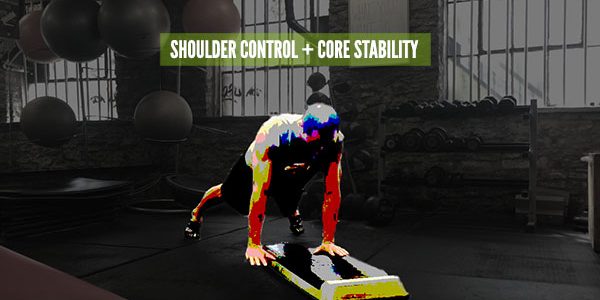
    The Scap Step is a great exercise because it trains the following important elements:

    • Straight-arm strength (to counteract all the bent-arm strength training that’s mostly done)
    • Unilateral serratus anterior strength and control through the full range of protraction/retraction
    • Integrated diagonal core stability (rotational power anyone?)

    And more, which you’ll discover in the video:

    Do anywhere from 4 reps on each side if you’re going for activation as part of a warmup or multiple sets of up to 10 reps per side if you’re trying to build strength-endurance.

    I also recommend you do the sequence from the last post FIRST, as it’ll release the naughty pec minor and get the serratus anterior activated at a low level before jumping into the Scap Step Up, which is a higher intensity drill when done correctly.

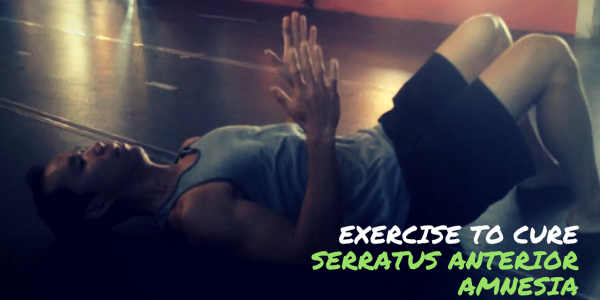
  • Exercise to Cure Serratus Anterior AMNESIA

    Exercise to Cure Serratus Anterior AMNESIA

    You may have heard about the importance of the serratus anterior muscle before…

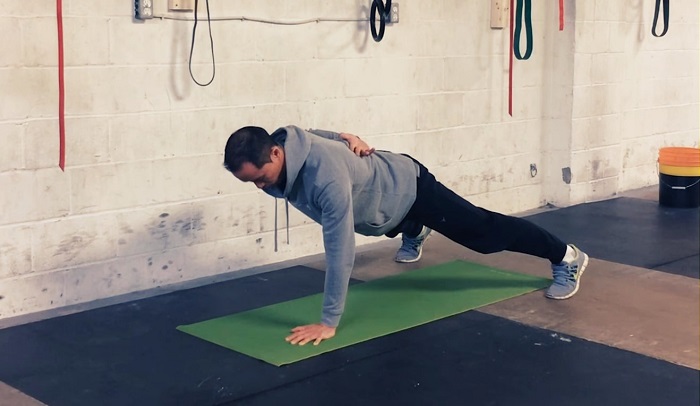
    serratus-anterior-muscleIts most commonly discussed function is protraction of the scapula, which is why it’s often trained with the Scap Pushup (aka Pushup Plus), which is when you get into a Pushup position and protract your scapulae by pushing yourself away from the ground without bending your arms.

    It’s a great exercise that should be done by everyone, but it trains just ONE of the serratus anterior’s functions.

    Likewise, its most commonly discussed dysfunction is winged scapula, which is when the medial border of the scapulae stick out and away from the body and it looks like you could hide stuff in there.

    The thing is, there are two other functions that are just as or even more important for maintaining healthy shoulders.

    The first is upward rotation of the scapula to maintain proper scapulohumeral rhythm.

    Scapulohumeral rhythm is the term used to described how your scapula must rotate as you lift your arms up overhead to ensure the head of the humerus has space to move smoothly.

    If the scapulae don’t upwardly rotate when you raise your arms up, a bone-on-bone collision can occur that will stop the movement and cause pain.

    Thing is, proper scapulohumeral rhythm is largely unconscious and just requires proper thoracic mobility a low level of strength in the 3 muscles responsible (upper trap, lower trap and serratus anterior) and avoiding doing anything silly when lifting your arms up i.e. trying to pinch your shoulder blades down and back the whole time, then you’re likely ok.

    The other function not often discussed but critical to shoulder health is posterior tilting of the scapula.

    Posterior tilt of the scapulae should occur during most movements including:

    • Horizontal pulls (Rows)
    • Vertical pulls (Chinups)
    • Horizontal pushes (Pushups)
    • Vertical pushes (Overhead Presses)

    All of these movements require your scapula to be tight to your ribcage, which occurs as a result of the ability of the serratus anterior to fire first, then its strength and endurance.

    But in most people this muscle is weak, inhibited and/or rarely considered in exercise programming.

    The result is our scapulae don’t move how they’re supposed to, causing dysfunctional movement patterns, limited mobility, decreased strength and pain.

    But today, you’re in luck because you’re going to
    wake up your serratus with a KILLER 1-2 punch.

    The first part is to release the pec minor, which is antagonist (opposite in function) to the serratus.

    We’ve got to release and deactivate the pec minor because when tight and/or overactive, it fires and will inhibit serratus activation.

    After we release pec minor, we immediately perform the serratus activation technique shown in the video, which I’m guessing is one you’ve never seen before.

    Unlike the Scap Pushup, we’re activating the serratus in its lengthened position with shoulder extension torque occurring, which is a powerful downward rotator of the entire shoulder girdle and a common dysfunctional movement pattern that occurs during Pushups, Chinups and even Rows!

    As with all of the techniques I share, focus on the itty-bitty details as they’ll determine whether the exercise just looks ok or is actually effective.

    One more point before we dive in – do your best to breathe in a relaxed fashion and if you’re trying too hard to the point where you’re tensing up, back off and BREATHE.

    You won’t effectively reprogram movement patterns while holding your breath.

    Now, GO:

    Go into and exit the activation slow and smooth, do 10 reps and hold for 5 sec on each rep, so it’ll take you under 2 minutes to complete.

    After you give it a try notice your posture and scapulae, then let me know how you feel in the comments below.
  • Maximize Power Ground Up Transfer (and activate your serratus anterior)

    Maximize Power Ground Up Transfer (and activate your serratus anterior)

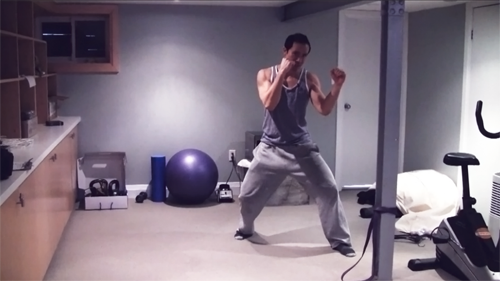
    You might start getting more videos from me shot in my basement workout corner.

    My 6 month old baby girl Livia is the cutest thing ever and I enjoy working from home more so I can bug her often throughout the day. 🙂

    Because of this, you’ll be getting more corrective/patterning/activation drills that I do because I typically do these at home versus at the gym.

    In today’s video, I reveal one of the techniques that I’ve integrated into my upcoming Shoulder Flexibility Solution, which is about 57% done.

    [BTW – I’m definitely going to include much of the feedback I got from the survey responses, so thanks again for taking the time to respond if you in fact did respond]

    Poo poo to the rest of ya bums 😉

    In today’s video, you’re going to see how to train the skill of transferring force from the ground up through to your hand, like you want to do if you enjoy throwing really powerful punches.

    In fact, after learning this skill, you may be able to punch so hard, you could punch down a 100 oak tree from its base.

    I’m not exaggerating.

    On top of that, I also show you how to activate the serratus anterior, with important coaching cues that many don’t know.

    A sleepy/weak serratus anterior can result in:

    [+] Pain and tightness between your shoulder blades (due to compensatory action from the rhomboids and middle traps)

    [+] Decreased ability to transfer maximum force from the ground through to your hand

    [+] A tight pec minor or a pec minor that won’t release even fromthe most aggressive stretching and treatment regimen

    This last point is uber-important because a lot of guys have tight PEC MINORs and this limits flexibility and increases anterior shoulder pain and can create nerve impingements.

    Yikes.

    You’re getting a lot of bang from your buck in this vid ONLY if you put it to work for you.

    Best part is all you need is a wall or something you can push up against with your hand, so NO EXCUSES.

    Give it a go and make sure you tell me if you felt the serratus activate and if you became aware of any “force leaks” in your body when driving through the ground.