Tag: injuries

  • New Site for Pain, Injuries and Flexibility Problems

    New Site for Pain, Injuries and Flexibility Problems

    I’ll be taking a break from posting new content here on powerDOJO.com for a while as I focus on building up PrecisionMovement.coach – my new site that will be all about helping you with pain, injuries and flexibility problems.

    There are already over 10 blog posts to help you out and we’re adding 2-3 new articles every week including articles to help you recover from low back pain and sciatica, improve your posture, loosen tight hamstrings, fix chronic musculoskeletal pain and more.

    www.PrecisionMovement.coach

    New assessments and questionnaires will also be published to help you figure out the root cause of your problems and thus, help you get to a PERMANENT solution instead of just applying band-aids when issues surface.

    I look forward to continuing this never-ending journey of improving the way we move together.

    – Coach E

  • Compensatory Movement Patterns

    Compensatory Movement Patterns

    In my last year of university (12+ years ago now – yeesh), there was this guy in one group project I was a part of that did absolutely NOTHING.

    Total SLACKER!…

    Instead, he played lots of video games, smoked pot, drank beer… but at least he worked out.

    He would show up at group meetings without any of his tasks complete.

    And he barely knew what the class was about, let alone the project.

    Because the rest of the group members didn’t want to get a bad grade, they picked up the slack and did all of his tasks on top of their own.

    I’m sure the mark was lower than if all cylinders were firing and I bet the added stress to the other members affected other areas of their lives too.

    And this is exactly what happens when you’ve got something that’s not working right, whether it’s a weak muscle, restricted range of motion or pain that stops you from performing a certain movement – something else picks up the slack.

    Because you’ve still gotta eat, brush your teeth and wipe, your brain works its way around this and figures out a way to get it done.

    Fitness and rehab peeps refer to this as a
    Compensatory Movement Pattern…

    … a movement pattern you use to get around issues that prevent you from executing the movement properly (or at least how you’d normally do it).

    For example, if you’ve got a stiff thoracic spine (area of your spine between your shoulder blades) with limited thoracic extension, to push a barbell overhead, you’ll either:

    A) Tear up the anterior aspect of your shoulder joint
    B) Hinge at your lumbar spine so you don’t tear up your shoulder joint

    Great options.

    So which to choose?

    Easy… NEITHER.

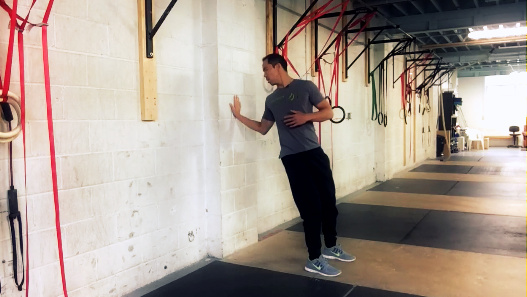
    Instead, you’d choose NOT to push a barbell overhead in favour of something else, perhaps an Incline Dumbbell Press but there’s no one saying you have to swap a push for a push so you could do a Seated Row or better yet – the Twisting Wall Press (my recommendation as it addresses the root cause).

    Do this and you’ll be avoiding using a compensatory movement pattern and avoid options A and B.

    Another problem with compensatory movement patterns is that even if they don’t result in an injury, if you keep using them over time, they become your new normal and at the very least, that lowers the ceiling on your potential and is an inefficient way to move.

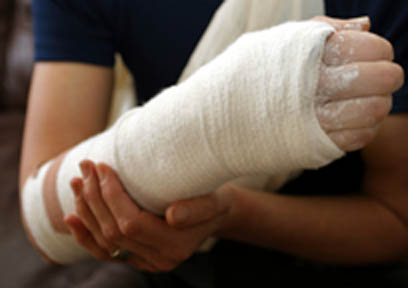
    On Friday I’ll be sending you a video showing you exactly what I’m talking about because I’m dealing with a bum wrist right now that is limited in extension and radial deviation (thumb to forearm movement) so I can show you exactly what it looks like.

    I just wanted to lubricate your mental gears a bit and teach you the definition so when you get the video you’re ready to soak it all up.

    Understand this concept and it may help to prevent you from suffering this pain in the bum-bum where you either get injured or have to spend time reprogramming this pattern.

    The one thing I’ll mention now is the most common cause of a compensatory movement pattern is PAIN, so if you’re dealing with any pain right now, getting the concept you’ll learn in Friday’s video may save you a lot of time and frustration down the road.

    We’ll talk then.

    PEACE~

    Coach E

    P.S. That guy was me. I like to think I’ve matured since then. 😉

  • 3 Types of Injuries

    3 Types of Injuries

    nogueira-broken-arm-mir

    If you train MMA, injuries are the norm, not the exception.

    But even if you don’t train MMA but you go to the gym and push yourself to reach higher levels of fitness, sooner or later, something’s gonna happen.

    That’s just the way it is.

    Over the last few years, more and more little aches and pains and nagging things have been coming up.

    Some attribute it to age (I’m 32)…

    I don’t buy it. And neither should you.

    Here’s why:

    Yes, aging makes your tissues less injury-proof and makes recovery take longer.

    But let me ask you a question…

    Let’s say 2 guys workout 3-4 days per week, who would be more likely to experience an injury:

    jack-lalanneThe 60 year old guy with perfect movement mechanics, a deep intuitive understanding of his body and top-notch nutrition, sleep and stress management…

    … or the 30 year old guy who’s got terrible form in the gym, doesn’t listen to his body, eats like crap and has a high-stress job and 2 young kids?

    Exactly.

    Age isn’t the determining factor.

    Plus, there’s nothing you can do about it, so fuggedaboutit!

    Either way, one thing we can all agree on is that injuries are a pain in the ass and can be a real downer…

    Nothing worse than making super gains in some area of fitness, then having to sit out for a few weeks and watch them wither away…

    But as an S&C coach, I’ve shifted my perspective on injuries lately.

    Whenever I’ve had an injury, I’ve learned so much about my body and how it functions. Injuries have a ton of teaching power.

    I’ve gained a deeper understanding of what muscles work during what movements and how my body naturally compensates to avoid others.

    This knowledge has definitely made me a better coach by improving the effectiveness of my cues.

    And having different types of injuries over the years, I’ve come to the conclusion that there are 3 basic types of injuries that we get.


    Injury Type #1: Accidental and Incidental

    These are the types of injuries that happen and when people see it happen they rush over to you and say, “Are you ok?”

    “Ahhhhhhh shit, fuck, #@$#%!” is the typical reply of the person who got injured.

    When I was 18, I got smashed into the boards from behind playing ice hockey and I suffered an SC joint sprain. This was an incidental injury.

    Luckily it wasn’t too bad as I was out of commission for only a few weeks.

    Another hockey flashback – when I was a kid I was playing street hockey with my brothers and as I was running, I tripped and smashed my mouth on the pavement.

    Chipped a tooth, bloodied a lip, but not too bad. You may have noticed I have uneven front teeth – this is why.

    And there was nothing I could’ve done about either injury so there’s not much more to say about accidental and incidental injuries other than they suck.

    Parkour is also a good source for accidental and incidental injuries:


    Injury Type #2: WTF?

    jackie-chanThese are injuries that happen and when they do, you’re like, “WTF?”

    Recently, I was at the cottage and I was walking and all I did was turn my body a little bit and suddenly pain shot through my knee like a lightning bolt.

    I hobbled on one leg over to the couch to assess the damage. I sat down and moved my knee around a bit, thinking the pain would just go away because nothing really happened.

    But the pain didn’t go away. In fact, it lasted for over a week and I just got back to leg training 2 days ago.

    I’ve racked my brain trying to think about what happened and how to prevent it, but I can’t come up with anything.

    All I can do is hope it doesn’t happen again.

    Just like with accidental and incidental injuries, not much you can do, so nothing to think about.


    Injury Type #3: Arrogant and Ignorant

    In this classification system, these are the only injuries you can actually do anything about.

    When I was 14, I had fairly major back surgery that left me lying on back to recover for 2 full months.

    Because a surgeon’s job is to do his thing then send you on your merry way, I didn’t know that I would have to deal with issues like muscular strength and length imbalances.

    So once I got past the stage of working out where my main goal was to pump up my bicepz to impress the honeys and I started Squatting, shit got real.

    Back pain and SI joint pain were common after heavy squat sessions.

    Until I learned why they were happening to me and what to do about it in university under the tutelage of Dr. Stu McGill.

    But before then, I was ignorant to where my problems were coming from and suffered Ignorant Injuries as a result.

    Since I’ve dedicated the past 14 years of my life to studying how to turn the human body into a vicious fighting machine, the amount of potential ignorant injuries has gone down while the potential amount of arrogant injuries has gone up. 

    I say potential because the injuries don’t have to occur, if you take preventative action once you learn what you’re doing or not doing that might result in an injury.

    Lately, my biggest issues have been with my knees…

    For example, whenever I’ve gotten to around 250 lbs on the Back Squat, my knees started to feel it.

    Thing is, I knew what was up.

    ostrichBut like the silly ostrich, I kept my head buried in the sand, hoping it would just go away.

    Unfortunately, this strategy failed.

    Miserably.

    Which is why I’ve dedicated so much time and energy to fixing the problem – my tight ass hips.

    In my next post I’m going to show you how tight hips can cause knee problems, but until then…

    What injuries have you had and based on the 3 types here, how would you classify them?

    Let me know in the Comments below.

  • 7 Tips for Quick Recovery from Injuries

    Another Ask EricWongMMA segment is officially in the books.

    This was week 4 and I kinda like doing these as I know I’m putting out content that YOU want to see.

    If you have a question, you can go here to ask me.

    Otherwise, check out the video below:


    If you have any questions specifically about this video, then you can definitely ask me in the Comments section below. 

    Don’t forget to hit ‘Like’ if this helped you out at all.

    I’m out – PEACE!

  • Your Injuries?

    I’m going to be covering some stuff on various injuries in MMA, as I’ve been experiencing a few injuries myself lately.

    Recently, I’ve experienced a concussion (non-MMA related) and a hand injury (boxing).

    At least THIS didn’t happen to me…

    I also just attended a workshop where I learned some new stuff for shoulder injuries.

    So I just want to know what injuries you have currently or you’re recovering from?

    Vote below and it will help me help you!

    [poll id=”11″]

    If you’ve got any other Comments or questions, leave them below.

  • What to Learn from Patrick Cote’s Knee Injury

    If you got a chance to catch the UFC on Saturday night and saw Patrick Cote’s knee injury when he was fighting the Spider, you were probably disappointed that the 2 warriors didn’t get a chance to properly finish what they started.

    I sure was. I love getting a chance to watch Silva at work, and I thought Cote showed that he definitely has a chin.

    But what I want to talk about is the knee injury that Cote suffered.

    You could see the shin bone kind of move forward and out laterally when he hurt himself. In some interviews he said that it’s an old meniscus, but from the way it looked, I believe that he hurt his ACL. Often with a buckling type injury, it’s a ligament that gets damaged.

    The ACL functions to stop the shin (tibia/fibula) from sliding forward under the thigh bone (femur), but only when the muscles aren’t there to do their job.

    PICTURE it this way: put your right fist up like at the top of a bicep curl, then put your left fist on top of your right fist. When you slide your right fist forward towards the computer screen, that’s the movement that the ACL prevents, and that’s what happened to Cote’s knee.

    So the ACL will come into play in a really quick pivot type move, like a running back who cuts hard, or during something unexpected, like getting pushed right before you land from a jump.

    The ACL will also work to stabilize the joint if the muscles aren’t strong enough to do the job, so even if you’re expecting the movement or it’s a planned movement, like a hard cut in football, if you don’t have strong muscles, you can still tear your ACL.

    To prevent ACL injuries, you need to make sure your hamstrings and calves are strong and powerful. So exercises like Stiff-leg deadlifts and Swiss ball leg curls are crucial to knee injury prevention. The muscles worked in these exercises do exactly what the ACL does, prevent anterior slide of the lower leg on the upper leg. These exercises are all a part of my MMA Strength and Conditioning program.

    So the lesson to learn here is to keep the muscles strong, but even more importantly, powerful. The muscles need to be able to react quickly, so doing exercises such as repetitive, explosive jumps like squat jumps and others found in my NRG system complexes will train this quality.

    Well that’s it for now, hope you enjoyed the rest of the UFC and I’ll talk with you soon.