You may have heard about the importance of the serratus anterior muscle before…
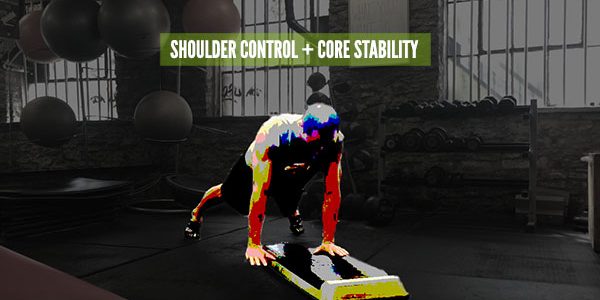
 Its most commonly discussed function is protraction of the scapula, which is why it’s often trained with the Scap Pushup (aka Pushup Plus), which is when you get into a Pushup position and protract your scapulae by pushing yourself away from the ground without bending your arms.
It’s a great exercise that should be done by everyone, but it trains just ONE of the serratus anterior’s functions.
Likewise, its most commonly discussed dysfunction is winged scapula, which is when the medial border of the scapulae stick out and away from the body and it looks like you could hide stuff in there.
The thing is, there are two other functions that are just as or even more important for maintaining healthy shoulders.
The first is upward rotation of the scapula to maintain proper scapulohumeral rhythm.
Scapulohumeral rhythm is the term used to described how your scapula must rotate as you lift your arms up overhead to ensure the head of the humerus has space to move smoothly.
If the scapulae don’t upwardly rotate when you raise your arms up, a bone-on-bone collision can occur that will stop the movement and cause pain.
Thing is, proper scapulohumeral rhythm is largely unconscious and just requires proper thoracic mobility a low level of strength in the 3 muscles responsible (upper trap, lower trap and serratus anterior) and avoiding doing anything silly when lifting your arms up i.e. trying to pinch your shoulder blades down and back the whole time, then you’re likely ok.
The other function not often discussed but critical to shoulder health is posterior tilting of the scapula.
Posterior tilt of the scapulae should occur during most movements including:
- Horizontal pulls (Rows)
- Vertical pulls (Chinups)
- Horizontal pushes (Pushups)
- Vertical pushes (Overhead Presses)
All of these movements require your scapula to be tight to your ribcage, which occurs as a result of the ability of the serratus anterior to fire first, then its strength and endurance.
But in most people this muscle is weak, inhibited and/or rarely considered in exercise programming.
The result is our scapulae don’t move how they’re supposed to, causing dysfunctional movement patterns, limited mobility, decreased strength and pain.
But today, you’re in luck because you’re going to
wake up your serratus with a KILLER 1-2 punch.
The first part is to release the pec minor, which is antagonist (opposite in function) to the serratus.
We’ve got to release and deactivate the pec minor because when tight and/or overactive, it fires and will inhibit serratus activation.
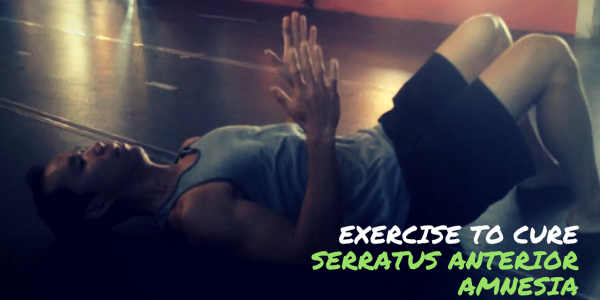
After we release pec minor, we immediately perform the serratus activation technique shown in the video, which I’m guessing is one you’ve never seen before.
Unlike the Scap Pushup, we’re activating the serratus in its lengthened position with shoulder extension torque occurring, which is a powerful downward rotator of the entire shoulder girdle and a common dysfunctional movement pattern that occurs during Pushups, Chinups and even Rows!
As with all of the techniques I share, focus on the itty-bitty details as they’ll determine whether the exercise just looks ok or is actually effective.
One more point before we dive in – do your best to breathe in a relaxed fashion and if you’re trying too hard to the point where you’re tensing up, back off and BREATHE.
You won’t effectively reprogram movement patterns while holding your breath.
Now, GO:
Go into and exit the activation slow and smooth, do 10 reps and hold for 5 sec on each rep, so it’ll take you under 2 minutes to complete.
After you give it a try notice your posture and scapulae, then let me know how you feel in the comments below.